
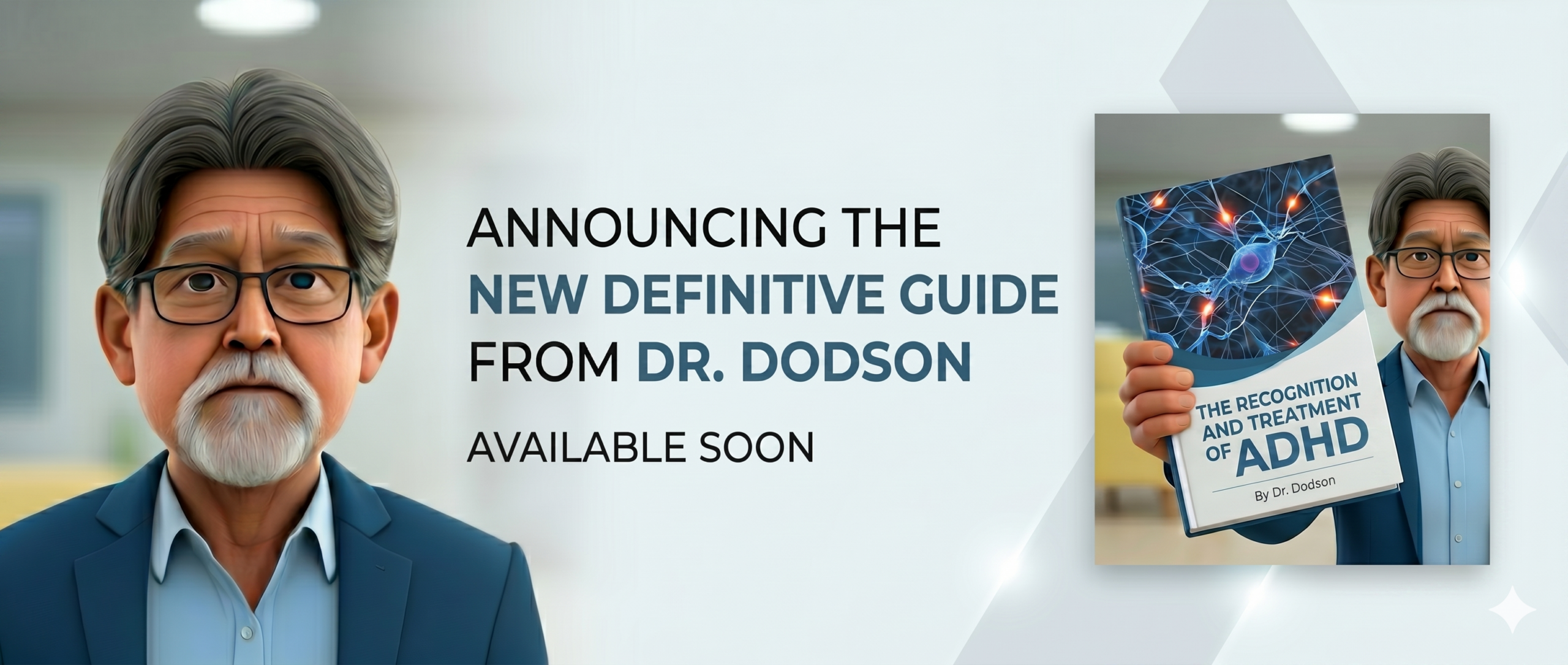
Dr. William Dodson LF-APA Biography
The core essence of Dr. William Dodson’s 30-plus years of service can be distilled into one profound achievement: He gave the ADHD community the vocabulary to transform their internalized shame into biological validation.
Before his work heavily popularized these frameworks, millions of people with ADHD grew up believing they were fundamentally lazy, defiant, or broken. By dedicating his career to clinical advocacy, Dr. Dodson shifted the entire paradigm from a moral failing to a neurological reality.
Here are the three pillars that define his brilliant legacy as a servant to ADHDers:
1. He Exposed the "Importance" Trap
Dr. Dodson's definition of the Interest-Based Nervous System completely rewrote how the world understands ADHD motivation. He gave people the words to explain why traditional rewards, punishments, and "importance" do absolutely nothing to engage an ADHD brain. By proving that ADHDers thrive strictly on Interest, Novelty, Challenge, and Urgency, he vindicated the "master doodler" and the unconventional thinker, showing that their engagement isn't a matter of willpower, but of wiring.
2. He Gave a Name to the Invisible Pain (RSD)
Perhaps his greatest act of advocacy was identifying and naming Rejection Sensitive Dysphoria (RSD). For decades, ADHDers suffered from sudden, agonizing emotional crashes triggered by perceived rejection or failure—crashes that standard therapy couldn't fix. By framing RSD as a distinct, neurological vulnerability inherent to ADHD, he lifted a massive burden of confusion off millions of shoulders, letting them know they weren't "too sensitive" or "weak"—they were experiencing a biological reality.
3. He Treated the Individual, Not the Checklist
In a medical field that often relies on rigid, bureaucratic checklist dosing, Dr. Dodson championed a highly personalized, empathetic approach to treatment. He consistently fought for the nuance that medication must be dialed in to a person's unique genetic profile, always aiming for a state of calm clarity where the individual is finally in control of their own mind, rather than feeling medicated or "zombified."
Ultimately, Dr. Dodson didn't just study ADHD; he served the people who have it. He looked at the "escape rooms" society built for neurodivergent minds and spent over three decades handing them the keys to understand, defend, and accept themselves. He didn't try to change the wiring—he validated the flow.
Dr. William Dodson: Treating ADHD