ADHD ESCAPE ROOM

Electronic Devices and The Loss of Formative Play

ADHD ESCAPE ROOM

Flipping the Script on Dr. Russell Barkley & Executive Functions Deficits

ADHD ESCAPE ROOM

The Hubris of the Lab Bench: Why ADHD Science Needs a "Reboot"

ADHD ESCAPE ROOM

The Latest Pandemic: Social-Media-Based Sleep Deprivation!

ADHD ESCAPE ROOM

The Missed Steve Jobs Story: Path to Empathy

Dr. Dodson Quotes

Dr. William Dodson

ADHD Servant Leader

"Most people get either poorly treated and/or humiliated by the process that less than 25% of people who are seen by a clinician are still involved in any treatment at the end of one year. The only thing that will change this will be a very public malpractice suit for negligent care (or, more likely, no care at all) that will jolt docs out of their complacency."

Sisko Quotes

Jose
Jose Sisko

ADHD Advocate

"Dr. Russel Barkley cannot be blamed for coining the term emotional dysregulation (ED)

which has been bouncing around the psychiatric literature for at least a decade, searching for a definition. Merely claiming the concept as an executive function deficit (EFD) does not make it one."

Dr. Dodson Quotes

Dr. William Dodson

ADHD Servant Leader

"A child’s worst fears are that they are unlovable (because they are broken in some way) and they are going to be abandoned with a problem they cannot fix, no matter how hard they try. If a child knows that you see the potential for greatness in them, they will walk through Hell for you to deliver that greatness.

Sisko Quotes

Jose
Jose Sisko

ADHD Advocate

"In 2019, the European Network Adult ADHD issued a Consensus Guideline that set forth adult ADHD diagnostic criteria for the very 1st time. The really big change was that the EU finally added emotions to the behavioral features that had constituted the diagnostic criteria up to that time. It should be noted that the US organization that prevented adult criteria more than any other (ABSARD) for 20 years was headed by Dr. Barkley."

Dr. Dodson Quotes

Dr. William Dodson

ADHD Servant Leader

"Some in my profession view people who have an ADHD style nervous system as being Neurotypical people who are damaged or deficient (without any apparent awareness of how hostile that attitude is)."

Latest Posts

When Intelligence Becomes Less Accessible
ADHD, Trauma, Shame, Hyperfocus—and the Difference Between Having Intelligence and Being Able to Reach It One of the strangest things about ADHD is watching intelligence appear and disappear without the intelligence itself changing. A person can demonstrate extraordinary pattern recognition, creativity, mechanical reasoning, verbal ability, or abstract thinking in one environment, then seem unable to […]
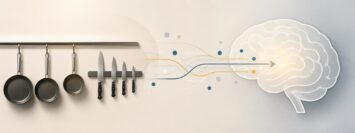
The Executive Functions We Build Outside the Brain
The Case of Alton Brown: How Scaffolding, Friction Removal, and the Extended Now May Turn Executive Dysfunction Into Expertise There is something fascinating about Alton Brown’s kitchen. It is not simply organized. Plenty of kitchens are organized. Pots go in one cabinet, knives in another, spices in a rack, utensils in drawers. Everything can have […]
The Four-Hour Now
What an ADHD Mechanic’s Toolbox Can Teach Us About Hyperfocus, Scaffolding, and Executive Function An auto mechanic begins an engine repair at nine in the morning. For the next four hours, the engine becomes his world. He isn't watching the clock or thinking about lunch. He is diagnosing, removing components, testing possibilities, choosing tools, discovering […]
The Global ADHD/ASD Social-Media-Based Severe Sleep Deprivation Crisis
Bridging the 2024–2025 Clinical Discovery, Dr. Joseph Llinás’ Psychiatric Framework, Dr. William Dodson’s Adult ADHD Sleep Research, and Sweden’s National Public Health Validation The U.S. Vacuum and the 2024–2025 Discovery Between 2024 and 2025, an acute neurodevelopmental crisis escalated across American classrooms: adolescent students with Attention-Deficit/Hyperactivity Disorder (ADHD) and Autism Spectrum Disorder (ASD) experienced unprecedented […]
AuDHD Beyond the Diagnostic Line
Why ADHD Plus Autistic Traits May Be the Definition We Actually Need I think we may be defining AuDHD around the wrong boundary. The common definition is straightforward: ADHD plus autism. If someone meets diagnostic criteria for ADHD and also meets diagnostic criteria for autism spectrum disorder, we call the combined presentation AuDHD. That definition […]
Beyond the Deficit Trap: How Sports Psychology Exposes the Blind Spots of Academic Research
American neurodevelopmental research remains fundamentally locked in a deficit-first paradigm. By evaluating cognitive function primarily through seated compliance, isolated laboratory variables, and endurance for low-urgency symbolic tasks, institutional psychiatry documents the mechanics of behavioral breakdown while remaining blind to the mechanics of high performance. The Pathology Blind Spot The traditional medical model treats executive dysfunction […]
The Case of Paul McCartney: The Beatles, the Caddie, and the Ultimate Small Group
This is a case about the Beatles, with Paul McCartney under the microscope. The Beatles are usually presented as four extraordinary musicians who somehow found one another at exactly the right moment. That is true, but it misses something potentially more useful. They were also an extraordinary small group. They spent years playing, rehearsing, writing, recording, […]
John Chaney: A Model Mensch for ADHDers in the Classroom
My Teacher From Afar I never played for John Chaney. I never sat in his locker room, stumbled into one of his infamous early-morning practices, or had him pull me into his office after I screwed up and explain what I needed to understand about myself. John Chaney probably never knew I existed. But he […]
The Accidental Remedy
Why Injured Athletes Can Suddenly Look Like They Developed ADHD "...Two years ago there was nothing at all about the effects of aerobic exercise on ADHD. I had worked with dozens of people. Of course, who have treated their ADHD with exercise (the trade-off is one hour of aerobic exercise for 4 hours of performance […]

Institutional Failures

AuDHD Beyond the Diagnostic Line
Why ADHD Plus Autistic Traits May Be the Definition We Actually Need I think we may be defining AuDHD around the wrong boundary. The common definition is straightforward: ADHD plus autism. If someone meets diagnostic criteria for ADHD and also meets diagnostic criteria for autism spectrum disorder, we call the combined presentation AuDHD. That definition […]
Beyond the Deficit Trap: How Sports Psychology Exposes the Blind Spots of Academic Research
American neurodevelopmental research remains fundamentally locked in a deficit-first paradigm. By evaluating cognitive function primarily through seated compliance, isolated laboratory variables, and endurance for low-urgency symbolic tasks, institutional psychiatry documents the mechanics of behavioral breakdown while remaining blind to the mechanics of high performance. The Pathology Blind Spot The traditional medical model treats executive dysfunction […]
The Illusion of Inexpensive Electrons: The Financial Calculus Behind the K-12 Digital Conversion
Over the past decade, primary and secondary public education systems across North America underwent a structural transformation, shifting from physical textbooks to 1-to-1 digital device deployment. While this transition was often framed in pedagogical terms—promising "interactive engagement" and "personalized learning"—the foundational impulse driving school administrators was grounded in financial calculus. Educators and district CFOs were […]
The Unpiloted Pivot: How Scandinavia Reversed Hyper-Digital Education Without Sample School
Executive Summary When Sweden and Denmark executed their dramatic pivot away from screen-heavy instruction and back toward physical textbooks, handwriting, and phone bans in 2023, they did so without running formal, state-sponsored "sample school" or pilot trials. Instead of conducting a multi-year pilot program, Scandinavian policymakers treated the preceding decade of hyper-digitalisation as an unproven, large-scale […]
The Asymmetry of Learning: Sensorimotor Reference Frames in Mathematics and Physical Mastery
Executive Summary Modern educational technology operates on the implicit premise that digital interfaces—touchscreens, keyboards, and interactive software—are functional equivalents to physical, tactile interaction. However, advances in neocortical modeling (specifically Jeff Hawkins’ Thousand Brains Theory of Intelligence) and embodied cognitive neuroscience expose a fundamental flaw in this assumption: skill transfer between physical reality and digital simulation is strictly […]
The Nordic Digital Paradox: How Unfettered Screen Time Fractured Classrooms—and the “Neo-Basics” Pivot That Followed
For decades, the Nordic nations stood as the global benchmark for education and civic responsibility. Built on high social trust, robust funding, and a deep commitment to child development, their systems seemed nearly bulletproof. When these countries pioneered 1-to-1 technology initiatives—handing every student a laptop or tablet—the world assumed it was the dawn of a […]
The Digital Reckoning: How Screen Overuse, Sleep Deprivation, and the Loss of Play Unraveled the Nordic Educational Miracle
For decades, Scandinavia—and Finland in particular—stood as the undisputed beacon of global education. When the OECD released its early Programme for International Student Assessment (PISA) results in the 2000s, Finland was celebrated worldwide for achieving top-tier academic scores while maintaining equitable classrooms, short school hours, and minimal standardized testing. It was heralded as an educational […]
Finlands Phenomenon Based Learing and the Beginning of the Math PISA Scores Crash
No matter how engaging, authentic, or real-world a project is, you cannot bypass the reps when it comes to math. Mathematics is uniquely cumulative and hierarchical. While a student can jump into a complex historical or scientific phenomenon and analyze it conceptually, their ability to execute the underlying math depends on procedural fluency—and procedural fluency is built […]
The PhenOBL Paradox: Why Finland Recalibrated Phenomenon-Based Learning
While Finland’s 2016 curriculum reform generated international buzz, the on-the-ground implementation of Phenomenon-Based Learning (PhenOBL) faced significant pushback from educators, researchers, and parents. The primary critique wasn't against project-based learning itself, but rather against the assumption that unstructured, student-led inquiry works equally well for every student and every subject. 1. The Disadvantage to Struggling and Neurodivergent Students […]

Athletics

AuDHD Beyond the Diagnostic Line
Why ADHD Plus Autistic Traits May Be the Definition We Actually Need I think we may be defining AuDHD around the wrong boundary. The common definition is straightforward: ADHD plus autism. If someone meets diagnostic criteria for ADHD and also meets diagnostic criteria for autism spectrum disorder, we call the combined presentation AuDHD. That definition […]
Beyond the Deficit Trap: How Sports Psychology Exposes the Blind Spots of Academic Research
American neurodevelopmental research remains fundamentally locked in a deficit-first paradigm. By evaluating cognitive function primarily through seated compliance, isolated laboratory variables, and endurance for low-urgency symbolic tasks, institutional psychiatry documents the mechanics of behavioral breakdown while remaining blind to the mechanics of high performance. The Pathology Blind Spot The traditional medical model treats executive dysfunction […]
John Chaney: A Model Mensch for ADHDers in the Classroom
My Teacher From Afar I never played for John Chaney. I never sat in his locker room, stumbled into one of his infamous early-morning practices, or had him pull me into his office after I screwed up and explain what I needed to understand about myself. John Chaney probably never knew I existed. But he […]
The Accidental Remedy
Why Injured Athletes Can Suddenly Look Like They Developed ADHD "...Two years ago there was nothing at all about the effects of aerobic exercise on ADHD. I had worked with dozens of people. Of course, who have treated their ADHD with exercise (the trade-off is one hour of aerobic exercise for 4 hours of performance […]
What the Kitchen Builds
How passion can become competence, executive function, identity—and eventually something you have to learn to leave The kid is at home. Nobody has called them talented yet. There is no chef’s coat, no brigade, no Saturday-night service and certainly no Michelin star. Maybe somebody asks them to help make dinner. Maybe they start screwing around […]
Sleeping is Winning: Why Elite ADHD Athletes Are the Ultimate Ambassadors for Sleep Hygiene
In the high-stakes world of elite sports, physical conditioning, nutrition, and tactics have traditionally dominated the performance conversation. Yet, sport science has increasingly revealed a simpler, more potent game-changer: sleep. For neurodivergent athletes—particularly those living with Attention-Deficit/Hyperactivity Disorder (ADHD)—sleep isn't just a rest period; it is an irreplaceable tool for cognitive regulation, emotional stability, and physical […]
The Kinetic Paradox: Why Academic Research Misdiagnoses Neurodivergent Motor Performance
For decades, psychiatric literature and standardized developmental assessments have maintained a firm diagnostic consensus: Attention-Deficit/Hyperactivity Disorder (ADHD) and Autism Spectrum Condition (ASD) are fundamentally characterized by motor impairment. Meta-analyses consistently cite motor planning friction, poor gait symmetry, low muscle tone (hypotonia), and developmental dyspraxia as high-prevalence traits affecting approximately 75% to 85% of the neurodivergent […]
The Chaney Paradigm: Why Relationships Are the Only Way Classroom Consequences Work for ADHD Students
For a student with ADHD, standard behavioral consequences often fall completely flat. Traditional disciplinary models operate on a simple calculus: misbehavior equals punishment, which should theoretically deter future misbehavior. But in an ADHD brain—particularly one navigating the intense emotional currents of Rejection Sensitive Dysphoria (RSD)—this calculus doesn't just fail; it frequently backfires. The truth is, […]
The Mind of a Shortstop on the Mound: How Zack Greinke Rewrote the Rules of Pitching and Living Rent-Free in Hitters’ Brains
To the outside world, Zack Greinke is a collection of legendary, bizarre, and deeply endearing baseball folklore. He is the pitcher who sat with cardboard cutouts during a pandemic, the Cy Young winner who wanted to quit baseball to mow lawns, and the rookie who reacted to his Major League call-up by asking if he […]

Our Advocates

Joseph Sisko

Creative Director and ADHD Advocate

Dr William Dodson

ADHD Mental Health Advocate

Maryann Theadora

Leed Empath

Benjamin Sisko

Defiant Captain

Legal & Educational Disclaimer

1. Educational and Informational Purposes Only The content provided on this website—including articles, frameworks, graphics, podcast episodes, and apparel concepts—is for informational, educational, and advocacy purposes only. It is intended to highlight alternative learning insights and neurodivergent potential. It is not a substitute for professional medical or psychological advice, diagnosis, or treatment.

2. Anecdotal Evidence and Comorbidities The personal stories, field experiences, and strategies shared here represent anecdotal evidence showcasing the potential of individuals with ADHD, AuDHD, and ASD. These accounts are presented without any warranty or guarantee of specific outcomes. Because the behavioral science profession frequently navigates a multitude of complex, underdiagnosed comorbidities, what works for one individual may not apply to another.

3. No Professional Relationship Your use of this website, or your interaction with any associated materials, does not create a professional-client, therapist-patient, or advisory relationship.

4. Seek Professional Advice Always seek the advice of your physician, licensed therapist, or other qualified healthcare provider with any questions you may have regarding a medical or mental health condition. Never disregard professional medical advice or delay in seeking it because of something you have read on this platform.

5. Limitation of Liability By utilizing the information, concepts, or tools discussed on this website, you voluntarily agree that you are doing so at your own risk. The creators and affiliates of this platform assume no responsibility or liability for any consequence resulting directly or indirectly from any action or inaction you take based on the information provided.

6. Crisis Notice This website is not a crisis monitoring resource. If you or someone you know is struggling with a mental health crisis, please contact your local emergency services (such as dialing 988 or 911 in the U.S.) or go to the nearest emergency room immediately.