
Athletics

Engagement Gives You Access to Your Abilities: The Missing Variable in ADHD Research
The Child Who Couldn't Learn Motor Commands Imagine a young child with ADHD sitting in a laboratory, being asked to learn a sequence of motor commands. The researcher demonstrates a movement, the child attempts to reproduce it, and the researcher measures accuracy, timing, retention, and the ability to repeat the sequence. The child performs poorly, […]

AuDHD Beyond the Diagnostic Line
Why ADHD Plus Autistic Traits May Be the Definition We Actually Need I think we may be defining AuDHD around the wrong boundary. The common definition is straightforward: ADHD plus autism. If someone meets diagnostic criteria for ADHD and also meets diagnostic criteria for autism spectrum disorder, we call the combined presentation AuDHD. That definition […]

The ADHD Athletic Conundrum
The Executive Function Developmental Arc ADHD Research Has Barely Examined For decades, ADHD research has documented executive-function differences. We have studied inhibition, working memory, sustained attention, impulsivity, delayed consequences, emotional regulation, academic performance, medication response, and executive dysfunction. We have scanned ADHD brains and compared them with neurotypical brains. We have followed children longitudinally and […]
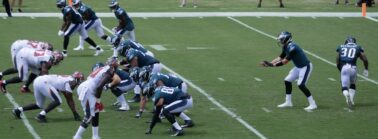
The Case of Nick Foles
Finding a Well-Scaffolded Home Nick Foles should not make sense. If you look at his NFL career as a conventional quarterback-evaluation problem, the pieces refuse to fit together. He produced one of the most efficient regular seasons in NFL history, continued winning the following year until an injury ended his season, deteriorated badly enough in […]
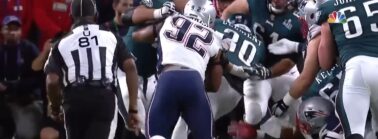
The Case of Corey Clement
What an Undrafted Rookie, a Super Bowl, and One Defender Following Him Can Teach Us About State-Dependent Performance Nick Foles won the MVP of Super Bowl LII. Doug Pederson called one of the great offensive games in Super Bowl history. Zach Ertz caught the go-ahead touchdown, Nelson Agholor caught nine passes, Alshon Jeffery made one […]
The Hubris of the Lab Bench: Why ADHD Science Needs a “Reboot”
For decades, one of the recurring conclusions in ADHD research has been that children and adults with ADHD demonstrate poorer motor development or motor performance than their neurotypical peers. There are studies behind it, reviews behind it, and citations stacked upon citations behind it. And I am mostly convinced that a substantial portion of what […]
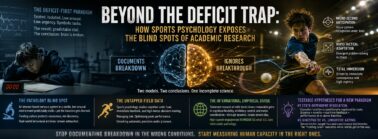
How Sports Psychology Exposes the Blind Spots of Academic Research
American neurodevelopmental research remains fundamentally locked in a deficit-first paradigm. By evaluating cognitive function primarily through seated compliance, isolated laboratory variables, and endurance for low-urgency symbolic tasks, institutional psychiatry documents the mechanics of behavioral breHow Sports Psychology Exposes the Blind Spots of Academic ADHD Research A Science of Pathology Without a Science of Potential American […]

John Chaney: A Model Mensch for ADHDers in the Classroom
My Teacher From Afar I never played for John Chaney. I never sat in his locker room, stumbled into one of his infamous early-morning practices, or had him pull me into his office after I screwed up and explain what I needed to understand about myself. John Chaney probably never knew I existed. But he […]

The Accidental Remedy
Why Injured Athletes Can Suddenly Look Like They Developed ADHD "...Two years ago there was nothing at all about the effects of aerobic exercise on ADHD. I had worked with dozens of people. Of course, who have treated their ADHD with exercise (the trade-off is one hour of aerobic exercise for 4 hours of performance […]