ADHD ESCAPE ROOM

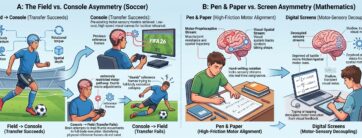
Electronic Devices and The Loss of Formative Play

ADHD ESCAPE ROOM

Flipping the Script on Dr. Russell Barkley & Executive Functions Deficits

ADHD ESCAPE ROOM

The Hubris of the Lab Bench: Why ADHD Science Needs a "Reboot"

ADHD ESCAPE ROOM

The Latest Pandemic: Social-Media-Based Sleep Deprivation!

ADHD ESCAPE ROOM

The Missed Steve Jobs Story: Path to Empathy

Dr. Dodson Quotes

Dr. William Dodson

ADHD Servant Leader

"Most people get either poorly treated and/or humiliated by the process that less than 25% of people who are seen by a clinician are still involved in any treatment at the end of one year. The only thing that will change this will be a very public malpractice suit for negligent care (or, more likely, no care at all) that will jolt docs out of their complacency."

Sisko Quotes

Jose
Jose Sisko

ADHD Advocate

"Dr. Russel Barkley cannot be blamed for coining the term emotional dysregulation (ED)

which has been bouncing around the psychiatric literature for at least a decade, searching for a definition. Merely claiming the concept as an executive function deficit (EFD) does not make it one."

Dr. Dodson Quotes

Dr. William Dodson

ADHD Servant Leader

"A child’s worst fears are that they are unlovable (because they are broken in some way) and they are going to be abandoned with a problem they cannot fix, no matter how hard they try. If a child knows that you see the potential for greatness in them, they will walk through Hell for you to deliver that greatness.

Sisko Quotes

Jose
Jose Sisko

ADHD Advocate

"In 2019, the European Network Adult ADHD issued a Consensus Guideline that set forth adult ADHD diagnostic criteria for the very 1st time. The really big change was that the EU finally added emotions to the behavioral features that had constituted the diagnostic criteria up to that time. It should be noted that the US organization that prevented adult criteria more than any other (ABSARD) for 20 years was headed by Dr. Barkley."

Dr. Dodson Quotes

Dr. William Dodson

ADHD Servant Leader

"Some in my profession view people who have an ADHD style nervous system as being Neurotypical people who are damaged or deficient (without any apparent awareness of how hostile that attitude is)."

Latest Posts

It’s Not an Attention Deficit—It’s an “Engagement on Demand” Difference
In a recent post, I questioned why states mandate specialized ESOL/ELL training for general education teachers while requiring almost zero specialized training for teaching students with ADHD. The common explanation is that ADHD is a behavioral issue or an "executive function deficit." But as leading experts like Dr. William Dodson point out, ADHD is fundamentally […]
The Chaney Paradigm: Why Relationships Are the Only Way Classroom Consequences Work for ADHD Students
For a student with ADHD, standard behavioral consequences often fall completely flat. Traditional disciplinary models operate on a simple calculus: misbehavior equals punishment, which should theoretically deter future misbehavior. But in an ADHD brain—particularly one navigating the intense emotional currents of Rejection Sensitive Dysphoria (RSD)—this calculus doesn't just fail; it frequently backfires. The truth is, […]
The 20,000-Correction Wound: Why School Administrators Must Abolish the ADHD Punishment Loop
By the time a child with ADHD reaches their twelfth birthday, they have received an estimated 20,000 more negative messages, corrections, and public rejections than their neurotypical peers. Let that number sink in. It isn't just a staggering statistic; it is the blueprint for a profound, secondary psychological injury. For decades, school disciplinary frameworks have been built […]
The Mask of Contentment: Johnny Carson, RSD, and the Architecture of Control
When Dr. William Dodson first introduced the clinical concept of Rejection Sensitive Dysphoria (RSD) to describe the intense, agonizing emotional pain experienced by neurodivergent individuals in response to perceived failure or abandonment, it unlocked a massive wave of sudden clarity. One of the most famous clinical anecdotes from the early documentation of RSD involves a patient who, […]
The Microphone as a Shield: How ADHD, RSD, and Trauma Shape the Comedy of Provocation
When we think of stand-up comedians, we picture people who are fearless. We see individuals willing to stand alone under blinding spotlights, facing a room full of strangers whose sole job is to judge them in real-time. For decades, icons like Lenny Bruce, Sam Kinison, and Sarah Silverman have pushed the boundaries of what is […]
Shattered Trust, Reactive Systems: The Intersection of ADHD, RSD, and Trauma in Young Adulthood
When ADHD, Rejection Sensitive Dysphoria (RSD), and unresolved childhood trauma from a significant event like a sexual assault intersect in a young adult, they don't just exist side-by-side—they actively amplify one another. ADHD brings a naturally intense, highly reactive nervous system and executive dysfunction. RSD adds an agonizing vulnerability to perceived criticism or abandonment. Childhood […]
The Firewall of Education Law: School Social Work When Parents Weaponize Medical Privacy
When a parent pulls a student out of therapy to hide their own actions or prevent exposure, a school social worker enters a high-stakes, legally complex landscape. The transition from an outside private clinician to a school-based social worker fundamentally changes the legal and structural boundaries. School social workers are governed by a distinct matrix […]
The Echo Chamber of the Mind: ADHD, Generational Trauma, and the Neurobiology of Breaking the Loop
⚠️ Crucial Clinical Disclaimer The following material discusses complex neurobiological interactions, trauma frameworks, and emerging pharmacological research. This article is for informational and educational purposes only and is not a substitute for professional medical advice, diagnosis, or treatment. ADHD and Complex PTSD (C-PTSD) share massive symptomatic overlap; self-diagnosing either condition—or assuming specific trauma pathways—can lead to […]
The Colliding Systems: ADHD, Generational Trauma, and the Cycle of Maltreatment 
The intersection of neurodivergence, generational trauma, and child maltreatment is a critical area of study in developmental psychology and behavioral health. When a child with ADHD grows up in a home with an undiagnosed, dysregulated parent, it creates an intense environment where executive dysfunction and nervous system survival strategies collide. 1. Rates of Physical Abuse […]

Institutional Failures

The Neurobiological Trap: Nighttime Hyperarousal and the 15-Year-Old Medication Cliff
To truly understand why neurodivergent teenagers face such severe, systemic sleep deprivation, we must look past simple behavioral choices and examine the literal neurobiology of the ADHD and ASD brain. It is not just that these teenagers want to stay up late; it is that their nervous systems are structurally and chemically wired to resist […]
Flipping the Script on Dr. Russell Barkley and Executive Functions Deficits
For decades, the mainstream medical narrative surrounding ADHD has been dominated by a single, clinical perspective: ADHD is a severe, unmitigated disability of the prefrontal cortex. The leading architect of this view, the retired Dr. Russell Barkley, gave the world an incredibly rigorous scientific map of executive function deficits—tracking how our brains struggle with working […]
The Weak Scaffold
What an ADHD Specialist Could Be—and Why Executive-Function Coaching Alone Falls Short I recently applied for an ADHD Specialist position at a private K–12 school built around serious student-athletes. The educational model immediately interested me. Students complete academics during a compressed portion of the day, leaving substantial time for high-level athletic development with experienced coaches. […]
Losing a Generation to the Screen: An Educator’s View from the Front Lines of the Sleep Crisis
During my tenure teaching mathematics at Poinciana High School, our campus achieved a remarkable turnaround, elevating our school grade from a C to an A. But as a teacher, true success isn't just measured by institutional data—it’s measured by the human beings sitting in your rows. With my principal’s full backing, I began investigating a […]

Athletics

The Goalkeeper Paradox: High-Stakes Focus, Spatial Clarity, and the Multisport Advantage
The goalkeeper position in soccer is a fascinating paradox: it is an isolated, highly specialized role that requires intense psychological resilience, making it uniquely suited for an athlete with ADHD. While it is often viewed as a "wallflower" position because the keeper stands apart from the continuous, fluid movement of the rest of the team, […]
Striking a Balance: How Rhythmic Bowling Mechanics Calm and Coordinate the Autistic Nervous System
In the context of sports, recreation, and adapted physical activity, bowling is often a highly recommended sport for individuals on the autism spectrum (ASD). However, standard delivery styles can sometimes feel mechanically rigid or sensory-jarring. The "rock the baby" approach—a specialized bowling delivery technique where the bowler cradles or swings the ball smoothly close to the body, emphasizing a […]
Effects of physical exercise on children with Attention Deficit Hyperactivity Disorder (ADHD)
This review article examines the role of physical exercise as an adjunctive, non-drug treatment for children and adolescents with Attention Deficit Hyperactivity Disorder (ADHD) . It synthesizes how both brief, single sessions (acute exercise) and regular, long-term programs (chronic exercise) impact the neurophysiology and cognitive functions of children dealing with the disorder . Key Highlights […]
The Neurodivergent Arena: Singles vs. Doubles Table Tennis
For individuals navigating neurodivergence, sports are rarely just about physical exercise. They are an intense exercise in cognitive load management. While a sport like soccer introduces a massive, 21-vector matrix of chaotic human movement, table tennis shrinks the physical universe down to a highly predictable, $9 \times 5$ foot geometric surface. However, how a brain processes this […]
Why Certain Individual Sports and “Island” Positions Are Sanctuaries for ASD Thinkers
For youth on the autism spectrum (ASD), team sports characterized by continuous, unpredictable social choreography (like basketball or soccer) can create an overwhelming cognitive load. However, individual sports and highly structured, isolated roles within larger sports provide an ideal canvas. These environments allow a rigid, systematic, and deeply focused brain to achieve mastery by turning […]
When to Remove the “u” in AuDHD to Master Performance in Golf
Traditional school systems are fundamentally built on a structural model that rewards sequential processing, conformity, and uniform paces. For a student with a highly active, nonlinear brain, the rigid environment of primary and secondary education often acts as a friction point rather than a catalyst for learning. When a high-IQ, hyperactive thinker checks out of […]
The Defensive Instinct: The Neuro-Architecture of the “Mama Bear” Charge
To the uninitiated, when a goalkeeper like Kasey Keller or Emiliano “Dibu” Martínez hurtles off their line to throw their physical frame directly at a charging striker's laces, it looks like reckless bravado—a hyper-aggressive, alpha-male display of dominance. But that is a profound misreading of the competitive instinct. This brand of extreme, forward-charging goalkeeping isn't […]
Table Tennis and the ADHD and ASD brain.
To understand why table tennis is such a powerful vehicle for saving a generation of children with ADHD and ASD, we have to look closely at the precise neurocognitive and sensorimotor demands of the sport. It isn't just physical exercise; it is a highly structured, fast-paced environment that perfectly aligns with the specific mechanics of […]
The Progressive Rock of the Playing Field: How the ADHD Non-Linear Brain Weaponizes Syncopation
Most traditional sports coaching treats the athletic arena like a predictable 4/4 pop song. It relies on rote, linear repetitions, a steady, metronomic cadence, and an insistence that consistency is the ultimate virtue. But to a specific type of competitor—driven by a non-linear, empathic ADHD brain—the playing field is not a pop song. It is […]

Our Advocates

Joseph Sisko

Creative Director and ADHD Advocate

Dr William Dodson

ADHD Mental Health Advocate

Maryann Theadora

Leed Empath

Benjamin Sisko

Defiant Captain

Legal & Educational Disclaimer

1. Educational and Informational Purposes Only The content provided on this website—including articles, frameworks, graphics, podcast episodes, and apparel concepts—is for informational, educational, and advocacy purposes only. It is intended to highlight alternative learning insights and neurodivergent potential. It is not a substitute for professional medical or psychological advice, diagnosis, or treatment.

2. Anecdotal Evidence and Comorbidities The personal stories, field experiences, and strategies shared here represent anecdotal evidence showcasing the potential of individuals with ADHD, AuDHD, and ASD. These accounts are presented without any warranty or guarantee of specific outcomes. Because the behavioral science profession frequently navigates a multitude of complex, underdiagnosed comorbidities, what works for one individual may not apply to another.

3. No Professional Relationship Your use of this website, or your interaction with any associated materials, does not create a professional-client, therapist-patient, or advisory relationship.

4. Seek Professional Advice Always seek the advice of your physician, licensed therapist, or other qualified healthcare provider with any questions you may have regarding a medical or mental health condition. Never disregard professional medical advice or delay in seeking it because of something you have read on this platform.

5. Limitation of Liability By utilizing the information, concepts, or tools discussed on this website, you voluntarily agree that you are doing so at your own risk. The creators and affiliates of this platform assume no responsibility or liability for any consequence resulting directly or indirectly from any action or inaction you take based on the information provided.

6. Crisis Notice This website is not a crisis monitoring resource. If you or someone you know is struggling with a mental health crisis, please contact your local emergency services (such as dialing 988 or 911 in the U.S.) or go to the nearest emergency room immediately.