
When Dr. William Dodson first introduced the clinical concept of Rejection Sensitive Dysphoria (RSD) to describe the intense, agonizing emotional pain experienced by neurodivergent individuals in response to perceived failure or abandonment, it unlocked a massive wave of sudden clarity. One of the most famous clinical anecdotes from the early documentation of RSD involves a patient who, upon finally hearing the neurological explanation for their volatile emotional baseline, looked at the clinician and remarked with a mix of grief and relief: "Well, that explains my three marriages."
That exact quote captures the tragic relational math of untreated RSD. When your nervous system treats any perceived dip in validation, an ambiguous silence, or an unscripted conflict as an excruciating, full-body threat, relationships become unsustainable minefields. Long-term intimacy requires navigating vulnerability and inevitable friction—two things a severe RSD brain will naturally sabotage, flee from, or aggressively attempt to control to avoid being wounded.
When we map this exact psychological reality onto the life of Johnny Carson, his historic run as a television icon ceases to look like mere ambition, and begins to look like a beautifully executed, lifelong defensive architecture.
The Math of Relational Failure
Carson was married four times. His inability to sustain long-term romantic partnerships was legendary within show business, leaving a trail of ex-wives who described him as emotionally unavailable, cold, and prone to swift, absolute detachment the moment conflict arose.
If an individual cannot process the baseline vulnerability of a domestic partnership without the nervous system screaming that they are being rejected, the defensive adaptations take over:
- The Preemptive Strike: Terminating a relationship or completely shutting down emotionally before the other person has the chance to abandon or criticize you.
- The Cold Wall: Withdrawing into total, impenetrable isolation to create an environment where nobody possesses the proximity required to drop your defenses.
"On Stage, I'm In Control"
The ultimate manifestation of Carson’s RSD defense mechanism occurred every weeknight at 11:30 PM. In his famous 60 Minutes profile with Mike Wallace, Carson was pushed to explain the jarring contrast between his crippling private social anxiety and his effortless public charisma. His response was the definitive manifesto of a trauma-and-neurodivergent survival strategy:
"On stage, I'm in control. I know where the script is going, I know what the parameters are, I know what the moves are."
For an individual managing severe emotional reactivity and early parental trauma (driven by a pathologically withholding mother), the live television set functioned as a clinical clean room. It was an environment completely scrubbed of unscripted interpersonal risk.
| The RSD Threat (Private Life) | The Controlled Countermeasure (The Tonight Show) |
| Ambiguity: Unpredictable social cues, silent rooms, unscripted expectations. | The Script: A rigid, predictable structure where every movement is rehearsed and timed. |
| Criticism/Rejection: Visceral, agonizing pain from a partner’s disapproval or perceived slight. | The Audience Contract: Guaranteed, immediate feedback loops of laughter and applause that act as a dopamine shield. |
| Loss of Autonomy: Being vulnerable to someone else's emotional state or narrative. | Total Sovereignty: The power to cut to a commercial, utilize a scripted "saver line" if a joke dies, or dictate the boundaries of the desk. |
Somatic Pacifiers: The Drums and the Heavy Smoking
To keep this high-stakes nervous system regulated under the burning lights of the studio, Carson relied on two powerful somatic pacifiers: his jazz drumming and his severe, four-pack-a-day cigarette habit.
For an ADHD brain constantly searching for internal pacing and sensory-motor grounding, these were not casual hobbies; they were essential chemical and physical anchors:
- The Drums: Provided intense bilateral coordination, physical discharge for pent-up nervous energy, and a structured rhythm to organize a restless mind.
- The Cigarettes: Served as a constant chemical drop of nicotine to stimulate his under-aroused ADHD dopamine pathways. Crucially, the physical act of smoking provided an automated baseline for deep breathing and a socially acceptable prop to hold onto, masking his inner restlessness. Even on camera, a lit cigarette was always nestled between his fingers or resting in the ashtray on his desk—a physical tether to keep him grounded while navigating the intense stimulation of live television.
The Volatile Accelerant: The Anatomy of a "Mean Drunk"
If the television studio was Carson's clean room, the dinner table and the lounge were his structural failure points. The most notorious shadow over Carson’s legacy was his transformation when drinking. Off-camera, he expended an immense amount of daily energy maintaining his emotional firewall. However, when you introduce alcohol into a system wired with ADHD, early developmental trauma, and severe RSD, the result is a predictable, explosive neurological collapse rather than simple intoxication.
1. Evicting the Executive Governor
An ADHD brain already operates with structural deficits in the prefrontal cortex—the region responsible for impulse control, emotional regulation, and behavioral filtering. Alcohol chemically evicts this remaining cognitive "governor." For Carson, lowering this guard did not make him warm or loose; it stripped away the strategic restraint that kept his hyper-aroused nervous system in check. Without a cognitive braking system, the decades of suppressed anxiety, hyper-vigilance, and resentment were granted direct, unfiltered access to his mouth.
2. The Collapse of the Threat Threshold
In an alcohol-impaired state, the nervous system's threat-detection threshold drops to zero. An ambiguous look from a friend, a minor disagreement with a spouse, or a perceived lack of immediate deference was no longer processed as a normal social nuance. Instead, the trauma-adapted brain interpreted it as an immediate, catastrophic threat of abandonment or humiliation. Because he could not use a scripted saver line or cut to a commercial break in real life, his fight-or-flight response defaulted instantly to fight.
3. Surgical Hostility and the Preemptive Strike
Biographers and close associates noted that a few drinks transformed Carson from a quiet, detached introvert into a viciously cruel verbal assassin. Because his ADHD brain was naturally wired for rapid-fire association and hyper-focus, his hostility was never blind rage—it was executed with surgical precision. He weaponized his legendary wit, instantly recalling his loved ones' deepest vulnerabilities and using them as a devastating verbal blade to lacerate them before they could reject him.
The immediate aftermath of these outbursts highlighted the profound paralysis of his condition. Flooded with massive, agonizing RSD shame over the damage caused while drinking, Carson’s traumatized nervous system could not tolerate the vulnerability required for a face-to-face apology. Instead, he retreated into classic avoidance behavior: freezing people out for weeks or utilizing transactional repair—sending incredibly expensive jewelry, cars, or luxury gifts to paper over the damage. He literally tried to buy back the emotional safety of his relationships without ever having to look someone in the eye and admit he was broken.
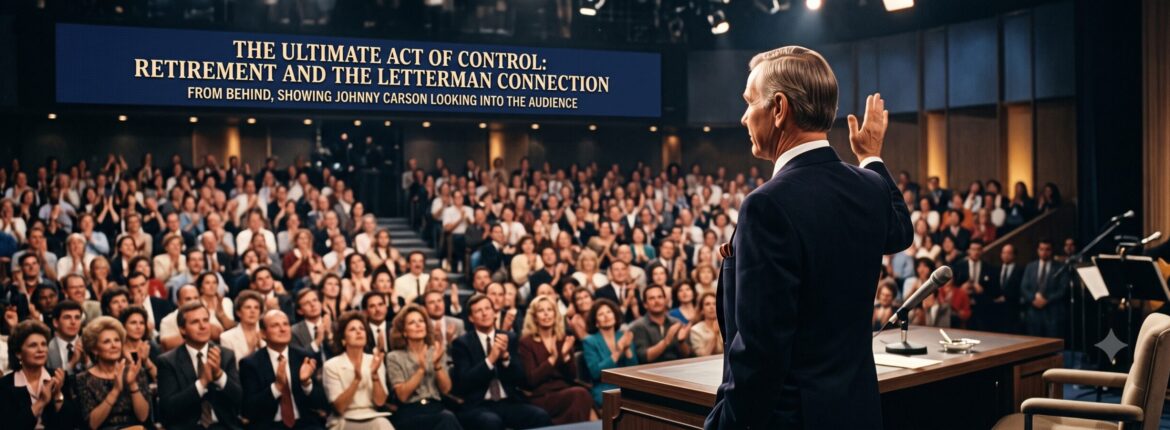
The Ultimate Act of Control: Retirement and the Letterman Connection
The definitive proof that Carson's entire life was governed by the need to control the narrative was how he ended it. Unlike almost every other legendary entertainer who chased the spotlight until they were forced off the stage, Carson walked away in May 1992 at the absolute peak of his power, ratings, and cultural relevance.
He did not just retire; he vanished. He pulled the ultimate preemptive strike against a changing media landscape:
- Preventing the Fade: By leaving on top, he ensured the world would never see him grow irrelevant, slip in ratings, or be pushed out by a younger generation. He controlled the final edit of his legacy.
- The Fortress of Malibu: He retreated completely behind the walls of his razor-wired Malibu estate, severing ties with the entertainment industry and refusing all interviews, memoirs, and public appearances. The firewall was now absolute.
Yet, an RSD brain never truly stops craving the dopamine hit of external validation; it simply demands that the validation arrive with zero interpersonal risk. This baseline need for affirmation explains one of the most fascinating secrets of Carson’s retirement: he routinely wrote and stealthily fed monologue jokes to David Letterman.
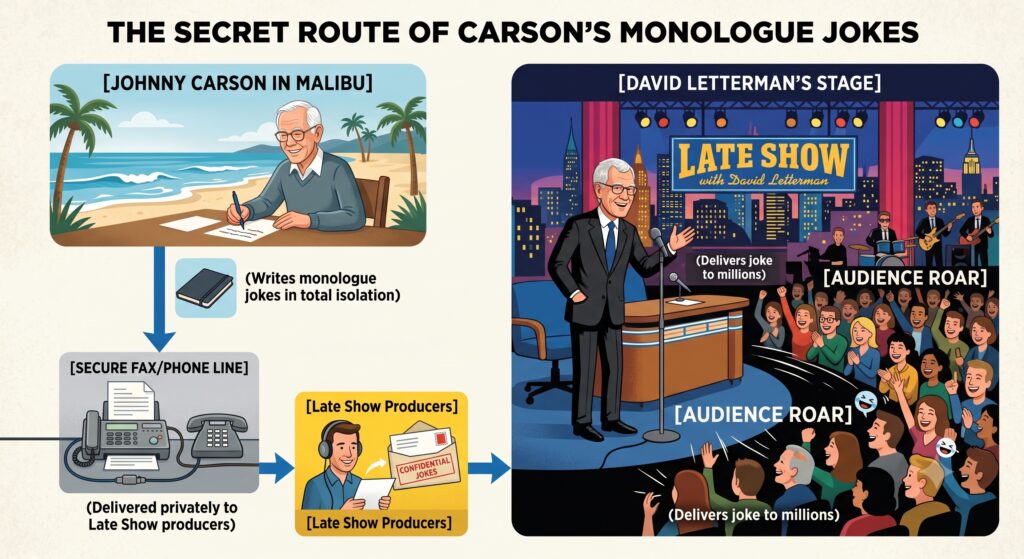
This brilliant proxy arrangement allowed Carson to perfectly balance his deep neurodivergent vulnerabilities with his lifelong addiction to public approval:
- The Zero-Risk Monologue: If a joke landed a massive laugh, Carson could sit in his living room and quietly claim the victory. If a joke bombed, it was Letterman’s face on the screen bearing the rejection. It was the ultimate, risk-free extraction of positive judgment.
- Affirmation Without Exposure: By watching Letterman kill with his material on The Late Show, Carson received ironclad proof that he was still the funniest man in America. He got the validation he desperately needed, but it was safely laundered through another performer.
This transactional comedic bond set the stage for his rare, legendary cameos on Letterman's show. Carson viewed Dave as his rightful heir—and more importantly, he knew Letterman revered him with protective, almost filial devotion. When Carson walked out to a thunderous standing ovation, sat in Dave's chair, took a single drag from a cigarette, and walked off without saying a single word, he proved that even in retirement, he could orchestrate the ultimate moment of public adoration—completely on his terms, completely under his control, without ever risking a single second of real vulnerability.
The second the cameras went dark, the man who effortlessly controlled the emotional temperature of an entire nation would slip out the backstage door in total silence, returning to the safety of isolation—proving that the highest-paid entertainer in the world was, at his core, a man building a fortress to survive the terrifying, unpredictable sting of the world.