
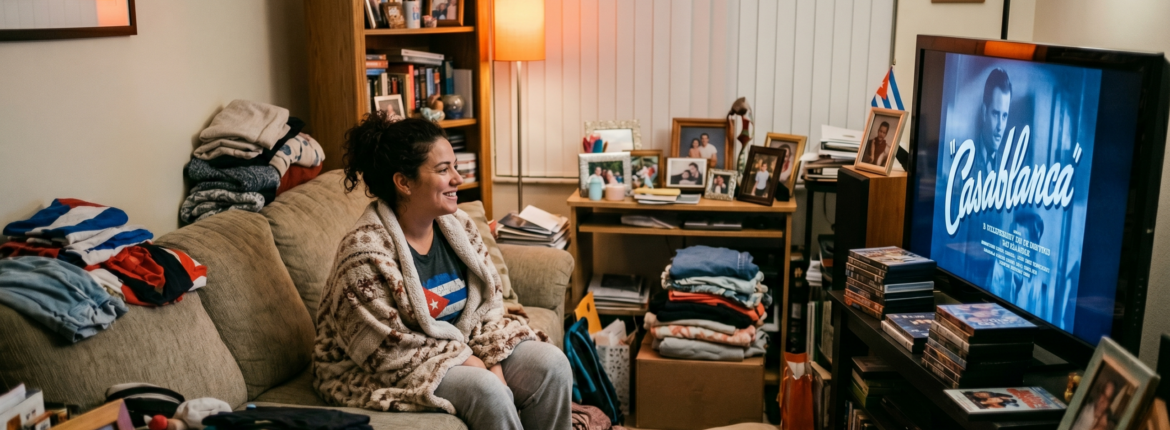
When a spouse carries a heavy, unaddressed cocktail of undiagnosed OCD, Inattentive ADHD, and childhood trauma inflicted by a family sexual predator, their relationship with physical space changes entirely.
For someone with this specific neurological and traumatic history, hoarding and living alone for twenty years are not random eccentricities—they are brilliant, desperate survival strategies. The physical environment becomes an externalized manifestation of an internal defense network.
1. The 21-to-40 Solitude: Constructing the Invisible Fortress
Living alone from age 21 to 40 is a profound coping mechanism designed to solve three distinct crises at once:
- The Trauma Defense (The Predator Variable): When a child is victimized by a sexual predator within their own family, their foundational sense of safety is shattered. The world is coded as fundamentally unsafe, and people—especially those close to them—are threats. Living alone for two decades creates a absolute, non-negotiable physical perimeter. If no one else has access to the space, no one can catch them off guard, cross a boundary, or perpetrate harm. Solitude is the ultimate armor against the repetition of trauma.
- Masking the Inattentive ADHD Chaos: Inattentive ADHD makes managing the administrative and physical demands of daily life an exhausting, chaotic struggle. When an ADHDer lives with others, they are forced to constantly "mask" their executive dysfunction to avoid criticism or the painful sting of Rejection Sensitive Dysphoria (RSD). Living alone removes the audience. It allows her to let her environment reflect her internal state without the constant threat of judgment or shame.
- Unregulated OCD Rituals: Undiagnosed OCD demands rigid control to alleviate mounting, internal anxiety. When living entirely alone, she could engage in whatever compulsions, organizational systems, or hoarding patterns she needed to keep her anxiety at bay, without anyone questioning her or disrupting the delicate order she built to survive.
2. Sentimental Hoarding: The Fusion of ADHD and Trauma
It is crucial to note that she isn’t hoarding "trash." She is keeping everything she has ever bought. This specific behavior is a direct collision between the cognitive deficits of Inattentive ADHD and the emotional deficits of childhood trauma.
- The ADHD Object Permanence & Decisional Deficit: Inattentive ADHD makes processing objects incredibly overwhelming. Getting rid of an item requires a complex series of executive functions: categorization, evaluating utility, predicting future need, and executing a decision. For an ADHD brain, this causes immediate cognitive fatigue and decisional paralysis. Furthermore, ADHDers struggle with object permanence ("out of sight, out of mind"). Every object she has bought acts as a physical anchor for a memory; getting rid of the object feels like permanently erasing a piece of her own timeline.
- The Trauma Scarcity Mindset: Survivors of childhood abuse often develop a deep-seated, chronic sense of internal emptiness and structural instability. Material possessions are stable. Unlike people—who are unpredictable, dangerous, and prone to violating boundaries—the items she bought belong completely to her. They cannot hurt her. They cannot betray her.
- The OCD Compulsion: Every object represents a perceived responsibility or an anxious "what if" scenario ("What if I need this later?", "What if discarding this causes something bad to happen?"). The act of keeping the object serves as a direct OCD compulsion to temporarily neutralize the overwhelming anxiety of letting it go.
3. The Home as a Living "Safe Place"
The reality she manages at home is not just her safe place—it is her absolute sanctuary, her externalized prefrontal cortex, and her emotional baseline.
When she enters her home, she steps into a world where she has successfully achieved what her childhood denied her: total control.
The items filling the space do not represent clutter to her; they represent a protective insulation layer between her fragile internal world and a hostile external universe.
When she is home, she knows exactly where everything is, what it represents, and who has touched it. Every object she bought is a physical record of a moment where she had agency, financial independence, and choice—things a trauma survivor deeply craves.