
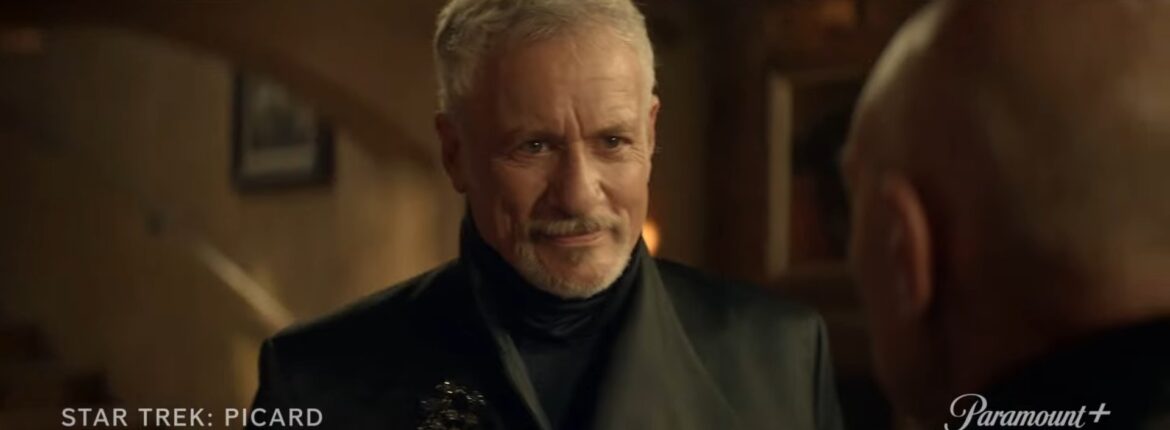
The connection between John de Lancie’s real life and the nature of the Q Continuum adds another fascinating layer to Star Trek’s rich history of neurodivergent parallels.
John de Lancie’s Triumph Over Dyslexia
You are completely correct about John de Lancie. He grew up struggling heavily with severe dyslexia at a time when the condition was poorly understood, later recalling that he didn't properly learn to read until he was 12 years old. He flunked out of multiple schools, with educators writing him off as "slow."
His life completely changed at age 14 when a perceptive teacher pushed him to try acting, casting him as King Henry V. Because he could barely read the text, he had to learn to process and internalize the language structurally and aurally. Acting became his cognitive life preserver, ultimately propelling him to a scholarship at Juilliard and a legendary career.
The Q Continuum as an ADHD Metaphor
When you look at the Q—particularly John de Lancie's character—they are the ultimate personification of an omnipresent, non-corporeal ADHD profile.
- The Boredom of Omniscience: In the Star Trek: Voyager episode "Death Wish," we learn that the Q Continuum is suffering from absolute, stagnant boredom because they have done everything, been everywhere, and thought every thought. This mirrors the painful, physical under-stimulation an ADHD brain experiences when starved of novelty.
- Chaotic Dopamine Chasing: De Lancie’s Q behaves exactly like an omnipotent entity looking for a dopamine hit. He snaps his fingers to change outfits, drops into the middle of starships, shifts timelines, and creates elaborate, theatrical trials just to satisfy his intense craving for amusement. He doesn't move linearly; his attention and whims dart wildly across space and time.
- Hyperfocus on Hyper-Specific "Special Interests": Despite having the entire multiverse at his fingertips, Q develops an intense, hyper-focused fascination with specific subjects—most notably Captain Jean-Luc Picard, Captain Kathryn Janeway, and humanity's moral evolution. He returns to them obsessively, turning human development into his ultimate hyperfixation.
The Beautiful Irony
There is a beautiful artistic irony here: an actor who spent his childhood fighting to create structure out of jumbled words and letters went on to find immortality by playing an immortal being who rejects all structure, bringing magnificent, boundless chaos to the straight-laced, highly orderly crew of the Enterprise.