
In the field of modern psychiatry, a fierce ideological battle is being waged over the neurodivergent brain. On one side stands the rigid, traditional medical model—personified by figures like Dr. Russell Barkley (whom many in the community sarcastically dub Dr. "Darkley"). This framework views ADHD strictly as a dark room of deficits, executive dysfunction, and behavioral failure. It treats the ADHD brain as nothing more than a "damaged or deficient" neurotypical brain.
As Dr. William Dodson poignantly observed without naming names:
"Some in my profession view people who have an ADHD style nervous system as being Neurotypical people who are damaged or deficient (without any apparent awareness of how hostile that attitude is)."
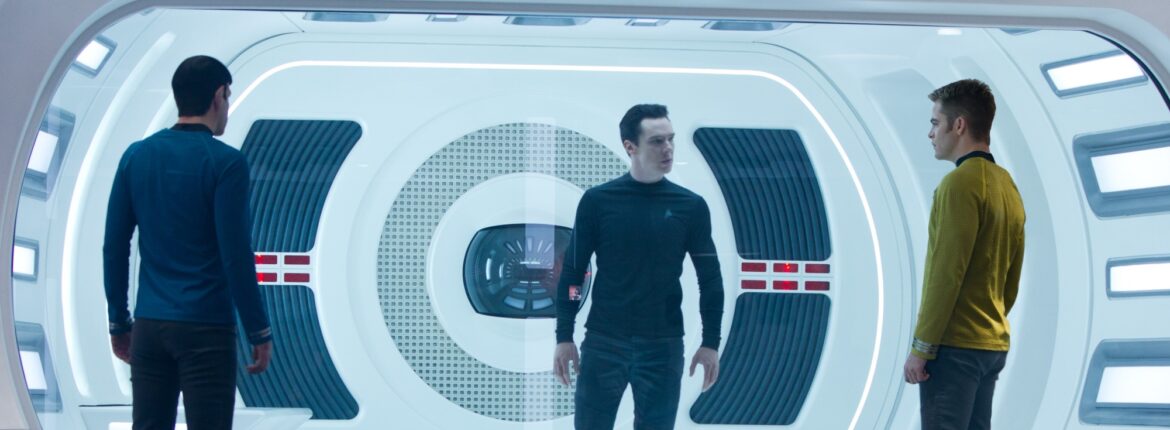
But out in the real world, away from the compliance-driven confines of cubicles and classrooms, that hostile narrative utterly collapses. Nowhere is this absolute failure of the clinical deficit model more visible than in the legendary brig scene of Star Trek Into Darkness.
When you look closely at that high-stakes sequence, you aren't watching "damaged" individuals struggling to adapt. You are watching a spectacular masterclass in neurodivergent synergy, driven by three powerhouse actors—Benedict Cumberbatch, Chris Pine, and Zachary Quinto—all absolutely nailing their roles by weaponizing their unique nervous systems.
1. Chris Pine’s High-Stakes Presence
Chris Pine has spoken openly about his own severe ADHD, and that wiring is the exact engine behind his portrayal of Captain James T. Kirk.
In the clinical manual, severe ADHD is characterized by impulsivity, a lack of linear focus, and risky decision-making. But on screen, Pine channels those exact traits into Kirk’s greatest strengths. Kirk is not a character who succeeds by following a rigid Starfleet handbook; he is a hyper-focused, rapid-fire improviser who thrives on high risk-tolerance and intense, split-second intuition. When Kirk confronts Khan in the brig, Pine brings a raw, high-voltage energy to the screen. It is the sound of an ADHD brain entering a state of total hyperfocus because the imaginative stakes are high enough to flood the system with the dopamine it craves.
2. Benedict Cumberbatch’s Emotional Precision
Opposite Pine is Benedict Cumberbatch's Khan, delivering a chillingly controlled monologue that culminates in an instant, perfect single tear.
For an unmedicated or high-voltage ADHD nervous system, emotions hit like a taser at full voltage every single time. Because the brain lacks the steady baseline filters to "dull" repeated triggers, an ADHDer accumulates a high-definition, somatic library of what profound grief, isolation, and high-stakes survival feel like in the body. When the director calls "Action," Cumberbatch doesn't have to intellectually manufacture sadness. His paper-thin barrier between thought and physical reaction allows him to open a direct valve to that raw emotional reservoir, forcing a genuine physical tear from his eye even while keeping his facial mask completely frozen.
3. The Neurodivergent Emotional "Ping-Pong"
Great ensemble acting is fundamentally about active listening and reacting. When you place multiple neurodivergent actors into a confined, intense space like the brig scene, their hyper-vigilant empathy doesn't just work in isolation—it multiplies.
Having an ADHD-style nervous system often means possessing a hyper-attuned social radar, designed to scan environments and instantly absorb micro-expressions, shifts in vocal tone, and unspoken tension. In this scene, the actors are actively feeding off each other’s intense, unfiltered nervous system responses. The crackling, electric chemistry between Kirk, Spock, and Khan becomes completely palpable to the audience because every actor in that space is dialed into the exact same high-frequency emotional wavelength.
Dismantling the Deficit Myth
To look at a cultural triumph of this magnitude and claim there are "no gifts" associated with the ADHD style of wiring is pure cognitive dissonance. It is the ultimate clinical malpractice of a diagnostic model that refuses to move its feet, even when its own narrative is being soundly destroyed by reality.
The brig scene in Star Trek Into Darkness proves that when you move the ADHD nervous system out of an environment designed for rigid compliance and drop it into an environment designed for creative intensity, the "disorder" entirely evaporates. What Dr. "Darkley" calls a deficit, the rest of the world calls lightning in a bottle.