
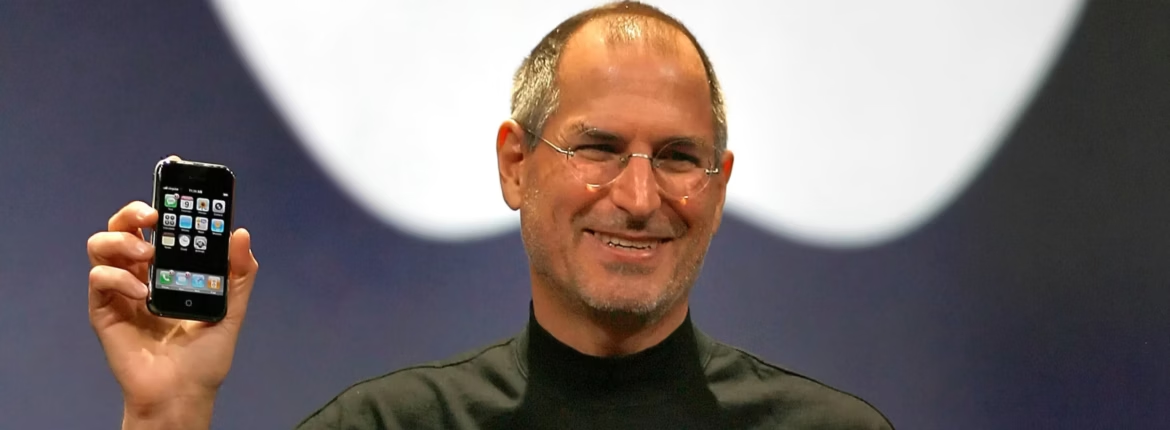
Steve Jobs’s second act at Apple is the ultimate case study in what happens when an intense, "Michelin Star" visionary learns better behavioral regulation, yet remains fundamentally driven by unfettered Rejection Sensitive Dysphoria (RSD).
When Jobs returned to Apple in 1997, he was older, wiser, and more calculated. He had learned the institutional scaffolding required to run a massive company. But beneath that polished corporate exterior lay the same raw, hyper-vulnerable neurological wiring.
Instead of outgrowing his RSD, Jobs simply got better at engineering his entire environment to insulate himself from it.
The Unregulated Outbursts: When the Armor Cracked
While Jobs could maintain an aura of supreme, Zen-like control during a product launch, any unexpected, unscripted feedback in the "quiet" of an interview or private meeting could instantly trigger an intense fight-or-flight response.
If an interviewer asked a question that felt critical, dismissive, or skeptical of his vision, Jobs wouldn't just give a PR-friendly answer. His amygdala would interpret the skepticism as an existential assault, resulting in sudden, emotional reactions:
- Storming Out: Jobs famously walked out of interviews, cut off journalists mid-sentence, or abruptly demanded that cameras be turned off if he felt a line of questioning was "stupid" or hostile.
- The Reality Distortion Field as a Shield: His legendary "Reality Distortion Field"—the ability to convince himself and others of a completely alternative reality—wasn't just a sales tactic. It was a cognitive defense mechanism. If the world offered feedback that implied failure or rejection, his brain instantly rewrote the narrative to protect itself.
The Macworld Audience Engineering: Defending Against the "Judgy" Gaze
Nowhere is Jobs’s structural compensation for RSD more brilliantly illustrated than in the exact physical layout of his iconic Macworld and Apple Keynote presentations.
To the casual viewer, a Steve Jobs keynote was a masterclass in effortless charisma. In reality, it was a hyper-controlled psychological sanctuary designed to protect a vulnerable ego from the paralyzing threat of negative feedback.
Jobs knew that standing on a stage meant exposing himself to judgment. If he looked out into the crowd and saw a prominent journalist frowning, crossing their arms, or shaking their head, the resulting spike of RSD could completely derail his focus and trigger a mid-presentation spiral.
To neutralize this threat, Apple intentionally engineered the seating and lighting architecture of the auditorium:
| Seating Zone | Audience Type | Environmental Design | Psychological Function |
| Rows 1 to 10 | Hardcore Apple Employees & Loyalists | Brightly Lit: Positioned directly in Jobs's immediate line of sight. | The Positive Echo Chamber: No matter where Steve looked, he was met with nodding heads, rapturous smiles, and unadulterated adoration. It provided an instant, continuous dopamine loop. |
| The Back Rows | Skeptical Journalists & Tech Critics | Pitch Black / Dimly Lit: Placed far behind the buffer zone of employees. | The Blind Spot: The "judgy" journalists were cast into darkness. Jobs literally could not see their cynical or indifferent facial expressions, preventing his brain from registering any visual cues of rejection. |
The Neurological Hack: Jobs couldn't stop his brain from overreacting to rejection, so he designed the physical space to ensure rejection was visually impossible to perceive. He built a human firewall of validation between his eyes and the critics.
The Genius of Managed Dysregulation
This is the bridge between Michael Jordan and Steve Jobs. Jordan manufactured enemies to trigger his focus; Jobs manufactured entire physical and corporate architectures to keep his vulnerability at bay.
It proves that the "Michelin Star Mind" doesn't necessarily achieve greatness by becoming neurotypical or "fixing" its emotional dysregulation. Rather, greatness happens when the individual becomes a master architect—building empires, choosing specific teams, and even manipulating auditorium lighting—just to create a world safe enough for their brilliant, hyper-sensitive brain to operate.