
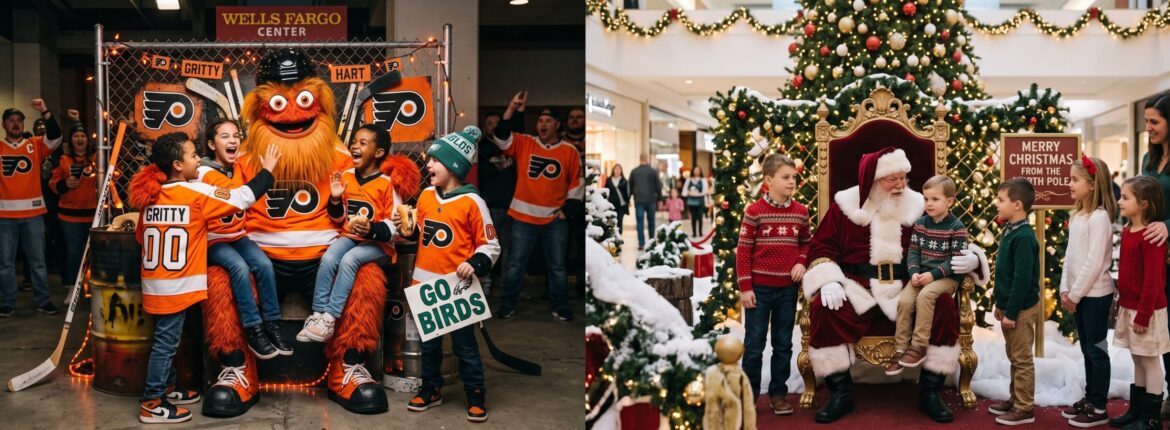
Study: Gritty/Santa Paradox Proves Philadelphia Children Possess Distinct, Unmapped Neurotype
PHILADELPHIA, PA — In a groundbreaking report released Tuesday by the imaginary Delaware Valley Institute for Advanced Behavioral Studies, researchers announced a major breakthrough in human development: children born within a 15-mile radius of City Hall do not process authority, terror, or jolly holiday figures through traditional human neural pathways.
The landmark paper, titled "Pelting St. Nick vs. Hugging the Chaos Demon: A Longitudinal Study of Southeastern PA Brain Chemistry," asserts that Philadelphia youth exhibit a unique neurodivergence defined entirely by how they react to two specific cultural figures: Santa Claus and Gritty.
The Control Group: The Santa Baseline
For decades, developmental psychologists relied on standard global baselines:
- Typical Human Baseline: Santa Claus represents warmth, generosity, and seasonal joy. A toddler sees Santa and experiences mild awe, magical wonder, or standard situational shyness.
- The Philadelphia Delta: In 1968, when a substitute Santa walked onto the field at Franklin Field, thousands of local youth and their parents instantly calculated his velocity, trajectory, and wind resistance before unleashing an atmospheric barrage of packed ice and snowballs.
"Standard childhood development models assume young human brains naturally gravitate toward clean, cheerful figures who offer free toys," noted lead researcher Dr. Frank Hoagie. "The Philly brain, however, instantly flags unearned cheerfulness as an obvious scam. To a child from South Philly, a guy offering free gifts without asking for anything in return isn't a magical elf—he's a narc."
The Gritty Variable: Stimulus Overload as Comfort
The study reached its defining breakthrough during clinical trials involving Gritty, the 7-foot-tall, unblinking, googly-eyed orange monster introduced by the Flyers in 2018.
Researchers exposed toddlers from across North America to Gritty in a controlled environment:
| Region | Primary Subject Response | Secondary Behavioral Marker |
| Midwest | Immediate distress / crying | Attempting to hide behind parent |
| New England | Mild panic / disorientation | Demanding to see a supervisor |
| Philadelphia | Instinctive, unprompted high-five | Asking Gritty if he wants half a pork sandwich |
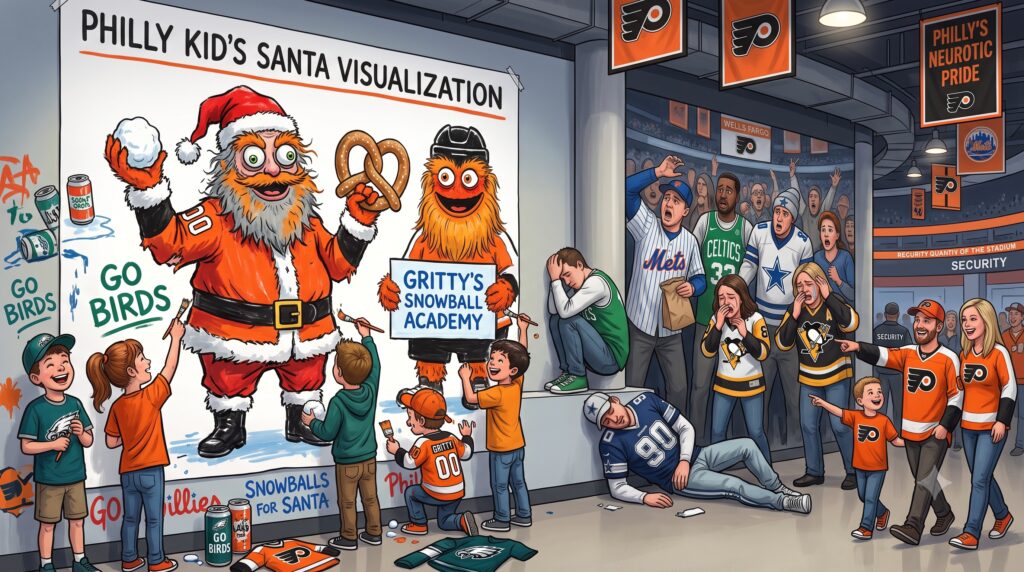
"Any normal sensory processing system should trigger a flight-or-fight response when confronted by a chaotic orange apex predator shooting hot dogs out of a pneumatic cannon," Dr. Hoagie explained. "Instead, Philadelphia children experience immediate, profound parasympathetic calm. Their EEG readings flatline into pure bliss."
           NEURAL RESPONSES TO UNHINGED CHAOS

Non-Philly Child:  [ Panic ] ---> [ Avoidance ] ---> [ Therapy ]
Philly Child:      [ Chaos ] ---> [ Affirmation ] -> [ "Go Birds" ]
Key Diagnostic Criteria of "Philly Spectrum" Processing
According to the study, local pediatricians can now diagnose this unique regional neurodivergent profile before age three based on four core criteria:
- Selective Sensory Gating: Complete immunity to screeching subway brakes, loud blaring horns, and roaring stadium crowds, paired with immediate sensory overload if someone speaks in a polite customer-service voice for longer than four seconds.
- Inverted Fear Response: Terrified of slow drivers in the left lane; completely unbothered by a chaotic Muppet tumbling headfirst off an ice zamboni.
- Echolalia Specifics: Repeating phrase patterns strictly limited to "Watch where you're goin'," "Gimme a shorti," and "Go Birds."
- Hyper-Specific Social Rules: Aggressively affectionate toward complete strangers, provided that affection is expressed exclusively through light verbal hostility and shared cynicism.
Conclusion
The research team concluded that Philadelphia's unique cultural ecosystem isn't a result of poor manners, but rather a highly specialized, highly adaptive evolutionary trait.
"In a world filled with artificial politeness, these kids are born with a built-in, industrial-grade BS detector," said Dr. Hoagie. "They don't want a perfect, sanitized fantasy. They want a massive, orange chaos-goblin who accurately reflects the sensory noise inside their own fast-moving brains. Honestly? It might actually be the healthiest coping mechanism in modern society."