
The Nomadic Brain Did Not Disappear
For thousands of generations, human survival depended on the ability to navigate unpredictable environments. Hunter-gatherer societies required individuals who could detect danger, recognize opportunities, respond to sudden changes, and lead others through unfamiliar territory.
Consider the characteristics that might make someone an effective leader of a mobile hunting party: heightened environmental awareness, rapid decision-making, exploratory curiosity, physical endurance, novelty seeking, and the willingness to act when hesitation could mean failure.
Today, many of these characteristics are associated with ADHD.
This does not mean ADHD evolved specifically to create successful hunter-gatherers. That reverses the evolutionary argument. A more interesting possibility is that neurological characteristics we now associate with ADHD already existed and happened to confer advantages in certain aspects of nomadic life. In other words, the environment rewarded characteristics that were already present.
A successful hunting-party leader might need to recognize danger before anyone else, change direction immediately when circumstances demanded it, and commit to action without becoming paralyzed by uncertainty. Individuals with these characteristics might also have been valuable as scouts, explorers, and defenders of their communities.
But then something extraordinary happened. Human beings increasingly settled down.
Agriculture transformed the organization of civilization. Permanent settlements grew into towns, towns developed into cities, and cities became the centers of increasingly powerful political states. The dominant demands of everyday life changed as agricultural communities required predictable schedules, repetitive labor, long-term planning, and the maintenance of established routines.
Yet the neurological characteristics that had been useful in mobile, unpredictable environments did not simply disappear. The emerging civilizations still needed them.
They needed soldiers.
From the Hunting Party to the Defensive Line
The transition to agricultural civilization created an interesting paradox. Although much of a settled population might spend its days cultivating fields, maintaining buildings, and producing goods, the community itself remained vulnerable to raids, territorial disputes, and invasion.
Someone had to defend it, patrol its boundaries, explore unfamiliar territory, identify approaching threats, and confront hostile groups. The characteristics that could make someone particularly effective in a mobile hunting party might also make that individual valuable as a soldier.
A hunter tracking a dangerous animal and a scout searching for an approaching enemy both benefit from environmental vigilance, rapid pattern recognition, and the ability to respond to unexpected circumstances. A hunting-party leader coordinating several individuals during a pursuit and a military commander directing a small unit through dangerous terrain face related demands: maintain awareness, anticipate movement, recognize opportunity, and act decisively.
Even impulsivity, so frequently described as a neurological deficit in modern society, could become an advantage in situations demanding immediate physical action. The soldier who hesitates while contemplating every possible consequence may be less effective in certain moments of direct confrontation than the individual who recognizes the opportunity and acts.
This is not to suggest that every soldier possessed ADHD or that an entire military could function through impulsivity alone. Effective armies required discipline, preparation, logistics, organization, and careful strategic thinking. But different military roles rewarded different neurological strengths.
The calculating general planning an extended campaign was not necessarily operating through the same cognitive strengths as the scout, raider, or frontline soldier who excelled during sudden, immediate danger. And the most effective battlefield commander might have been someone capable of combining both: developing a strategy beforehand and responding instinctively when the encounter became unpredictable.
The emerging military structure therefore offered a new environment in which characteristics associated with ADHD could remain useful.
The nomadic brain did not have to disappear when civilization became sedentary. Some of its characteristics could find a new occupational home in the military.
When Defenders Became Conquerors
As settlements accumulated wealth, resources, and political power, warfare was no longer confined to defending existing territory. Kings, emperors, and ambitious political leaders increasingly sought to acquire territory belonging to others. Armies became instruments of conquest, requiring large numbers of people willing to leave familiar surroundings, travel great distances, confront unfamiliar environments, and expose themselves to extraordinary physical danger.
The political decision to conquer might originate with a ruler seeking wealth, land, tribute, or strategic advantage. But the individuals carrying out those campaigns had to endure the uncertainty and danger of the expedition itself.
This distinction is central to my hypothesis.
The emperor directing a campaign from his palace did not necessarily possess the same behavioral characteristics as the soldier who found excitement, purpose, and immediate engagement in marching into unfamiliar territory. The soldier's daily experience could resemble an extreme, militarized expression of the exploratory life that had characterized much of human history.
Constant movement, unpredictable surroundings, physical challenges, immediate rewards and consequences, competition, danger, group loyalty, and an ongoing requirement to respond to events unfolding in the present.
For individuals with certain ADHD-associated characteristics, such environments might have offered unusually powerful engagement.
Of course, many ancient soldiers were conscripted, compelled by economic necessity, or forced into service. Military participation was not always voluntary, and an attraction to exploration does not imply an attraction to violence. Nevertheless, the possibility remains that individuals possessing particular combinations of novelty seeking, impulsivity, physical courage, and high responsiveness to danger were disproportionately attracted to, retained in, or rewarded within certain military roles.
If so, civilization might have created a mechanism that selectively exposed those individuals to repeated mortal danger.
And that leads to the darker part of this evolutionary hypothesis.
The Genetic Cost of Being Useful
What happens to an inherited neurological characteristic when the individuals expressing it are repeatedly recruited into occupations with unusually high mortality?
The conventional evolutionary mismatch explanation proposes that characteristics once advantageous in ancestral environments became less beneficial as human societies changed. But there is another possibility.
What if some ADHD-associated traits remained useful to civilization, but civilization repeatedly placed the people expressing them in positions where they were disproportionately likely to die?
Under this hypothesis, the reduction of ADHD-associated genetic variants would not necessarily result from their becoming useless. It could result, in part, from their continued usefulness in exceptionally dangerous occupations.
An individual could be highly valuable to the survival of a settlement while simultaneously facing a greater likelihood of dying before reproducing. Across hundreds of generations, even relatively modest differences in reproductive survival could alter the genetic composition of a population.
The Historical Numbers: Warfare and Attrition
Ancient Greek warfare provides an illustration of how substantial that mortality could become.
Historian Peter Krentz's estimates of classical Greek hoplite battles suggest that the victorious army suffered approximately 5% fatalities on average, compared with approximately 14% for the defeated army.
Those percentages become especially significant when considered across repeated campaigns. Imagine a group of 1,000 soldiers who experience ten battles, each with a 5% fatality rate among those remaining.
Under this simplified model, ten battles at 5% mortality would eliminate approximately 40% of the original force. Ten battles at 14% mortality would eliminate approximately 78%.
These figures do not represent the actual survival history of a particular ancient army. They demonstrate how repeated exposure compounds mortality, even when an individual battle does not appear especially catastrophic.
The long-term consequences become more striking when we examine Sparta.
Ancient sources suggest that the number of full Spartan citizens declined from approximately 8,000 around the Persian Wars to fewer than 1,000 by Aristotle's era. That represents a decline of at least 87.5% in the citizen population across roughly two centuries.
The decline had multiple potential causes, including economic inequality, restrictive citizenship practices, demographic changes, and military losses. However, a 2018 analysis in Klio argued that repeated battlefield attrition could have contributed substantially to Sparta's demographic collapse.
No one can reasonably attribute that population decline to ADHD. But Sparta demonstrates something relevant to the hypothesis: a society that organizes itself around military service can suffer enormous demographic losses within the population responsible for providing its warriors.
If inherited behavioral characteristics influenced which people entered the most dangerous roles, repeated losses might create selection pressures extending beyond the battlefield.
What Ancient DNA Tells Us
The genetic evidence makes this question particularly intriguing.
In May 2020, Paula Esteller-Cucala and colleagues published Genomic Analysis of the Natural History of Attention-Deficit/Hyperactivity Disorder Using Neanderthal and Ancient Homo sapiens Samples in Scientific Reports.
Their investigation examined the historical distribution of genetic variants associated with ADHD, using ancient human genomes alongside modern genetic association data. Their results indicated that the frequency of ADHD-associated risk variants had declined over tens of thousands of years.
The study's evolutionary model estimated a decline in ADHD-associated allele frequencies across approximately 1,552 generations, representing roughly 45,000 years of human history.
ADHD is influenced by numerous genetic variants rather than a single gene, and ancient genetic measurements cannot tell us what percentage of prehistoric individuals would have met modern ADHD diagnostic criteria.
The researchers identified long-standing selective pressures, including evidence that the decline began well before the widespread adoption of agriculture. This is particularly interesting because it means the evolutionary story cannot be reduced to a single event in which farmers displaced hunters. The selective pressures were already operating.
The investigators interpreted their findings as broadly compatible with evolutionary mismatch theories, but the research did not establish warfare as a cause. My hypothesis proposes an additional potential mechanism: differential mortality among individuals drawn into dangerous military roles.
The relevant question is not whether agriculture alone caused ADHD-associated variants to decline. It is whether the changing social organization of human populations, including the emergence of organized warfare, altered the survival and reproductive opportunities of people carrying particular combinations of inherited behavioral characteristics.
Attrition, Survival, and the Reproductive Paradox
Warfare did not affect everyone equally. Some soldiers died young, others survived repeated campaigns, and some returned to their families while others settled in conquered territories.
Historically, military conquest also involved the forced displacement, enslavement, and sexual exploitation of conquered populations. These circumstances create competing evolutionary pressures.
A young soldier killed before reproducing would transmit none of his genetic variants to future generations. A surviving soldier who fathered numerous children could transmit those variants more widely, including across geographic boundaries that might otherwise have separated populations.
Consequently, warfare could theoretically have operated in two directions simultaneously. It could reduce the reproductive contribution of those who died while increasing the reproductive contribution of some survivors.
Population genetics provides evidence that certain historical expansions involved strongly male-biased migration. For example, a 2017 ancient-DNA study reported an estimated five to fourteen migrating males for every migrating female during later migrations from the Pontic steppe into central Europe, although those findings do not establish the behavioral traits of the migrants or the circumstances of reproduction.
For the ADHD hypothesis, the essential issue becomes whether military participation, combat survival, and reproductive success differed systematically according to inherited behavioral characteristics. The answer could involve both genetic depletion and genetic dispersal.
Civilization might have repeatedly removed some carriers of these traits from the reproductive population while allowing surviving carriers to spread them into new populations.
That would create a considerably more complicated evolutionary history than the simple displacement of the hunter by the farmer.
The Last Line of Defense
There is a modern parallel worth considering.
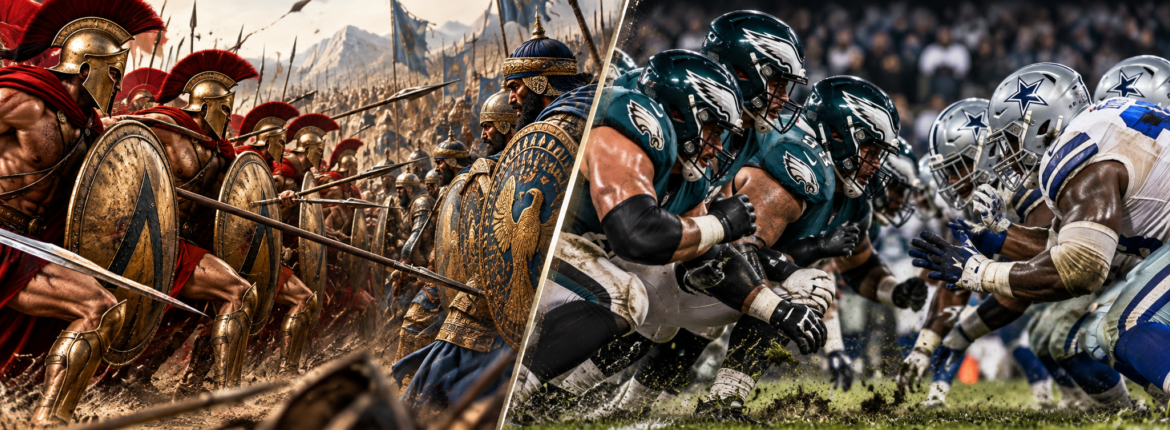
Organized team sports reproduce some of the environmental demands that once characterized hunting parties and military units: shared objectives, coordinated movement, territorial defense, rapidly changing situations, competition, immediate consequences, and reliance on teammates.
In soccer, the goalkeeper is literally the last line of defense.
As a former Division I goalkeeper, I understand the peculiar mental demands of that position. The goalkeeper must maintain awareness of a constantly changing environment while remaining prepared to act immediately when danger appears.
In indoor soccer, that heightened engagement can persist throughout an entire period because play rarely moves far enough away to eliminate the possibility of immediate involvement. The position rewards anticipation, rapid spatial processing, decisiveness, and the ability to commit to physical action without becoming immobilized by thoughts about injury.
These are precisely the characteristics I have repeatedly observed among goalkeepers with ADHD, and this is not an observation based on a handful of encounters.
For thirteen years, I have made a habit of asking high-level soccer goalkeepers one simple question: "Are you ADHD?"
The consistency of their answers has been extraordinary. I can remember only one goalkeeper who answered no. More than 90% is a conservative estimate of the proportion who have answered affirmatively, and I believe the actual percentage among the goalkeepers I've encountered is higher.
One especially memorable encounter involved an extraordinarily talented high school goalkeeper who was also gifted in mathematics. After watching him perform, I asked him the question.
"Are you ADHD?"
His answer was almost matter-of-fact.
"Well, yeah."
That response was entirely consistent with what I had been hearing from outstanding goalkeepers for more than a decade. The pattern has left me increasingly convinced that the neurological characteristics associated with ADHD are disproportionately represented among high-level goalkeepers.
This is based on direct conversations rather than a formal prevalence study, but the repeated observation raises an intriguing question: Why would a position requiring constant vigilance, rapid anticipation, spatial awareness, immediate physical commitment, and extraordinary engagement attract so many individuals who identify as ADHD?
I suspect the answer lies in the neurological demands of the position itself.
A goalkeeper experiences something different from most outfield players. The goalkeeper's attention must remain distributed across a changing environment while continuously anticipating the possibility of an immediate threat.
In outdoor soccer, long periods of relative inactivity can be interrupted by sudden moments of extraordinary urgency. That sudden transition can produce an intense state of engagement.
In indoor soccer, the engagement is often sustained because the goalkeeper remains involved in directing play, intercepting clearances, organizing teammates, and preparing for rapid transitions. In my own experience, indoor soccer could produce an extended state of hyperfocus lasting virtually the entire period.
And during that state, the characteristics that are sometimes viewed as liabilities in ordinary life become valuable athletic assets.
The same vigilance that may be exhausting in a conventional classroom can become essential to an outstanding goalkeeper. The same impulsive responsiveness that might be criticized in an office can allow the athlete to commit to a save without conscious hesitation.
And the same attraction to intense, immediate challenges that can complicate routine academic work may help sustain extraordinary engagement in a demanding athletic environment.
This is also why I find the relationship between ADHD and team sports so interesting.
Recently, during an interview for a growing sports academy in the Orlando area, the headmaster asked me a remarkable question.
Did I think the majority of her student-athletes might have ADHD?
My response was immediate.
"I wouldn't be surprised."
The academy had grown from approximately 40 students to 150, and the headmaster's question reflected her observations of the young athletes attending the school.
Her question also captured something I have observed throughout my career in athletics and education: characteristics that can become liabilities in conventional classrooms may become assets in intensely engaging, fast-moving environments.
The sports team becomes a contemporary outlet for some of the same characteristics that might once have been valuable in hunting parties, scouting expeditions, and military units. The purpose has changed, but the behavioral demands sometimes overlap.
And unlike ancient warfare, athletics offers an opportunity to develop those characteristics without requiring people to risk their lives in conquest.
A Different Interpretation of Evolutionary Mismatch
The prevailing evolutionary mismatch explanation often emphasizes that modern environments are poorly suited to traits shaped by ancestral conditions.
But perhaps the explanation is incomplete.
What if some of those traits remained extraordinarily useful as human societies became more complex? What if agricultural civilizations didn't simply select against novelty seeking, rapid responsiveness, and exploratory behavior because those characteristics became less valuable?
What if those civilizations continued to depend on those characteristics for defense, exploration, military leadership, and conquest? And what if the occupations that rewarded those characteristics also exposed their carriers to disproportionately high mortality?
That leads to a different interpretation of the evolutionary history of ADHD-associated characteristics.
Perhaps civilization didn't simply outgrow the nomadic brain. Perhaps it repeatedly recruited that brain for some of its most dangerous work.
The resulting genetic history could reflect competing forces: differential survival, reproductive success, migration, and the repeated redistribution of inherited characteristics across populations.
The documented historical changes in ADHD-associated genetic variants provide an intriguing starting point. The proposed role of military attrition is a distinct explanation worth investigating.
Yet the central question remains compelling.
If a civilization depends on particular neurological characteristics to protect its settlements and expand its boundaries, what happens to the genetic distribution of those characteristics when the people expressing them are repeatedly sent into battle?
The answer might reveal that some characteristics modern society calls disabilities were never simply evolutionary leftovers. They may have remained valuable throughout the development of civilization, even as the environments that rewarded them became increasingly dangerous.
Testable Predictions
1. Military participation and inherited behavioral traits. Where historical and genetic evidence permits, populations with traditions of voluntary military service, exploration, or frontier activity may show associations between relevant inherited behavioral characteristics and military occupational selection.
2. Differential battlefield mortality. If carriers of particular ADHD-associated variants were disproportionately represented in high-risk military roles, repeated combat losses could produce measurable changes in variant frequencies across generations, after accounting for migration, population structure, and other selective pressures.
3. Survivorship and reproductive expansion. Surviving conquerors and military migrants may have increased the geographic distribution of some associated variants, potentially offsetting losses among soldiers killed before reproducing.
4. Ancient genomic comparisons. Ancient DNA sampled before and after periods of intense warfare may reveal changes in ADHD-associated polygenic variation. Comparisons would need to distinguish military selection from famine, disease, migration, and other demographic changes.
5. Modern athletic parallels. Athletes in positions requiring continuous environmental monitoring, rapid response, spatial prediction, and immediate physical commitment may exhibit different patterns of ADHD-associated traits than athletes in positions with different cognitive and physical demands.
6. Goalkeeper prevalence. Systematic research comparing ADHD diagnoses and ADHD-associated traits across soccer positions, competition levels, and age groups could determine whether the extraordinary concentration I've encountered among high-level goalkeepers is reflected in larger populations.
7. Environmental advantage rather than neurological deficiency. Individuals with ADHD-associated traits may demonstrate improved engagement and task performance in environments emphasizing immediate feedback, movement, competition, and meaningful challenges compared with repetitive, low-stimulation environments.
References
Esteller-Cucala, P., et al. (2020). Genomic analysis of the natural history of attention-deficit/hyperactivity disorder using Neanderthal and ancient Homo sapiens samples. Scientific Reports, 10, 8622. https://www.nature.com/articles/s41598-020-65322-4
Decety, N. (2018). When valor isn't always superior to numbers: Homoioi oliganthrôpia caused by attrition in incessant warfare. Klio, 100(3), 626–666. https://doi.org/10.1515/klio-2018-0125
Goldberg, A., et al. (2017). Ancient X chromosomes reveal contrasting sex bias in Neolithic and Bronze Age Eurasian migrations. Proceedings of the National Academy of Sciences. https://doi.org/10.1073/pnas.1616392114
Krentz, P. (1985). Casualties in hoplite battles. Greek, Roman and Byzantine Studies.