
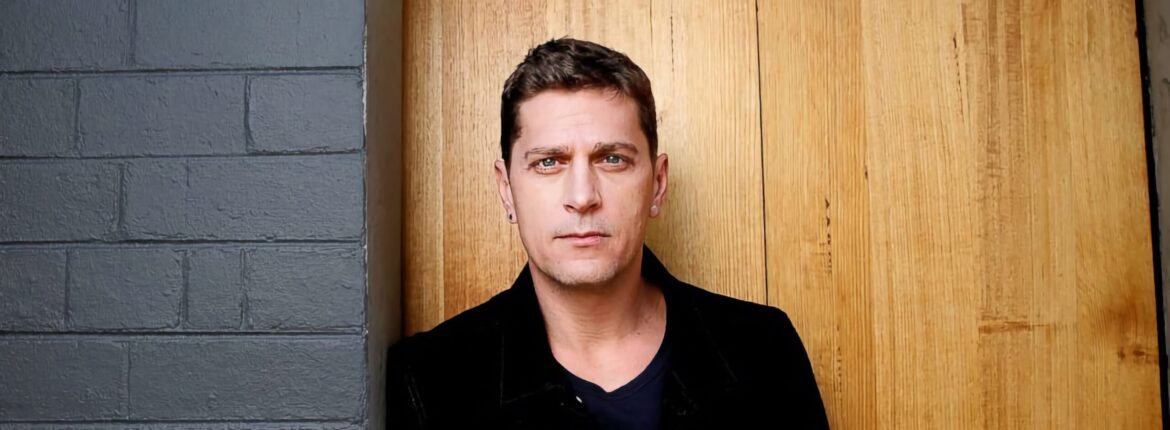
Pop-rock history is filled with artists who survived chaotic beginnings—musicians who struggled with anxiety, depression, substance use, restlessness, impulsivity, and the inability to fit comfortably inside ordinary institutions. It is also filled with artists who could barely organize the mundane parts of their lives while displaying almost frightening levels of organization inside the craft they loved. Rob Thomas belongs in that conversation.
Not because his life needs to fit neatly into a diagnostic box, but because the pattern across his biography is unmistakable: childhood instability, adolescent defiance, movement, risk, homelessness, enormous creative output, periods of extraordinary immersion, anxiety, panic, and an acute difficulty feeling comfortable in ordinary environments. Alongside those vulnerabilities sits a capacity to become extraordinarily functional whenever music supplies sufficient stimulation, meaning, structure, and urgency.
Then something else happens. He finds an anchor. Her name is Marisol, and that may be one of the most important parts of the story.
The Fractured Foundation
Thomas was born on a U.S. military base in West Germany and spent much of his youth moving between his mother’s home in Florida and his grandmother’s home in South Carolina. His parents divorced when he was young, his mother struggled with severe alcoholism, and genuine predictability was almost entirely absent from his early world. That matters because a child does not experience instability as an abstract concept; the nervous system registers it in real time, constantly calculating basic safety, adult mood, and whether to settle down or remain braced for impact.
For children already carrying restless, highly sensitive, novelty-seeking, impulsive, or otherwise neurodivergent traits, chronic instability becomes combustible. Neurodivergence and trauma do not have to be competing explanations; they actively interact.
The child brings a nervous system into the room. The room does something to it. And eventually that nervous system learns how to survive the room.
The adaptations that emerge are later labeled oppositional, impulsive, anxious, irresponsible, difficult, moody, defiant, or self-destructive. Those descriptions capture visible behavior while completely missing the developmental machinery underneath it. Thomas’s adolescence certainly became rough around the edges.
Defiance as Self-Preservation
Conventional schooling simply could not hold him. Thomas dropped out of Lake Brantley High School at seventeen, stepping into a life that bore zero resemblance to the expected transition to adulthood. Contemporary reporting describes stretches of homelessness, couch-surfing, sleeping on park benches, hitchhiking across Florida and South Carolina, and writing songs along the way. There was jail, alcohol, and later drugs—the trajectory of a restless young man seemingly incapable of staying inside the lanes society had paved for him.
It would be easy to turn this into the familiar redemption narrative where a troubled kid straightens out, learns discipline, and becomes successful. That framing misses almost everything interesting about the story.
Thomas did not suddenly learn how to sit still inside somebody else’s system. He found a system in which moving fast was useful.
The First Scaffold: Music
Thomas has often described songwriting as the first place where he felt capable and grounded. During those volatile early years, connecting with musicians, playing in bands, and writing seriously gave his nervous system something it actually wanted to return to. Music supplied immediate feedback, pattern recognition, emotional intensity, movement, collaboration, and creative autonomy. It offered rich social connection without the exhausting social performance demanded by traditional environments, presenting endless complex problems that could be explored indefinitely.
Most critically, songwriting converted emotional volatility into raw material. This was not a miraculous personality overhaul; it was environmental fit. The restless kid never disappeared; he simply found something worth being restless about. As he moved through local Florida bands to Tabitha’s Secret and eventually Matchbox Twenty, the writing, playing, and feedback loops tightened.
Instead of being ordered to suppress the engine, music gave it a transmission. The result was extraordinary output.
When Trauma Becomes Material
Thomas’s early catalog did not emerge in spite of his emotional history; much of the material came directly through it. “3AM,” for example, grew from his mother’s battle with cancer during his youth. Subsequent tracks continually circled insecurity, fractured relationships, alienation, mortality, and the uneasy gap between appearing functional and actually feeling whole.
This does not mean trauma magically produces art; trauma destroys plenty of people and leaves nothing remotely romantic in its wake. But an unusually capable songwriter found a reliable mechanism for converting chaos into form.
Verse. Pre-chorus. Chorus. Melody. Resolution.
Three and a half minutes.
Human experiences that had once arrived without structure could now be given absolute structure. That is a very different proposition.
The Binge
Alongside emotional candor sits another crucial dimension of Thomas’s creative life: sheer volume. He writes obsessively, often generating several albums' worth of finished songs just to discover the record he actually wants to make. Rather than sketching an idea and discarding it early, he routinely carries complete tracks all the way through to completion before deciding whether they hold water.
That volume challenges standard clinical assumptions that view executive function as a fixed internal reservoir where an individual either possesses organizational capacity or fails. Yet Thomas can repeatedly complete entire musical works that he ultimately shelves, demonstrating immense persistence whenever the activity itself supplies the regulation.
The real question is not whether the capacity exists. The question is what happens when the task supplies the regulation.
“Smooth”: The Nervous System Finds the Groove
The creation of “Smooth” is almost a perfect miniature of that process. When songwriter Itaal Shur brought in an initial musical foundation with lyrics that weren't clicking, Thomas was brought in to help reshape the track. Working at a rapid pace, he completely reconstructed the lyrics with the intention of pitching the vocal to someone else, reportedly eyeing George Michael as his first choice.
Thomas wasn’t writing generic Latin-pop imagery from an intellectual distance; he was writing straight from his life with Marisol Maldonado, the Puerto Rican woman who would become his wife. The language that emerged was intensely physical: heat, movement, skin, rhythm, sensuality, and weather. Marisol wasn’t just someone he returned to after the session; she was already inside the sensory vocabulary of the song.
That became apparent the moment Carlos Santana heard it. Santana recognized something distinct in the lyrics and told Thomas that a man could not have written those words unless he was involved with a Latin woman. Thomas told him that he was, and that woman was Marisol. Santana heard her before he even knew her name because Thomas had absorbed the sensory reality of the relationship so deeply that another artist could detect its origin through the phrasing.
And then came another accident of history. Thomas recorded the guide vocal simply so Santana could hear how the words locked against the rhythm, still imagining another singer taking the part.
Santana heard something else. The voice and the words belonged together.
Thomas stayed.
The Hit Was a Consequence
“Smooth” went on to become one of the most successful singles in the history of the Billboard Hot 100, trailing only Chubby Checker’s “The Twist” on historic anniversary rankings before The Weeknd’s “Blinding Lights” nudged it to number three. It was not merely Matchbox Twenty’s biggest hit; it became one of the biggest records in commercial music history. Yet reducing Rob Thomas’s songwriting to hit-making craftsmanship gets the causality completely backward.
His writing shares an unvarnished emotional honesty with Justin Hayward of the Moody Blues. Hayward has described his songwriting as cathartic, and much of the music he wrote during the Moody Blues’ Classic Seven albums reflects that process. These were not simply exercises in constructing memorable melodies or commercially appealing lyrics. They were deeply personal expressions of heartbreak, loneliness, grief, uncertainty, and the sometimes overwhelming experience of being human.
Hayward wrote “Nights in White Satin” at nineteen amid the raw collision of one relationship ending while another was beginning. The verses carry the ache of heartbreak, while the chorus reaches toward the emotional intensity of new love. It was a young man trying to make sense of what he was feeling, putting the unresolved experience into music before life had sorted out the pieces. The result became a generational standard, not because the emotions were carefully manufactured for an audience, but because they were recognizable to one.
That same cathartic quality runs through “Watching and Waiting,” with its profound sense of loneliness, isolation, and disconnection. Hayward has associated the song with the emotional aftermath of losing his father. The experience was intensely personal, but the feelings it expressed were not exclusive to him. Listeners who had never met Hayward could recognize their own grief and loneliness in the music.
Ray Thomas of the Moody Blues took that emotional honesty into darker territory with “Painted Smile.” The song presents a performer who can entertain an audience, sing, dance, and make people laugh while suffering from depression and emotional pain that the audience never sees. The entertainer is expected to keep performing, even when the person behind the painted smile is hurting.
The lyrics capture that contradiction directly:
I can sing
I can dance
Just give me a chance
To do my turn for you
There's a change I'll slip
But with stiff upper lip
I'll sing a song for you
Laughter is free
But it's so hard to be a jester
All the time
And no one's believing
I'm the same when I'm bleeding
And I hurt all the time deep inside
There is something devastating about that confession. The audience sees the entertainer, the energy, the smile, and the performance. What it cannot see is the depression and suffering behind them. The performer can deliver everything the audience came to experience while privately struggling to make it through the day.
That is the parallel with Rob Thomas. “3AM” emerged from the experience of his mother’s illness. “Unwell” expressed anxiety, alienation, and the difficulty of feeling comfortable in his own skin. These were not abstract subjects selected because they might resonate with a particular demographic. They were pieces of his own emotional life, expressed through the medium in which he felt most capable.
For certain neurodivergent performers, that relationship between emotional experience and artistic expression can be particularly significant. Anxiety, sensitivity, restlessness, and an unusual way of experiencing the world can influence not only how they navigate ordinary life, but also how they write, perform, and connect with an audience. Music can become a place to process experiences that resist ordinary explanation.
The Moody Blues were exploring much of that emotional territory decades before Rob Thomas. Hayward's heartbreak and loneliness, Ray Thomas's depression behind the painted smile, and Rob Thomas's anxiety and alienation share something more important than a musical genre. They reflect a willingness to place the heart and mind directly into the work.
A heart-and-mind dump.
When a songwriter is not manufacturing an emotional response but expressing something genuinely felt, the music can connect with people who have never shared the songwriter's particular circumstances. The experience may be personal, but the emotions are human. That is why “Nights in White Satin” can continue reaching listeners generations after Hayward wrote it, and why “Unwell” continues resonating with people who recognize their own struggles in Thomas's words.
The song begins as catharsis and becomes something communal. The songwriter puts an unresolved piece of himself into the music, and listeners discover that what seemed intensely private is something they understand.
The hit is a consequence of that connection, not necessarily the reason the song was written.
Marisol: A Center and a Core
Something even more consequential than a hit record was happening in Thomas’s life around that period: he met the woman who would become his wife.
Thomas met Marisol Maldonado during the chaotic explosion of Matchbox Twenty’s initial breakthrough. He was already an extraordinarily capable songwriter and performer, but success had not magically resolved the instability he carried from childhood. The restless young man who had spent years moving between homes, sleeping on park benches, and struggling to find somewhere he belonged was suddenly navigating an entirely different kind of chaos: fame, touring, commercial expectations, and the demands of an international music career.
Marisol brought something different into that world. By Thomas’s own description, she was a driven, Type A personality who knew how to take care of business. She became actively involved in managing his career and their foundation, handling responsibilities that required organization, consistency, and attention to the practical demands surrounding his creative life. She was not simply accompanying a successful musician. She was a capable partner helping build and sustain the life they were creating together.
That distinction matters because Thomas's musical competence was never the problem. He could write extraordinary songs, command an arena, and sustain remarkable creative output while still struggling with anxiety and the less predictable demands of ordinary life. The abilities that made him exceptional onstage did not automatically translate into an equally comfortable existence everywhere else.
Marisol's strengths complemented his. Where he could become consumed by the music, she could help maintain the structure around it. Where his early life had offered instability, their relationship offered continuity. She brought an organizational temperament that could handle practical responsibilities without expecting Thomas to approach every part of life the way she did.
And she was doing this while he was still finding his footing emotionally. The commercial success of Matchbox Twenty had arrived quickly, but the wounds and survival adaptations of his childhood had been accumulating for years. Becoming famous did not suddenly teach him how to feel safe, how to manage anxiety, or how to settle comfortably into a predictable adult life.
Marisol did not need him to become a different person before they could build something together. She understood that the restless, emotionally intense man who sometimes struggled with ordinary life was also the man capable of producing extraordinary music. Those were not two separate people.
She was not trying to make him less Rob Thomas. She was helping create a life in which he could remain Rob Thomas.
Decades later, Thomas still describes Marisol as his best friend and his “ride-or-die,” having spent remarkably little time apart across their marriage. In another interview, Thomas went considerably further, admitting he did not know whether he would still be alive without her.
Then came the line that anchors this entire study.
She gave him “a center and a core.”
That is more than companionship. It describes the experience of finding stability in another human being when stability has never been something you could take for granted.
Marisol was not simply someone who loved his music, shared his success, or understood his personality. She was a partner whose own strengths helped provide the continuity and practical grounding that his earlier life had lacked.
And that brings us to the distinction at the heart of this story.
The Anchor
An anchor does not supply a ship with its engine, its navigation, or its destination. It provides stability when the surrounding conditions threaten to carry it somewhere it never intended to go.
Marisol did not write Rob Thomas's songs. She did not give him his ear, his melodic instincts, his lyrical vulnerability, his stage presence, or his ability to take emotional debris and turn it into something millions recognize as their own. Those abilities were already his. What she helped provide was a stable foundation around the human being who possessed them.
That stability was both emotional and practical. It meant having someone who understood his strengths without demanding that those strengths eliminate his vulnerabilities. It meant sharing the operational responsibilities of a complicated life rather than expecting the artist to become equally proficient at every task simply because he was brilliant at his craft.
There is a meaningful difference between a companion and an anchor. A companion may share your interests, your adventures, your intensity, and even your chaos. An anchor provides something different: a dependable point of stability when the environment becomes overwhelming or the internal machinery begins to wobble.
The distinction is not about one person being superior to another. It is about what a particular relationship provides and what a particular person needs.
For Thomas, Marisol appears to have supplied something his musical success alone could never guarantee. His career gave him purpose, stimulation, creative autonomy, and a place where his unusual abilities could flourish. His marriage gave him continuity and a partner capable of handling parts of life that did not come as naturally.
This is where external executive function becomes something much more interesting than a clinical accommodation. Human beings routinely distribute responsibilities according to their strengths. One person anticipates problems, another solves them in real time. One handles logistics, another generates ideas. One maintains continuity while the other thrives on novelty.
We accept these arrangements in professional environments without hesitation. Successful artists have managers, producers, agents, technicians, and entire teams coordinating the practical demands of their work. Nobody suggests that a musician is less talented because someone else negotiates the contracts or organizes the tour.
Yet in personal life, we frequently turn the same division of responsibilities into a moral judgment. We ask why someone cannot manage everything independently, as though needing another person's strengths somehow invalidates their own.
Marisol's organizational abilities did not diminish Thomas's independence or accomplishments. They helped make his extraordinary creative life more sustainable.
The goal of scaffolding is not normalization. It is not about sanding down an unusual human being until they conform to conventional adulthood so everyone around them can finally relax. The goal is access: What conditions allow this specific nervous system to access what it does extraordinarily well without constantly being overwhelmed by what it does poorly?
Thomas already had the engine. Music gave the engine a road.
Marisol gave the man an anchor.
And Then the Roles Changed
There is an additional reason the anchor metaphor should not be mistaken for a simplistic story about an organized wife managing a chaotic husband: life changed.
Marisol developed serious chronic health problems. The woman who had once thrived as a driven Type A personality—managing Thomas’s career and steering their foundation—increasingly needed assistance herself. Thomas became a primary caregiver, managing medications and complex treatments on tour, checking on her, walking out onto an arena stage to perform for thousands, handling major commercial obligations, and immediately returning to the bus to resume caregiving.
This is where their relationship becomes especially revealing. The man whose early life had been defined by instability was now providing continuity and practical support for the woman who had helped provide those things for him. The responsibilities were different, the circumstances were different, and the demands were enormous. But the relationship had never been built on the assumption that only one of them possessed something valuable to contribute.
Thomas's extraordinary capacity for immersion, attention to detail, and persistence did not disappear when he stepped offstage. Those abilities could now be directed toward someone he loved. The same man capable of completing song after song was capable of learning complicated medical routines and attending to the practical demands of caregiving.
That complicates the model beautifully because scaffolding is dynamic and relational. The person providing executive structure in one period of a relationship can need physical or emotional grounding in another.
Healthy interdependence is not one capable person dragging an incapable partner through life. It is two people whose strengths and vulnerabilities change across circumstances, sometimes requiring one to carry more of the load and sometimes the other.
An anchor is not a permanent job assigned to one person. Sometimes the person who once steadied you needs you to steady them.
And the relationship becomes the anchor.
The Clinical Desert of the Nineties
To understand what Rob Thomas was navigating—and what thousands of neurodivergent people carrying severe trauma walked through in that era—we have to confront the institutional desert of the 1990s. Had a young person during those years tried to seek help for early instability, childhood trauma, sexual assault, and a restless, racing mind, the psychiatric establishment had nowhere to put them.
Adult ADHD was poorly recognized and inadequately addressed in mainstream psychiatric training during the 1990s. And the institutional failure persisted well beyond that decade. As Dr. William Dodson pointed out in 2016, approximately 93% of adult psychiatry residency programs in the United States provided no training in adult ADHD, while psychiatric board examinations contained no questions about it. If that was the state of professional education in 2016, consider what an adult struggling with ADHD symptoms and childhood trauma would have encountered twenty years earlier. Trauma-informed cognitive behavioral therapy with neurodivergent expertise was not a realistic option for most patients.
Instead, patients were subjected to a diagnostic game of musical chairs. If you walked into an office carrying hypervigilance, sudden drops in executive regulation, and intense emotional reactivity, the system did not see an atypical nervous system reacting to an unresolved wound. The diagnostic roulette wheel spun, landed on Bipolar II or Borderline Personality Disorder, and the prescription pad came out.
The goal was containment, not healing. Patients were chemically sedated with heavy mood stabilizers and tricyclics to normalize outward behavior—to calm them down so the institution could manage the noise—without ever addressing the injury underneath. When twenty-five percent or fewer of adults diagnosed with ADHD remain in treatment after a year because the support is an utter vacuum, people do what humans have always done when medicine fails them: they walk away, they quit trusting the system, and they try to self-medicate the pain on their own.
Only in recent years has European clinical research, particularly out of the Netherlands, begun proving what lived experience always knew: childhood trauma and neurodivergence do not sit in polite, separate diagnostic boxes. Unresolved childhood trauma acting on an atypical nervous system directly alters the brain's developmental wiring, manifesting in adulthood as severe emotional dysregulation, hypervigilant alarm, and explosive anger. In the nineties, that understanding did not exist.
Before "mindfulness" became a sanitized corporate buzzword, regulatory tools for dropping an over-aroused nervous system were entirely absent from clinical therapy. High-stakes performers had to discover them intuitively through haptic, sensorimotor discipline. Jack Nicklaus managed the intense cognitive load of championship golf by building a vivid pre-shot visualization routine—going to the movies in his head, seeing the ball flight, and feeling the clubface before ever addressing the ball. Steve Carlton commanded his autonomic state on the pitcher's mound by immersing himself in martial arts and Taoist breath control, physically quieting the static of a screaming stadium.
When Carlton's emotional wheels began to wobble, the Philadelphia Phillies did not tell him to sit down, straighten out his attitude, or bear the cognitive friction alone. They traded for Tim McCarver. They gave him back his personal catcher—the operational anchor who knew Carlton's mechanics, read his emotional baseline, stepped out to the dirt to break the sensory spiral, and absorbed the psychological load so a generational arm could simply throw. McCarver famously quipped that when he and Carlton died, they would be buried sixty feet, six inches apart.
That was not weakness. That was distributed peak performance.
Thomas had no clinical McCarver in his corner. If he had sought help from the psychiatric machine of that decade, he likely would have encountered the same chemical sedation, broken trust, and institutional blindness that derailed countless lives. He survived because he found an intuitive sensorimotor anchor in music—and because he found a personal anchor in Marisol.
Success Did Not Cure the Nervous System
Then comes perhaps the most revealing contradiction in Thomas’s story: he could perform in front of thousands of people while ordinary situations could overwhelm him.
Thomas has described becoming increasingly uncomfortable in everyday environments while simultaneously being comfortable doing his actual job in front of enormous crowds. Around the period when he wrote “Unwell,” panic attacks entered his life. Viewed through a conventional model of anxiety, that looks completely backwards: thirty thousand people is fine, but a regular room is a problem.
Intensity isn’t always the stressor.
Sometimes intensity is the regulator.
An arena stage supplies an extraordinarily dense package of information: lights, sound, movement, timing, musicians, lyrics, audience feedback, physical action, stakes, novelty, and immediate consequences. There is almost nowhere for attention to go except into the moment.
Then the show ends. The structure disappears, the stimulation changes, and the brain is left with itself again.
For anyone studying ADHD, neurodivergence, trauma, anxiety, hyperfocus, flow, or state-dependent performance, that contrast should be irresistible.
“Unwell” Wasn’t the Ending
“Unwell” became one of Thomas’s most enduring songs partly because people recognized themselves in it. Thomas has described its origin in terms of anxiety, discomfort in his own skin, panic, and feeling different in ordinary environments.
There is another mistake we make with successful people: we expect an ending. The troubled young man becomes successful, the anxious artist finds love, the homeless teenager becomes wealthy, the restless songwriter finds his calling—and we expect the credits to roll.
Except nervous systems do not roll credits. Thomas’s anxiety did not evaporate. He has spoken about panic attacks developing onstage as he got older, particularly after his mother’s death, and about initially trying to manage them through alcohol and Xanax.
More than two decades after “Unwell,” he was still writing about the same territory. In 2025, Thomas released “Hard to Be Happy.” Discussing the song, he rejected the idea that people should be required to perform happiness simply because someone asks whether they’re okay. His point was not that everything eventually becomes wonderful, but that people can find moments of being okay inside the storm.
That is a much more interesting arc than recovery. It is adaptation.
Rough Around the Edges
This is where Thomas becomes particularly useful to the larger argument of this book: the rough edges never needed to disappear.
Some undoubtedly softened, some became manageable, some acquired names, and some found outlets or treatment. Some became songs, and some were absorbed into a long marriage, enduring friendships, and band relationships that supplied the continuity his childhood had lacked. And some remained rough.
Thomas was still publicly discussing anxiety, unhappiness, vulnerability, and the difficulty of living comfortably inside his own head decades after achieving essentially everything the seventeen-year-old hitchhiking kid could possibly have imagined.
That may be the better model of adulthood.
Not cure. Not normalization.
Integration.
The Restless Creator and the External Anchor
This is where Rob Thomas’s story intersects with the central argument of ADHD Escape Room.
We spend enormous amounts of energy asking how to make unusual nervous systems independently perform the functions that conventional environments demand: pay attention to this, organize that, regulate this, remember that, sit here, finish this.
And eventually comes the judgment: Why can’t you just do it yourself?
Human beings have never functioned entirely by themselves. We distribute cognition constantly. Calendars remember dates, coaches see mechanics athletes cannot feel, teachers provide sequence, and bandmates maintain time. Steve Carlton had Tim McCarver. Great golfers have caddies who understand their game and help them manage the pressure of competition.
But there is another kind of support that cannot be reduced to task management or performance. It is the stability another human being can provide across the ordinary uncertainties of life. Someone who knows when you are becoming overwhelmed, understands what helps you recover your footing, and does not interpret every vulnerability as a character flaw.
For some people, the right partner does not merely provide companionship; that person becomes part of the regulatory environment.
And the relationship does not have to erase the underlying differences to be successful. It may work precisely because those differences are understood, accommodated, and sometimes complemented by the strengths of another person.
Thomas supplied perhaps the best description himself: a center and a core.
Epistemic Status & Testable Predictions
Rob Thomas offers a remarkable longitudinal case study for this model because his life places several variables in the same person across decades: childhood instability and trauma, restlessness and difficulty fitting conventional structures, extraordinary creative immersion, anxiety and panic, enormous differences in functioning depending on environment, and a long-term relationship that appears to have provided substantial external scaffolding.
None of those elements needs to be considered in isolation; the interesting question is what happens when we examine the pattern they form together. Trauma can shape anxiety and vigilance, neurodivergent traits can affect how a person encounters and responds to an unstable environment, passion can radically alter attention and persistence, and external scaffolding can change functional outcomes without necessarily changing the underlying nervous system.
Thomas’s life therefore does not need to prove the model to make it scientifically interesting. It gives us somewhere to look. And if the model has explanatory value, it should generate predictions that can be tested.
Prediction 1: Performance Will Vary More by Environment Than Ability
If the model is correct, some neurodivergent people should show dramatically different executive performance across environments despite possessing the same underlying cognitive ability. Low-interest, delayed-feedback environments should produce greater initiation and persistence problems. High-interest environments containing novelty, challenge, urgency, immediate feedback, movement, or personal meaning should produce disproportionately improved persistence and task completion. The person did not suddenly acquire executive function. The environment changed access to it.
Prediction 2: High Stimulation Will Not Always Produce Greater Dysregulation
For some neurodivergent people, sufficiently structured high-intensity environments should produce greater subjective calm and functional organization than low-intensity environments. A stage in front of thousands may therefore be easier than a cocktail party with ten people. A hockey goal may be easier than a classroom desk. An emergency may be easier than Tuesday afternoon. That sounds contradictory only if stimulation is assumed to be inherently dysregulating. Test it.
Prediction 3: Passion Will Produce Disproportionate Persistence
If interest-dependent regulation is important, highly engaging creative work should produce persistence far beyond what would be predicted from the person’s performance on low-interest administrative tasks. A songwriter who struggles to answer an email may complete fifty songs. Calling one behavior executive dysfunction and the other merely talent misses the experiment occurring directly in front of us. Measure both.
Prediction 4: External Scaffolding Will Increase Output Without Necessarily Changing Core Traits
People with substantial discrepancies between creative or technical ability and everyday organizational functioning should demonstrate improved consistency when paired with effective external scaffolding. That scaffold might be a spouse, assistant, producer, coach, teacher, manager, collaborator, body double, caddy, structured workflow, or technological system. The prediction is not that the person’s underlying traits disappear. The prediction is that impairment decreases because fewer cognitive resources are consumed doing work the environment can carry instead.
Prediction 5: Trauma and Neurodivergence Will Interact Rather Than Simply Add Together
If an already atypical nervous system develops inside chronic instability, the adult presentation should not be adequately explained by adding an ADHD score to an anxiety score to a trauma score. The interaction itself should matter. Trauma may amplify vigilance. Impulsivity may alter exposure to traumatic situations. Rejection sensitivity may intensify interpersonal consequences. Novelty seeking may become escape. Hyperfocus may become refuge. The resulting person should therefore show patterns that cannot be adequately modeled by treating each variable independently.
Prediction 6: Successful Scaffolding Will Preserve Difference Rather Than Eliminate It
This may be the most important prediction. If scaffolding works by improving environmental fit rather than normalizing the individual, successful people receiving strong scaffolding should retain many of their unusual traits even while functional impairment decreases. They may remain restless, intense, emotionally sensitive, nonlinear, forgetful, obsessive about certain interests and indifferent to others. The successful outcome is not becoming neurotypical. The successful outcome is becoming sustainable.
The Anchor
Rob Thomas’s life can be read as a success story. I think that reading is far too small.
It can also be read as a story about what happens when an unusual nervous system spends years trying to survive environments that offer it nowhere productive to go, then discovers an activity capable of absorbing its enormous energy. Music did not erase the chaos; it organized it. Success did not erase the anxiety. Love did not erase the trauma.
And Marisol did not arrive to fix a broken musician. She brought her own strengths, her own capabilities, and her own remarkable capacity to handle the demands of a complicated life. Together, they built something neither of them could have built in quite the same way alone.
When she needed him, he was there. When he needed her, she was there. The roles changed because life changed, but the relationship remained.
Marisol did not erase Rob Thomas. She gave him a center and a core.
And perhaps that is the lesson worth carrying beyond one songwriter, one marriage, or one extraordinary career.
Sometimes the difference between surviving and thriving is not changing who you are.
It is finding someone who gives you somewhere to stand.
References
- Los Angeles Times. “Just the Push They Needed.” October 12, 1997. Thomas discusses leaving home, homelessness, hitchhiking, and his early development as a songwriter.
- ABC News. “Nightline Playlist: Rob Thomas.” January 2008. Biographical discussion of Thomas’s childhood instability, homelessness, and songwriting.
- Stereogum. “We’ve Got a File on You: Rob Thomas.” 2023. Thomas discusses hitchhiking, couch-surfing, early bands, and his entry into music.
- SongwriterUniverse. “Rob Thomas Interview.” 2016. Thomas recounts the development of “Smooth,” working with Itaal Shur, and initially imagining George Michael as vocalist.
- Billboard. All-Time Hot 100 rankings. “Smooth” ranked second on Billboard’s 50th-anniversary and 60th-anniversary Hot 100 lists and later third following the rise of “Blinding Lights.”
- GRAMMY.com. “Behind Matchbox Twenty’s Biggest Hits.” 2023. Thomas and his bandmates discuss “Unwell” and its continuing resonance around mental health.
- ABC News. “Rob Thomas Gets Candid About Marriage, Music.” 2019. Rob and Marisol Thomas discuss their marriage, her illness, touring, and Thomas’s caregiving role.
- Extra. “How Rob Thomas’ Wife Saved His Life.” 2019. Thomas describes Marisol as giving him “a center and a core.”
- Audacy. Rob Thomas discusses his onstage panic attacks, anxiety, and earlier attempts to manage them with alcohol and Xanax.
- Audacy. “Rob Thomas Shares It’s Okay Not to Be Okay with New Song, ‘Hard To Be Happy.’” 2025.
- SPIN. Interview with Rob Thomas, 2025. Thomas discusses Marisol, vulnerability, happiness, songwriting, and his continuing internal struggles.
- Dodson, William, M.D. Clinical presentations and surveys on adult ADHD professional education and psychiatric residency curricula, ADDitude Magazine / ADHD Experts, 2016.
- Thomas, Ray. “Painted Smile.” The Moody Blues, A Question of Balance, Threshold Records, 1970.
- Hayward, Justin. Interviews concerning the composition of “Nights in White Satin” and the cathartic nature of his songwriting.
- The Moody Blues. “Watching and Waiting.” To Our Children’s Children’s Children, Threshold Records, 1969.