
There is an assumption embedded in American education that becomes especially visible in schools serving children under enormous stress: some kids need us to be tougher. They need consequences and structure. They need somebody who will not tolerate excuses. They need to learn that the world is not going to accommodate them.
I have heard versions of that argument throughout education, and there is a piece of truth buried inside it. Children need boundaries. They need expectations. They need adults who mean what they say, and accountability matters.
But toughness and accountability are not synonyms. More importantly, toughness and effectiveness are not synonyms.
That distinction becomes striking when you listen to people who spent their careers interviewing suspects, witnesses, terrorists, correction officers, and people connected to genuinely horrific crimes.
Former federal prosecutor and DEA administrator Chuck Rosenberg explored this in separate episodes of The Oath with former FBI Deputy Director Andy McCabe and former U.S. Attorney Preet Bharara. Their stories come from a world far removed from a classroom, but the interviewing principles they describe should make educators uncomfortable.
Experienced federal investigators learned that intimidation, visible judgment, the badge, and the gun can all get in the way. If you want another human being to remain accessible to you, you build rapport. You learn about the person. You control your face, voice, and body language. You listen and establish trust before moving into the most threatening part of the conversation. MS NOW
They do not do that because federal investigators are soft. They do it because they want to be effective.
When we look at those techniques through the experience of ADHD children with severe rejection sensitivity, something else becomes apparent. Many of the things these investigators do to keep someone from shutting down are precisely the things that can prevent an RSD episode from escalating in the first place.
Schools should pay attention.
Andy McCabe: Suspend the Judgment Long Enough to Reach the Person
Andy McCabe described one of the central principles of FBI interviewing as rapport building.
The popular image of interrogation is almost entirely backward. Hollywood gives us the bright light, the threatening detective, the slammed fist, the accusation, and the increasingly frightened suspect finally cracking under pressure.
McCabe described something much more human.
One of his examples involved Umar Farouk Abdulmutallab, who attempted to detonate an explosive device aboard Northwest Airlines Flight 253 on Christmas Day 2009. Abdulmutallab initially provided some information after his arrest and then stopped cooperating.
The FBI did not solve that problem by becoming more intimidating. Investigators traveled to Nigeria, learned about Abdulmutallab, worked with his family, and began building a relationship of trust. Eventually family members came back with the agents and helped persuade Abdulmutallab that cooperation was in his interest. He began talking again. MS NOW
That is an extraordinary example because nobody can plausibly argue that investigators were overlooking the seriousness of his actions. This was an attempted terrorist attack aboard a passenger aircraft. The investigators had every reason in the world to morally condemn what he had attempted to do.
But expressing that condemnation was not their objective. Getting information was.
McCabe described the discipline required of an effective interviewer. The person sitting across from you might tell you something appalling, surprising, or something you know is false. Every instinct may tell you to challenge it immediately or allow your disbelief to show, but the interviewer has to resist that impulse. McCabe described the need to carefully avoid communicating judgment and to suspend that judgment for a period of time so the person continues talking. MS NOW
That does not mean surrendering judgment or abandoning accountability. It means understanding that communicating your judgment too early may prevent you from accomplishing either.
That distinction is enormously important in education.
Preet Bharara and the Correction Officer Who Broke Down in a Diner
Preet Bharara told Rosenberg an even more remarkable story from the investigation into the death of Ronald Spear at Rikers Island.
Spear was a pretrial detainee. Investigators believed that a correction officer had essentially kicked him to death after he had already stopped resisting. Then came the enormous problem of penetrating the culture around the incident and finding someone willing to tell investigators what had actually happened. MS NOW
Anthony Torres was one of the correction officers who had become involved in the cover-up.
Investigators needed somebody inside that wall to talk.
What happened next is the part schools should study.
The investigator did his homework on Torres and did not approach him simply as a correction officer connected to something horrific. He saw a more complicated human being—a family man who seemed to have gotten caught up in something terrible and might be carrying the weight of it.
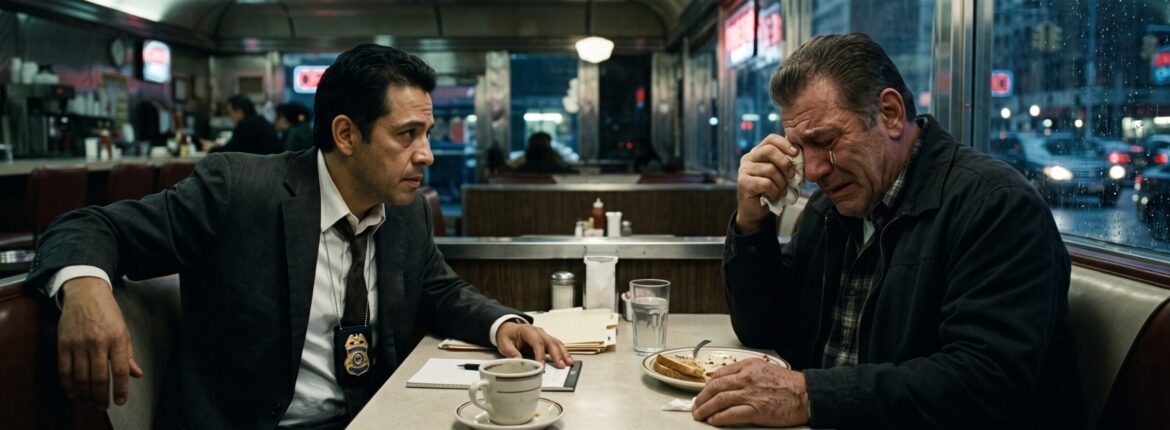
So they met Torres in a diner.
They did not begin with accusations. They sat in a booth, talked about his family and his job, got him comfortable, and engaged him in conversation before moving toward what had happened at Rikers. The investigator was watching Torres and assessing the person in front of him rather than merely applying pressure to a suspect. MS NOW
Eventually something broke.
Torres, described as a pretty macho guy, began sobbing in the diner. He became so emotional that the proprietor wondered whether the police needed to be called.
The answer was almost absurdly perfect:
They were the police.
Torres eventually cooperated and helped investigators penetrate the cover-up.
Nothing about building trust eliminated accountability. Building trust helped make accountability possible.
The Badge and the Gun Can Get in the Way
Bharara's larger point turns our cultural image of authority upside down. Federal investigators do their homework, learn the person, know the facts, and build rapport rather than relying on what Bharara called a “brutalist approach” of threats and harassment. Rosenberg described the federal law-enforcement approach as predicated on knowing the facts and building rapport rather than coercion. MS NOW
An effective investigator wants the person across the table talking to another human being rather than simply defending himself against an institution.
There is an understandable emotional desire to see someone who has done something horrible treated harshly, and being kind can look weak. But investigators are not being paid to perform toughness. They are trying to get information, and sometimes that requires trading the appearance of toughness for effectiveness.
Schools face the same choice far more often than we admit.
RSD Episode Prevention
There is another dimension to these stories: rejection sensitive dysphoria.
ADHD is disproportionately represented in justice-involved populations, and trauma is common there as well. Law-enforcement officers inevitably encounter people with ADHD, trauma, emotional dysregulation, extreme rejection sensitivity, or some combination of them.
Now look again at what experienced investigators have learned to do. They build trust before approaching threatening material, establish rapport, and learn about the person sitting across from them. They control facial expressions, body language, and tone. They suppress visible disgust and judgment, listen before confronting, and make the interaction feel human rather than adversarial.
For an ADHD child with RSD, those are not merely good interpersonal skills.
They are RSD-episode preventative measures.
That is the connection schools need to understand. The investigator does not wait until the person has shut down and then demand better self-regulation. He structures the interaction to reduce the probability of provoking the defensive response in the first place.
Schools too often do exactly the opposite: we trigger the kid and then punish the kid for being triggered.
Dr. William Dodson: The Advocate
This is where Dr. William Dodson's work on RSD and empathy becomes particularly important, because what he described to me in an email in 2021 sounds remarkably similar to what McCabe and Bharara describe from an entirely different world.
Dodson wrote that the email I had sent him about empathy “struck the bullseye.” His research group was called the RSD-Empathy Group, and after roughly 25 years of asking adults with ADHD who were doing well what they had figured out, he said he found one common element: what I had described to him as the execution of empathy.
His group sometimes called the person responsible a Cheerleader. Dodson preferred another word:
Advocate.
The Advocate could be a parent, sibling, grandparent, teacher, coach, or another important adult. What mattered was the relationship. Dodson described this person as someone who continued to hold the memory of the child as a good and precious person, particularly when things in that child's life were going badly. RSD and Empathy
Then Dodson described the three-part message these Advocates intuitively communicated.
The first message is essentially: I know you. I know who you are, I know what you are capable of, and I know that if sheer intelligence and effort could have solved this problem, you would already have solved it.
The second is: Something important has been missed. Your struggle is telling us that there is an invisible obstacle here that we have not yet understood.
And the third is: I am not leaving. I am going to stay with you through the difficult parts until we figure this out together, and I still see possibilities in you that you may not be able to see right now. RSD and Empathy
That is almost the inverse of the institutional message many struggling ADHD kids receive.
You aren't trying.
You should know better.
We've told you this before.
Why can't you just do it?
Here comes another consequence.
Dodson's Advocate begins somewhere completely different: I know you. Something is getting in your way. We are going to figure it out together.
That relationship does something enormously important before the crisis ever occurs.
It establishes trust.
The child already knows who is sitting across from them.
That matters enormously for RSD prevention because the adult is no longer an unknown threat arriving at the worst possible moment. The relationship itself carries information. The kid knows that this adult has seen them succeed, has seen them fail, has seen them dysregulated, and has not discarded them.
Dodson also emphasized something particularly relevant to schools: teachers and coaches can be that person. The Advocate does not have to come from the child's home. RSD and Empathy
For a child who may not have that relationship anywhere else, that possibility is enormous.
And now the parallel with federal interviewing becomes difficult to ignore.
The FBI calls it rapport building.
Dodson calls the person an Advocate.
I called what I was trying to do the execution of empathy.
Different environments. Different stakes. Different vocabulary.
But the same human doorway: before you can reach somebody in a difficult moment, they have to believe that the person sitting across from them sees them as a human being.
They Read Your Face Before You Finish the Sentence
I have watched this happen with ADHD students. An adult begins talking to the kid, and before the adult has finished the sentence, the kid is already going.
The teacher sees an overreaction because the teacher is evaluating the words that were spoken. The kid may be responding to information that arrived before the words: the face, the tone, the posture, the sigh.
The child saw the disappointment, heard the irritation, detected disbelief, and recognized that look because they have seen it hundreds or thousands of times before. The adult may still be assembling a perfectly reasonable sentence while the child's nervous system has already received an entirely different message: Here we go again. You think I'm lying. You think I'm lazy. You think I'm the problem. You are disappointed in me.
By the time the sentence arrives, the interaction may already be somewhere else.
This becomes particularly important when we are talking about children who carry trauma in addition to neurodivergence. Some of the kids I encountered in Title I schools had seen things children should never have seen. They had experienced violence, addiction, death, abuse, abandonment, instability, incarceration, or adults losing control. Some had learned very young to read the emotional state of the adults around them because reading adults was important.
Then they arrive at school, and we are surprised that they can read us.
Of course they can. The movement in the face matters. The change in posture matters. The difference between a neutral voice and the voice an adult uses when they have already decided the child is lying matters.
For a child with severe rejection sensitivity, those signals can become the beginning of the episode. Then the adult makes the crucial mistake of believing that because the child escalated, the child needs an even stronger display of authority.
The Institutional Feedback Loop
This is how a bad interaction becomes a system.
The adult approaches with visible frustration, and the child perceives judgment and escalates. The adult interprets the escalation as defiance, increases the consequence, and becomes firmer. The child becomes more dysregulated, more defensive, or shuts down completely.
The institution then records the outcome as evidence about the child: defiant, disrespectful, noncompliant, refused redirection. Those descriptions may accurately describe the observable behavior while completely missing the interaction that produced it.
The next adult reads the record before meeting the child and approaches expecting trouble. The child's threat detection finds exactly what it is looking for, and another confrontation follows, producing another referral that confirms the original assumption.
Eventually, everyone possesses documentation proving that the child is the problem while almost nobody has examined the system around the child.
That is an institutional failure.
The Strange Logic of Getting Tough With Traumatized Kids
There are schools where adults sincerely believe that children coming from difficult environments need more toughness because the world itself will eventually be tough with them.
I understand the instinct. I reject the conclusion.
A child who has already experienced instability does not necessarily need another unpredictable adult, and a child who has experienced humiliation does not become more resilient through additional humiliation. A child who has learned to scan adults for danger does not stop scanning because the person creating the danger has a teaching certificate, and a child whose nervous system reacts intensely to perceived rejection does not learn emotional regulation by repeatedly being pushed into dysregulation.
We would never describe that as good training in another domain. A coach does not teach balance by continually knocking the athlete over. A driving instructor does not teach someone to respond calmly to hazards by unexpectedly grabbing the steering wheel. Effective instruction creates conditions in which the skill can be practiced successfully and then gradually transfers responsibility.
Emotional regulation is no different, yet schools sometimes demand regulation while constructing interactions almost guaranteed to undermine it.
No Judgment Tone
One of the central principles I developed working with ADHD students was simple: no judgment tone.
That does not mean no standards, no consequences, or that the student gets to do whatever they want because they have ADHD. It means that my disappointment is not an instructional strategy.
If a kid has not completed the work, we can deal with the missing work. If a kid has hurt somebody, we can deal with what happened. If a student has disrupted a class, the disruption matters. But I do not have to make the child feel my judgment before we can solve the problem.
That is exactly what makes the FBI examples so striking. Federal investigators learned independently, in a radically different environment, that their own emotional presentation is part of the interaction. Their face, tone, posture, and the relationship they have established are all variables.
The investigator regulates himself because he wants the other person to remain accessible. Schools spend enormous amounts of time talking about student self-regulation while spending much less time talking about adult self-regulation.
Dodson's Advocate adds another layer. The best time to build that relationship is not when the child is already in crisis. The relationship has to exist beforehand. When the difficult moment arrives, the adult is drawing from trust that has already been deposited. RSD and Empathy
Two Nervous Systems Walk Into the Room
Every disciplinary interaction involves at least two nervous systems. One belongs to a child, while the other belongs to an adult with more authority, more experience, a more developed brain, and usually far more control over what happens next.
Yet when the interaction deteriorates, we often analyze only one of them.
Why couldn't the student regulate? Why did the student react like that? Why did the student become disrespectful? Why did the student leave?
Those can be legitimate questions, but they are incomplete. We should also ask what the adult's face and voice communicated, whether the student was corrected privately or publicly, whether the adult entered the interaction curious about what happened or already convinced, whether the adult interrupted, whether the adult listened, and whether the child had any route through the interaction that preserved dignity.
Those are not questions about being nice. They are questions about effectiveness.
The federal investigator sitting across from someone connected to murder understands this. If his own anger prevents the person from talking, his anger has become operationally useless regardless of how justified it is.
Educators deserve the same level of professional sophistication.
Accountability Requires Access
One of the false choices in school discipline is the supposed choice between empathy and accountability.
The Rikers Island story demolishes that distinction.
Investigators treated Torres as a human being. They built rapport, talked about his family, and sat with him in a diner rather than beginning with intimidation. Eventually this big correction officer broke down crying and told them what he knew.
Then accountability followed.
Rapport did not replace accountability; it created access to the information necessary for accountability. MS NOW
Schools should understand the sequence.
When a kid throws a chair, the chair still got thrown. When a student curses at a teacher, it still happened. When one student hurts another student, the harm is real.
The question is what happens next. We can begin with accusation, judgment, and punishment, or we can first establish enough relational safety to find out what actually happened.
What was happening immediately before it? What did the child perceive? What does the child remember? What can the child tell us now that the nervous system has settled?
Only then can we make intelligent decisions about accountability, repair, support, and consequences. You cannot solve a problem you never bothered to understand.
When School Becomes the Escape Room
This is where the institutional failure becomes larger than any individual disciplinary encounter.
Imagine being a neurodivergent child who experiences school as a place where the normal tools available to you repeatedly fail. You cannot regulate on command or explain yourself quickly enough. You cannot make the adult believe that you weren't intentionally ignoring the instruction. You cannot stop your face from showing frustration, make yesterday's missing assignment disappear, or explain why something you accomplished easily last Tuesday feels impossible today.
Every failure produces another intervention intended to make you try harder, and every intervention increases the pressure.
Eventually the lesson becomes: get out.
Get out of the conversation or the classroom. Get sent to the hallway. Put your head down. Stop caring. Make a joke. Become the bad kid before somebody else gets to define you as one. Refuse the assignment before the assignment gets another opportunity to tell you that you cannot do it.
Escape can take many forms, and that is how a school becomes an escape room.
For children carrying trauma, the building can inadvertently reproduce something they already know far too well: powerful adults whose faces, voices, moods, and body language have to be monitored for signs that something bad is about to happen.
Then we call their vigilance a behavior problem.
Toughness Is Not the Opposite of Weakness
The alternative to a punitive culture is not a permissive one. That false binary has done enormous damage.
A strong adult can maintain a boundary without humiliating a child. A strong teacher can say no without contempt. A strong administrator can impose a consequence while preserving a student's dignity, and a strong mentor can tell a kid that what happened was unacceptable without making the kid believe that they are unacceptable.
In fact, controlling your own emotional response when a child is losing control requires more discipline than simply demonstrating your authority.
That is one reason the federal interviewing examples belong in this conversation. These investigators work in a profession where the consequences can involve terrorism, homicide, imprisonment, and public safety. Nobody can seriously accuse the FBI of developing rapport-based interviewing because agents are unwilling to hold people accountable.
They developed it because intimidation often does not work, while rapport, relationship, trust, patience, knowing the person, and controlling your own judgment long enough to keep another human being talking often do. McCabe put the principle plainly: at the heart of an effective interview is a relationship in which the interviewee begins to trust the interviewer. MS NOW
Dodson arrived at a remarkably similar place from ADHD clinical work. The successful people he studied had someone who knew them, believed there was more to them than the struggle in front of them, and stayed. RSD and Empathy
The Lesson Schools Should Have Learned Already
There is something almost absurd about requiring this comparison.
An FBI investigator can sit across from someone suspected of participating in something horrific and understand that a raised eyebrow may matter. A federal prosecutor can understand why sitting in a diner and asking someone about his family might produce more truth than displaying authority. An investigator can recognize that the big, burly correction officer sitting across from him may be carrying something enormous underneath the exterior and that attacking that exterior will only make it stronger.
But some schools still believe the traumatized ADHD kid needs adults to get tougher.
Maybe we have the lesson backward. Professionalism is not demonstrating that the adult cannot be moved; it is understanding the human being in front of you well enough to know how to reach them.
For ADHD kids with RSD, that means recognizing that trust building is not merely something nice that happens after instruction. It can be preventative neurological scaffolding. A neutral face, nonjudgmental tone, private conversation, patient listening, and an established relationship may keep the child from entering the state in which meaningful communication becomes vastly more difficult.
And Dodson's Advocate gives us something even deeper than de-escalation. The child has someone communicating, over and over: I know you. I know this struggle is not the whole of you. We are missing something. I am staying here while we figure it out. RSD and Empathy
That is almost the perfect preventative counterweight to rejection sensitivity.
The goal should not be becoming really good at managing RSD explosions. Whenever possible, the goal should be not unnecessarily triggering one in the first place.
That is what these investigators understood in their own context: they changed the environment before demanding a different response from the person inside it.
Schools can do the same.
Epistemic Status & Testable Predictions
The argument is mechanistic and educational: experienced investigators have independently developed rapport-building practices that reduce perceived judgment, threat, and interpersonal confrontation. Those practices overlap substantially with strategies that should reduce the probability of rejection-triggered escalation among ADHD students with pronounced rejection sensitivity. Dodson's observations about the Advocate provide a complementary clinical framework centered on durable trust, empathy, and the child's knowledge that an important adult continues to see their value and potential during periods of struggle. RSD and Empathy
1. The RSD Prevention Prediction
Among ADHD students with high rejection sensitivity, disciplinary interactions beginning with established rapport, neutral affect, nonjudgmental tone, and private conversation will produce fewer severe emotional escalations than interactions beginning with accusation, visible disappointment, or immediate consequence delivery.
2. The Preverbal Signal Prediction
For highly rejection-sensitive ADHD students, measurable physiological or behavioral escalation will frequently begin in response to facial expression, posture, proximity, and vocal tone before the adult has completed the substantive verbal correction.
3. The Adult-Regulation Prediction
Training educators to regulate their own facial expressions, tone, posture, interruption patterns, and proximity during difficult interactions will reduce the frequency and duration of student escalation even when behavioral standards and available consequences remain unchanged.
4. The Rapport Prediction
Students with repeated disciplinary histories will provide more complete accounts of incidents and demonstrate greater willingness to participate in repair when the adult establishes relational safety before seeking accountability.
5. The Advocate Prediction
ADHD students who have a durable relationship with at least one adult in the school who consistently communicates Dodson's Advocate message—I know you; there is something here we have not yet figured out; I am staying with you while we figure it out—will demonstrate greater recovery from failures and corrective interactions and fewer relationship-ending responses to perceived rejection than comparable students without such an adult relationship. RSD and Empathy
6. The Layered-Vulnerability Prediction
The effect of judgment-signaling interactions will be strongest among students carrying multiple vulnerabilities, particularly ADHD combined with significant trauma exposure, because both rejection sensitivity and learned threat detection may contribute to rapid escalation.
7. The Institutional Escape-Room Prediction
Schools relying heavily on public correction, adversarial discipline, visible displays of authority, and escalating punishment will produce greater avoidance, disengagement, absenteeism, repeated disciplinary referrals, and eventual school rejection among vulnerable neurodivergent students than schools maintaining equally clear behavioral expectations within a relationship-first model.
The Walkaway Point
The most important lesson from McCabe and Bharara is not that investigators are nice to people. It is that they understand trust as operationally necessary, and they build it deliberately because they know what happens when it disappears.
Dodson's work takes that principle further for ADHD. Trust is not simply something an adult deploys during the difficult conversation. It is something accumulated over time through an Advocate who knows the child, sees the invisible obstacle rather than simply condemning the visible failure, continues to see the child's potential, and makes it clear that the relationship is not disappearing when things get difficult. RSD and Empathy
For an ADHD kid with severe rejection sensitivity, that relationship can begin working before the episode ever starts. The adult's face, voice, posture, patience, curiosity, and history with that child can determine whether the child remains reachable or whether the nervous system begins preparing for rejection before the conversation has even gotten started.
That changes the question schools should be asking. Instead of asking only how we make this kid comply, we should be asking how we keep this kid accessible long enough to understand what happened, maintain the relationship, and teach what needs to be learned.
Accountability, consequences, and repair can all follow, but first you need access to the human being.
Federal investigators learned that lesson while sitting across from people connected to terrorism and homicide. Our schools should not need another century to learn it while sitting across from children.
References
Bharara, Preet. “Preet Bharara: Doing Justice.” Interview by Chuck Rosenberg. The Oath with Chuck Rosenberg. June 11, 2019. Discussion of the Ronald Spear investigation, Anthony Torres, rapport-building, and the federal law-enforcement preference for knowing the person and building rapport rather than relying on coercion or bravado. MS NOW
Dodson, William. “A Response from Dr William Dodson, pioneer in ADHD plus RSD clinical research.” Email correspondence, August 21, 2021. Discussion of the RSD-Empathy Group, the “execution of Empathy,” the Advocate, and the three-part relational message Dodson identified among people who learned to thrive with ADHD. RSD and Empathy
McCabe, Andrew. Interview by Chuck Rosenberg. The Oath with Chuck Rosenberg. May 7, 2019. Discussion of FBI rapport-building, the Abdulmutallab investigation, trust as the foundation of effective interviewing, and the deliberate avoidance of communicated judgment during difficult interviews. MS NOW