
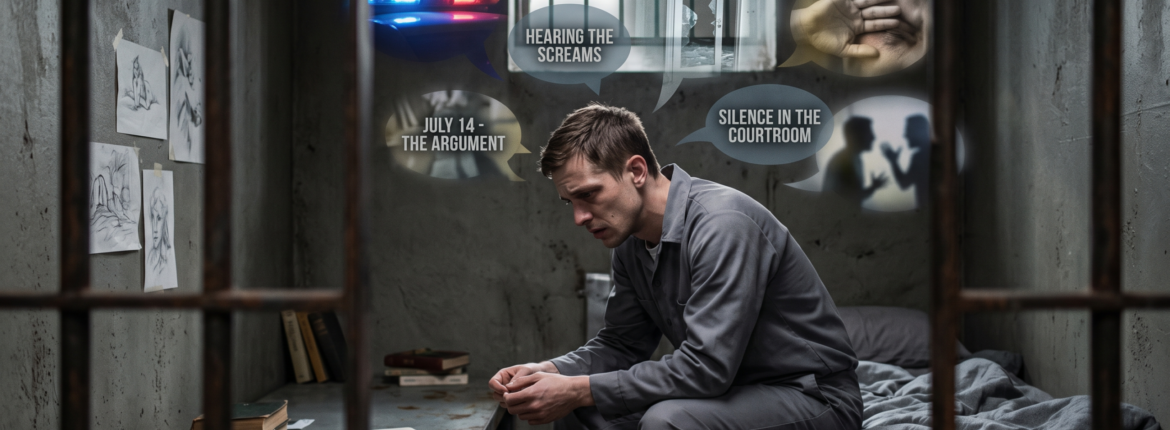
When these specific, acute layers of trauma—sexual assault, physical assault, and witnessing chronic violence at home, in the neighborhood, and/or at school—are forced onto an undiagnosed ADHD brain, the institutional pipeline accelerates with terrifying velocity.
For a child navigating these horrors, the brain is not just under-stimulated; it is profoundly, constantly terrorized. Adding these layers of trauma fundamentally alters the child’s neurobiology, transforming the standardized classroom from a place of boredom into an active war zone.
Here is how these specific traumas compound the systemic failure, turning the school-to-prison pipeline into an inescapable trap.
1. The Neurobiological Crossfire: Trauma and ADHD
Both ADHD and acute trauma target the exact same regions of the brain: the prefrontal cortex (responsible for impulse control, focus, and emotional regulation) and the amygdala (the brain's emotional smoke detector).
- The Amygdala Hijack: For an undiagnosed ADHD child, the amygdala is already highly reactive to emotional stimuli. When that child is a survivor of sexual or physical assault, or chronically witnesses violence at home or in the streets, their amygdala is jammed into a permanent, screaming "ON" position.
- The Dopamine Deception: The ADHD brain naturally craves high stimulus to achieve a baseline of focus. When a child is exposed to chronic violence at home or in the neighborhood, their brain adapts to a toxic, high-adrenaline baseline. Sitting quietly in a classroom doesn't just feel dull—it feels mathematically impossible. The quiet literally triggers their hyper-vigilance, making them feel exposed and unsafe.
2. The Multi-Front War: Mapping the Trauma
When a child experiences violence across every single domain of their life, there is no safe harbor for their nervous system to reset.
- Violence at Home (Witnessing or Experiencing Assault): The home is supposed to be the foundational nervous-system reset button. If a child is experiencing sexual or physical assault at home, or witnessing domestic violence, their baseline state is pure survival. They arrive at school completely sleep-deprived, emotionally dysregulated, and in a state of severe dissociation.
- Violence in the Neighborhood & School: If walking to school or sitting in the hallway requires navigating physical threats, the child's ADHD hyper-vigilance becomes an evolutionary defense mechanism. They are constantly scanning the room for exits, watching hands, and misinterpreting neutral facial expressions as immediate threats.
[The Hyper-Vigilant Matrix]
ADHD Restlessness + Chronic Assault/Witnessing Violence = Permanent Fight-or-Flight State
                                                                ↓
                                               Labeled as "Conduct Disorder" by Schools
                                                                ↓
                                                    Suspension & Legal System
3. The Institutional Execution: Mislabeling Survival as Defiance
This is where the systemic failure turns cruel. When a traumatized, undiagnosed ADHD child acts out in school, the system almost completely ignores the structural wounds beneath the behavior.
- The Classroom Manifestation: Because of their trauma and lack of executive functioning support, the child might flash into a sudden rage over a minor boundary, put their head down and dissociate for hours, or bolting from the classroom when they feel cornered.
- The Diagnostic Mistake: Instead of recognizing a shattered nervous system crying out for protection and neurological scaffolding, schools rely on punitive discipline. They label the child with terms like "Oppositional Defiant Disorder" (ODD) or "Conduct Disorder."
- The Criminalization of Self-Defense: If a student who has been physically or sexually assaulted reacts aggressively to an authority figure getting too close or touching them without warning, the school triggers "zero-tolerance" policies. They call the school resource officer. They issue a suspension. They effectively eject the victim from the only place that could have offered a structured intervention.
4. The Prison Cell: The Ultimate Failure of Care
When these children are kicked out of school, they are pushed directly into the open arms of the justice system. Studies show an overwhelming correlation: childhood physical and sexual abuse increases the likelihood of juvenile justice involvement by up to 40%, and when combined with undiagnosed ADHD, that trajectory becomes almost locked in.
Inside the ultimate escape room of a prison cell, the tragedy reaches its conclusion. The state spends tens of thousands of dollars a year to lock a human being in a concrete cage, punishing them for impulsive survival behaviors that were forged by the state's own failure to protect them when they were children.
An emissary for this community looks at these prison statistics and sees a ledger of ghosts. They see children who were assaulted at home, terrorized in their neighborhoods, failed by their schools, and ultimately discarded by a society that found it cheaper to build jail cells than to understand a traumatized, non-linear mind.