
When examining how Spain handles athletics and support for competitors with ADHD, the framework is deeply influenced by two major forces: a highly community-driven Cantera (academy/youth pipeline) sporting culture, and a rigid, heavily scrutinized medicalized anti-doping apparatus.
Rather than adopting the hyper-centralized public health "prescriptions" of Belgium or the entirely stress-free youth bans on ranking found in Norway, Spain focuses on club-level adaptation, tactical rhythm, and stringent bureaucratic compliance at the top.
Here is how the landscape breaks down for Spanish athletes managing ADHD today.
1. The Cantera Culture: Tactical Scaffolding over "Fixing Deficits"
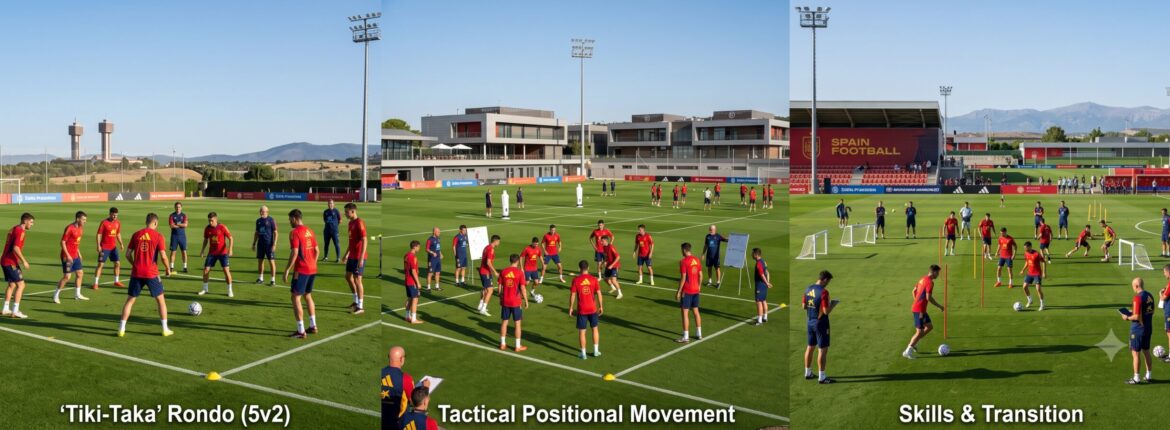
In Spain, youth sports development is dominated by highly sophisticated, localized club academies (canteras), especially in football (soccer) and basketball. The Spanish style of play—famously embodied by concepts like Rondo drills, positional play (Juego de Posición), and rapid, short-passing sequences—naturally caters to the ADHD cognitive profile.
- High-Stimulus Chaos Engineering: Spanish youth coaches don't try to suppress the high energy or instinctual decision-making of an ADHD player. Instead, they structure training around high-novelty, rapid-fire cognitive puzzles. Small-sided games require players to constantly scanning space, predicting passing lanes, and processing shifting environments. This continuous kinetic feedback loops perfectly with the dopaminergic cravings of an ADHD brain, naturally capturing focus.
- The Community Integration Push: At the grass-roots and educational level, Spain participates in broader European initiatives like the ADHD·FOCUS in Sport project. This initiative specifically focuses on training coaches, youth workers, and sports managers across partner European nations. Rather than forcing a non-linear mind into rigid, repetitive drills that cause them to tune out, the framework provides evidence-based coaching strategies to create welcoming, ADHD-friendly club environments.
2. Elite Sports & The Intense Anti-Doping Spotlight
At the high-performance and national-team levels, Spanish athletes with ADHD face a highly rigid administrative landscape. Managing standard, first-line stimulant medications (such as methylphenidate/Ritalin or Elvanse) requires immaculate precision.
- The CELAD Regulatory Wall: Anti-doping is overseen by the Spanish Commission for the Fight Against Doping in Sport (CELAD) under the Ministry of Education, Vocational Training and Sports. Because stimulants appear on the World Anti-Doping Agency (WADA) prohibited list, elite athletes must secure a Therapeutic Use Exemption (TUE), known locally as an Autorización de Uso Terapéutico (AUT).
- No Administrative Shortcuts: In recent years, the relationship between WADA and CELAD has faced intense international scrutiny regarding delays, poorly managed files, and the independence of Spain's TUE committee.Because WADA closely monitors Spanish results management and demands strict alignment with global standards, Spanish sports federations cannot afford administrative errors.
- The Administrative Scaffolding: For a national-team athlete, "time blindness" or a missed medical paperwork deadline can jeopardize an entire career. To mitigate this executive functioning vulnerability, elite Spanish clubs and federations increasingly utilize dedicated medical coordinators to manage athletes' psychiatric dossiers, ensuring multidisciplinary clinical testing portfolios are flawlessly logged before competition.
3. The Clinical and Concussion Focus
The Spanish sports science and university sectors—such as researchers at the Universidad Europea de Madrid working in coordination with anti-doping bodies—heavily analyze the intersection of athlete health, education, and neurodiversity.
- Concussion Management Vulnerabilities: Spanish sports medicine protocols heavily focus on how ADHD interacts with physical trauma, specifically concussions. Studies heavily utilized by sports clinicians show that athletes with ADHD face a higher baseline risk for concussions, and their neurocognitive recovery trajectories can be significantly more prolonged or complex compared to neurotypical peers.
- The Return-to-Play Blueprint: Because of this, elite Spanish sports programs do not use a standard, linear timeline for sending players back to the pitch after a head injury. Psychologists and neurologists build individualized, multi-stage cognitive and motor-skill baselines to ensure a neurodivergent competitor's brain has fully regulated before resuming high-impact play.
The Spanish Takeaway: Spain's approach to the ADHD athlete is split between on-field brilliance and off-field bureaucracy. On the pitch or court, the rich Cantera system intuitively embraces the quick-thinking, instinctive, non-linear mind, turning what traditional schools view as "impulsivity" into world-class tactical creativity. But off the pitch, the system is uncompromisingly forensic—forcing athletes to rely on highly structured support staff to survive one of the most heavily scrutinized regulatory environments in global sport.