
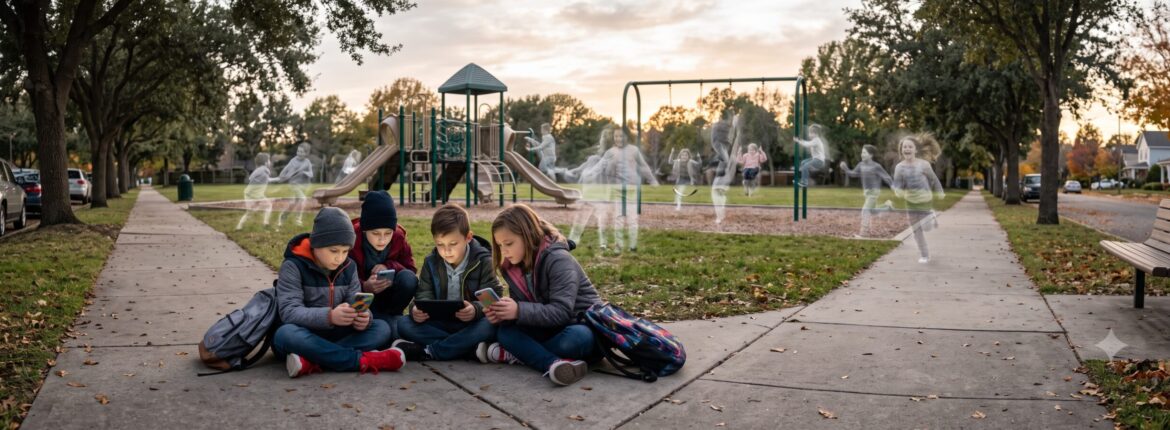
The vanishing of unstructured "pickup" sports—the unorganized, self-policed games played in driveways, local parks, and dead-end streets—has dealt a quiet but devastating blow to adolescent social development.
When youth sports shifted from spontaneous neighborhood play to hyper-structured, adult-run travel teams, kids lost more than just exercise. They lost the primary training ground for organic social negotiation, leading directly to the higher rates of awkwardness, social anxiety, conflict-avoidance, and isolation seen in high schoolers today.
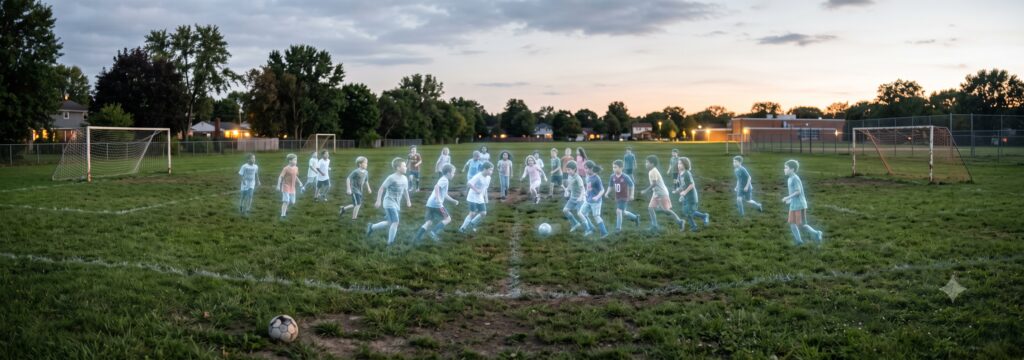
1. The Death of "Unscripted" Conflict Resolution
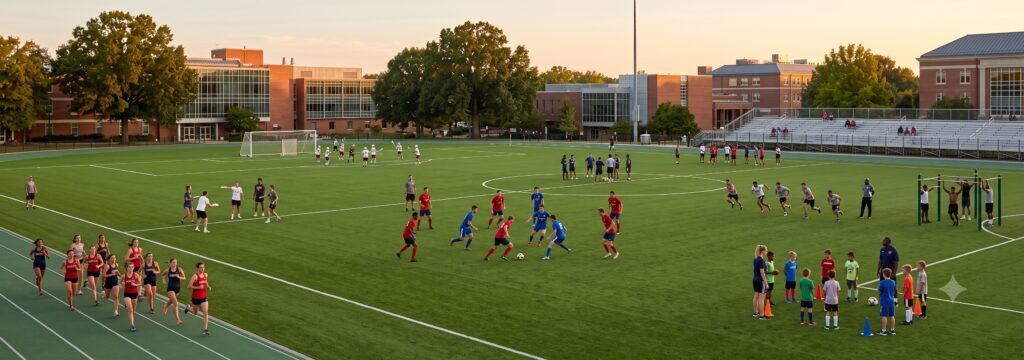
In an adult-coached travel league, adults make every rule, resolve every argument, and enforce all boundaries. When a player feels a foul was committed, a referee blows a whistle.
In pickup sports, there are no referees or coaches.
- The Pick-Up Skill: To keep playing, 10-year-olds in a pickup game had to negotiate boundaries themselves: Was that ball out of bounds? Was that a foul? Who gets to take the ball out? They had to learn how to stand up for themselves, compromise, read social cues, and resolve arguments without the game falling apart.
- The High School Deficit: Because today’s teens rarely practiced peer-to-peer conflict negotiation as kids, high school social friction feels terrifyingly high-stakes. When faced with disagreements, high schoolers today are far more likely to experience intense anxiety, completely withdraw, or rely on adults/authority figures to intervene in simple interpersonal issues.
2. Emotional Regulation & "Self-Sorting" Inclusion
Pickup sports required a unique form of social intelligence: emotional regulation for the sake of the group.
If a kid threw a temper tantrum or refused to pass the ball during a street soccer or pickup basketball game, the other kids wouldn't invite them back the next day, or they’d sit them out. Kids quickly learned to calibrate their ego, share responsibility, and regulate their anger because the social reward—continuing to play with friends—was worth it.
- In the absence of this early trial-and-error, high schoolers miss out on crucial "co-regulation" practice.
- Many teens arrive in high school struggling with the basic give-and-take dynamics of friendship groups, leading to fragmented cliques and quick social burnout.
3. The Collapse of Mixed-Age Socialization
One of the most valuable, underappreciated aspects of pickup sports was cross-age play. A typical driveway game often included 8-year-olds, 12-year-olds, and 15-year-olds playing together.
- Older kids had to learn empathy, leadership, and how to hold back so the younger kids could participate.
- Younger kids learned how to observe, adapt, and earn respect from older peers in a low-stakes environment.
Modern adult-led sports strictly segregate children by exact birth year (U-10, U-12, U-14). As a result, high schoolers have almost zero experience interacting naturally with people outside their immediate grade level. This age-segregation weakens the multi-generational community ties that historically made high schools feel like cohesive social ecosystems.
4. Unstructured Time Shifted to "High-Friction" Digital Spaces
When 3:00 PM to 6:00 PM after-school hours were freed up by the loss of neighborhood pickup games, that time wasn't replaced by other real-world social activities. It was swallowed by screen time and social media.
Unlike pickup sports—where social interaction is secondary to a shared physical goal (focusing on the ball reduces the awkwardness of face-to-face eye contact)—social media requires direct, performative social evaluation.
| Pickup Sports Socializing | Social Media / Digital Socializing |
| Low-Stakes / Low Friction: Side-by-side interaction focused on play. | High-Stakes / High Friction: Face-to-face performative comparison. |
| Real-Time Forgiveness: Arguments end when the next point starts. | Asynchronous / Permanent: Text logs and screenshots weaponize mistakes. |
| Physical & Grounded: Releases dopamine and burns off nervous energy. | Sedentary & Addictive: Spikes anxiety without physical release. |
The High School Reality
By the time today's kids reach 9th and 10th grade, the absence of early pickup sports manifests as a social stamina deficit.
Because they never got thousands of hours of low-stakes, real-world practice managing peer dynamics on their own terms, hanging out with peers in high school can feel exhausting rather than restorative. The loss of pickup sports didn't just change how American kids play—it fundamentally altered how they learn to belong.