
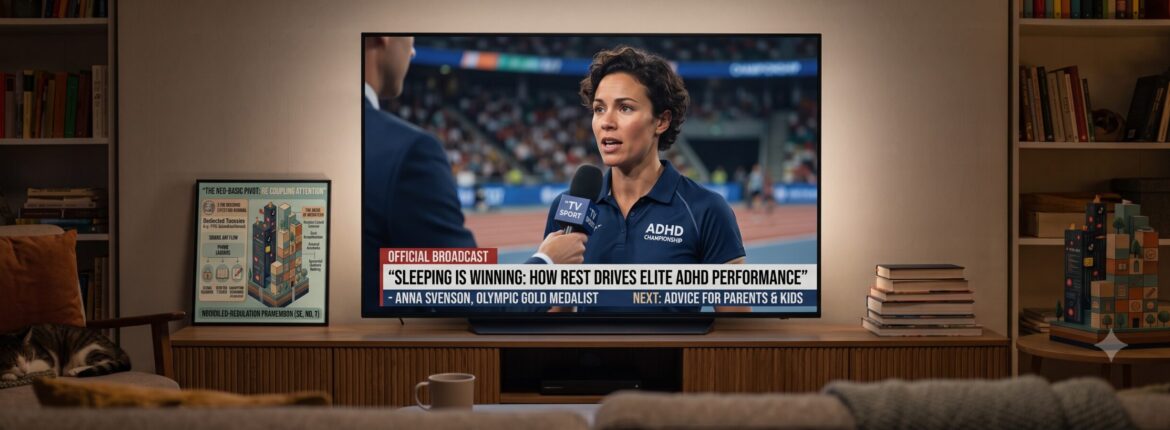
In the high-stakes world of elite sports, physical conditioning, nutrition, and tactics have traditionally dominated the performance conversation. Yet, sport science has increasingly revealed a simpler, more potent game-changer: sleep. For neurodivergent athletes—particularly those living with Attention-Deficit/Hyperactivity Disorder (ADHD)—sleep isn't just a rest period; it is an irreplaceable tool for cognitive regulation, emotional stability, and physical recovery.
Launching a nationwide Public Service Announcement (PSA) campaign entitled "Sleeping is Winning," spearheaded by top elite athletes with ADHD, holds the potential to transform how families, young competitors, and parents view sleep hygiene at home.
1. The ADHD Sleep Paradox: Why the Message Matters
For individuals with ADHD, the brain’s circadian rhythms and dopamine pathways often run on a delayed clock. Research indicates that delayed sleep phase tendencies and late-night hyperfocus affect up to 73–78% of children and adults with ADHD, frequently creating a vicious cycle:
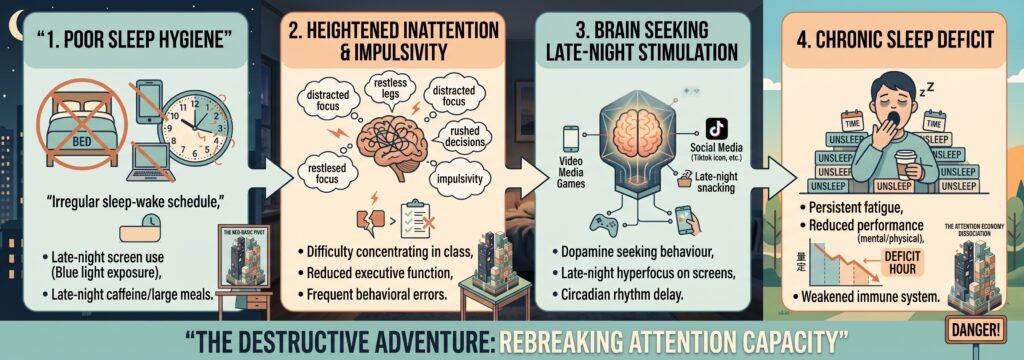
When elite athletes with ADHD share their personal struggles and breakthroughs with sleep, they dismantle a long-standing myth: that going to bed early is a restriction or a punishment. Instead, they reframe sleep hygiene as a strategic competitive advantage.
2. Why Athletes Have the Ultimate "Cred"
Children rarely listen to clinical lectures or parental nagging about early bedtimes. However, when an Olympic champion, a world-record swimmer, or a professional superstar speaks, kids listen.
Top athletes possess unique authority for several reasons:
- Proof in Performance: Elite sports are measured in fractions of a second, percentage points, and concrete wins. When an athlete demonstrates that extending sleep directly sharpens reaction times, shooting accuracy, and split-second decision-making, the benefit becomes tangible.
- Relatability Without Stigma: Neurodivergent champions who have spoken openly about managing ADHD prove that having a hyperactive brain is not a limitation. Hearing them explain how they "tame the late-night brain" gives young fans an authentic roadmap.
- Reframing Rest as Active Training: Athletes don't view sleep as downtime; they view it as muscle synthesis, memory consolidation, and neural repair. This shift from passive rest to active recovery resonates powerfully with high-energy youth.
3. The Science Behind the Pitch: Sleep as a Secret Weapon
Research consistently confirms what elite sports programs now build into their daily regimes:
The Performance Factor: In a seminal Stanford University study on collegiate basketball players, extending sleep to a minimum of 10 hours per night improved sprint times by 4.5% and increased free-throw shooting accuracy by 9% (Mah et al., 2011).
- Cognitive Focus & Reaction Speeds: Sleep loss directly impairs vigilant attention, slowing reaction times and increasing attentional lapses on high-signal cognitive tasks (Lim & Dinges, 2008). For a student in a classroom or an athlete on a field, optimal sleep restores executive function and working memory.
- Injury Prevention: Adolescent athletes who sleep on average fewer than 8 hours per night face a 1.7 times higher risk of injury compared with peers who sleep 8 hours or more (Milewski et al., 2014).
- Emotional & Behavioral Regulation: For youth with ADHD, treating underlying sleep disruptions serves as a key pillar in stabilizing daytime mood, impulse control, and executive functioning (Bijlenga et al., 2019).
4. Translating "Sleeping is Winning" to the Home Environment
A successful "Sleeping is Winning" PSA campaign translates elite athletic protocols into simple, executable household habits for kids and parents.

Actionable Takeaways for Families:
- Build a "Pre-Game" Wind-Down: Just as athletes warm up before a game, the brain needs a 30-minute cool-down phase before bed—reading physical books, stretching, or listening to audiobooks instead of looking at blue-light emitting screens.
- Optimize the Environment ("Cave Mode"): Keep bedrooms cool (60–67°F / 15–19°C), dark, and quiet to facilitate deeper, uninterrupted REM and slow-wave sleep cycles.
- Establish Consistent Sleep Windows: Keeping bedtime and wake-up times within a tight window reinforces natural circadian rhythms, reducing the night-time executive dysfunction that plagues ADHD youth.
Conclusion: Changing the Culture of Rest
By pairing neurodiversity advocacy with performance science, the "Sleeping is Winning" initiative turns a daily household struggle into an inspiring goal. When kids see their athletic idols treating sleep hygiene as the ultimate hack for speed, focus, and strength, turning off screens and turning down lights ceases to feel like a chore—it becomes the first step toward winning tomorrow.
References
Bijlenga, D., Vollebregt, M. A., Kooij, J. J. S., & Arns, M. (2019). The role of the circadian system in the etiology and pathophysiology of ADHD: time to redefine ADHD?. ADHD Attention Deficit and Hyperactivity Disorders, 11(1), 5–19. https://doi.org/10.1007/s12402-018-0271-z
Cited by: 191
Lim, J., & Dinges, D. F. (2008). Sleep Deprivation and Vigilant Attention. Annals of the New York Academy of Sciences, 1129(1), 305–322. https://doi.org/10.1196/annals.1417.002
Cited by: 1733
Mah, C. D., Mah, K. E., Kezirian, E. J., & Dement, W. C. (2011). The Effects of Sleep Extension on the Athletic Performance of Collegiate Basketball Players. Sleep, 34(7), 943–950. https://doi.org/10.5665/sleep.1132
Cited by: 1186
Milewski, M. D., Skaggs, D. L., Bishop, G. A., Pace, J. L., Ibrahim, D. A., Wren, T. A. L., & Barzdukas, A. (2014). Chronic Lack of Sleep is Associated With Increased Sports Injuries in Adolescent Athletes. Journal of Pediatric Orthopaedics, 34(2), 129–133. https://doi.org/10.1097/bpo.0000000000000151
Cited by: 823