
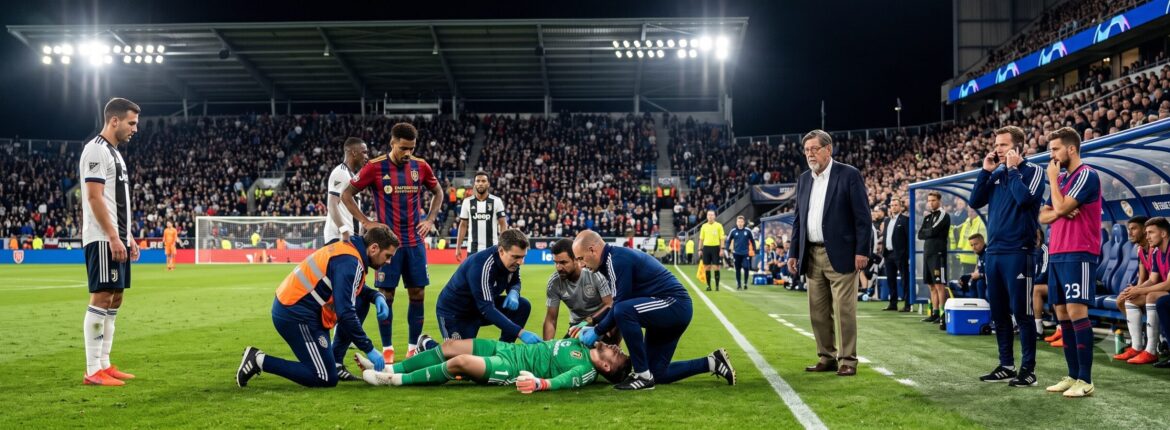
Why Injured Athletes Can Suddenly Look Like They Developed ADHD
"...Two years ago there was nothing at all about the effects of aerobic exercise on ADHD. I had worked with dozens of people. Of course, who have treated their ADHD with exercise (the trade-off is one hour of aerobic exercise for 4 hours of performance that is at least the equal of stimulant medications). I got them when they got a serious injury and couldn't exercise. From the outside it looked like a sudden onset of full-blown ADHD. The severity of the impairments came from the fact that the exercise worked so well that they had no need to develop other compensating strategies for their ADHD."
—Dr. William Dodson
At first glance, that sounds almost impossible.
An athlete trains for years, functions well enough that ADHD treatment is unnecessary, gets seriously injured, stops exercising for an extended period—and suddenly looks as though they have developed full-blown ADHD.
But Dodson's point was exactly the opposite.
The injury didn't create the ADHD. It removed the treatment they didn't know they were receiving.
And the last sentence of his observation may be the most important part.
These athletes hadn't merely been getting a little benefit from exercise. In Dodson's clinical experience, exercise had worked so well that they had never needed to develop many of the compensatory systems other people with ADHD gradually build through years of struggle.
No elaborate planner system.
No medication routine.
No carefully engineered work environment.
No collection of emergency executive-function workarounds.
The exercise was carrying enough of the load that the backup system never had to be built.
Then the injury removed it.
Exercise present >> functioning very well without stimulant treatment >> little need for additional ADHD scaffolding
Serious injury >> prolonged exercise loss >> primary regulatory support disappears >> few backup compensations available
The apparent "sudden onset" wasn't just ADHD becoming visible. It was ADHD becoming visible in someone who had never needed to learn how to compensate for it any other way.
Once you look at the phenomenon that way, saying "exercise helps ADHD" begins to sound woefully inadequate.
The Athlete Who Doesn't Look Like They Have ADHD
Imagine two people with similar underlying ADHD vulnerabilities. The first spends most of the day in an environment demanding prolonged sitting, delayed rewards, self-generated structure, repetitive tasks, distant deadlines, and sustained attention to things that may not be intrinsically interesting. The friction between that environment and their nervous system eventually becomes difficult to miss.
The second becomes an athlete.
Their day contains movement, but it also contains practice at a specific time, a coach waiting, teammates expecting them, drills with immediate feedback, measurable goals, physical intensity, competition, challenge, and a reason to come back tomorrow. Nobody has to remind them to exercise or construct an elaborate reward system to make them show up.
They want to be there.
If that person has ADHD, they may have stumbled into an extraordinarily effective regulatory system without ever thinking of it as treatment. They aren't thinking about executive function, cortical inhibition, emotional regulation, or compensatory scaffolding. They're thinking about practice, competition, getting faster, getting stronger, lowering their time, improving their swing, or winning the next match.
This is just who I am.
That is what makes the compensation almost invisible. We notice scaffolding when somebody deliberately builds it—planners, alarms, reminders, accountability partners, artificial deadlines. We are much less likely to recognize scaffolding when it looks like personality.
She's incredibly disciplined.
He's always moving.
She's miserable if she misses training.
He needs to run every morning before he can function.
What looks like personality may also be compensation.
Perhaps these are also people who discovered, through experience rather than diagnosis, the conditions under which their nervous systems work extraordinarily well.
Then somebody tears an ACL.
The Accidental Treatment
This is where Dodson's observation becomes more consequential than the familiar claim that exercise is "good for ADHD."
The athletes who caught his attention had been functioning very well without stimulant medication while vigorous exercise remained a consistent part of their lives. Their ADHD had not disappeared, but whatever underlying vulnerabilities existed had not been impairing enough to bring them into treatment.
Then injury changed the experiment.
A serious injury can remove vigorous exercise for weeks or months. The athlete who has spent years regulating through training is suddenly unable to train for a prolonged period. Only then does the impairment become impossible to ignore.
That before-and-after pattern tells us something about the magnitude of the exercise effect in these particular athletes. If removing something for an extended period is followed by a dramatic loss of functioning, it probably wasn't providing a trivial benefit.
It was carrying a substantial share of the regulatory load.
For some individuals, vigorous exercise may function as an effective and significant partial substitute for stimulant treatment—significant enough that someone who might otherwise require medication can function extremely well without it while regular vigorous exercise remains available.
That doesn't mean exercise and stimulant medication are pharmacologically identical. They aren't. Nor does it mean everyone with ADHD can replace medication with running shoes.
The comparison is functional: Can the person initiate, regulate, engage, sustain attention, inhibit an impulse, and access the abilities they already possess?
For Dodson's injured athletes, the answer while they were regularly exercising had apparently been: well enough that they didn't need him.
Then they got hurt.
And suddenly they did.
The Physiology Is Getting Much More Interesting
For years, the easy explanation for exercise and ADHD has been some version of this: exercise increases dopamine and norepinephrine; stimulants affect dopamine and norepinephrine; therefore exercise acts somewhat like a weak natural stimulant.
That may contain part of the story. It increasingly looks like it isn't the whole story.
Recent exercise research has begun looking directly at inhibitory control and cortical physiology rather than simply asking whether people feel better after a workout. The 2026 paper itself notes that prior controlled studies from the same research group found that acute aerobic exercise improved motor inhibition and increased cortical inhibition in adolescents and young adults with ADHD.
That moves the conversation beyond "exercise gives you dopamine."
Exercise isn't merely stimulating the ADHD nervous system. It appears capable of changing how that nervous system regulates itself.
But those acute studies left a fascinating question unanswered.
What happens when exercise isn't a single laboratory session?
What happens when you keep doing it?
The 2026 Study Changes the Question
A 2026 study in Brain and Behavior by Jia-Ling Sun, Jung-Chi Chang, Pou-Leng Cheong, and Hsiao-I Kuo took the next step. The researchers compared acute and repeated aerobic exercise in adolescents diagnosed with ADHD.
Twenty-four adolescents participated. The acute condition consisted of one 30-minute cycling session. The repeated condition consisted of 30 minutes of aerobic exercise twice a week for five weeks—a total of only ten sessions at moderate intensity.
This wasn't elite athletic training. It wasn't two-hour practices six days a week, preseason conditioning, distance running, competitive swimming, or soccer training.
Thirty minutes.
Twice a week.
Five weeks.
And something happened.
Both the single exercise session and repeated exercise improved motor inhibitory control, but the repeated condition produced a significantly greater improvement.
Using transcranial magnetic stimulation, the researchers also measured short-interval intracortical inhibition, or SICI—a measure strongly influenced by GABAergic inhibitory activity. Both acute and repeated exercise increased intracortical inhibition, but after five weeks, cortical inhibition was significantly greater than after the single exercise session at key measurement intervals.
The behavioral and physiological changes moved together. Greater increases in cortical inhibition were associated with better inhibitory control after both acute and repeated exercise, with correlations of r = .65 and r = .68 respectively.
Acute exercise >> increased cortical inhibition >> improved inhibitory control
Repeated exercise >> greater cortical inhibition >> greater inhibitory-control improvement
Exercise may not simply provide a temporary post-workout effect. Repeated exercise may begin changing the regulatory system itself.
The Accidental Remedy May Not Reset to Zero Every Morning
This is where the 2026 study becomes especially relevant to Dodson's athletes.
The researchers interpreted the stronger repeated-exercise effect as potentially reflecting cumulative GABAergic plasticity beyond the transient effects of a single session. The greater improvement after repeated exercise was consistent with training-related executive-function gains beyond the acute effect alone.
That gives us a more interesting model of what may have been happening in athletes who trained vigorously year after year.
Perhaps the athlete isn't simply receiving a temporary regulatory boost every morning and returning completely to baseline before the next workout.
Acute exercise >> immediate regulatory effect
Repeated exercise >> possible cumulative neurophysiological adaptation
Together >> a nervous system living inside a substantially different regulatory environment
Dodson's own clinical rule of thumb was striking: one hour of aerobic exercise for four hours of performance "at least the equal of stimulant medications." That is his clinical observation, not a universal dose-response equation. Everyone will have a different metabolism, fitness level, exercise response, ADHD presentation, and duration of benefit.
But his injured athletes give us something more useful than a rigid equation.
They give us a functional outcome.
While they were regularly training, they functioned very well without stimulant treatment. When exercise disappeared for a prolonged period, they no longer did.
The 2026 findings raise the possibility that what disappeared during an injury wasn't merely today's exercise effect.
The athlete may have been losing an exercise-supported regulatory state built through repeated training.
Now Look at the Medication Comparison
The 2026 paper contains a section with a remarkably relevant title: Comparison With Pharmacological Mechanisms.
Previous research has found that methylphenidate increases short-interval intracortical inhibition and improves cognitive performance in children with ADHD. The authors point out that aerobic exercise appears to influence some of the same inhibitory circuitry and propose dopaminergic modulation as another possible pathway through which exercise enhances inhibitory control.
Their conclusion goes further. They describe the exercise-related GABAergic effects as paralleling methylphenidate's action while potentially operating through sustained neuroplasticity rather than acute pharmacology.
That does not mean exercise is methylphenidate. It does not establish equivalent dosing, duration, or clinical effectiveness, and the researchers describe exercise as a promising non-pharmacological strategy rather than a universal replacement for medication.
But it gives us firmer footing for something Dodson's clinical observations have been pointing toward for years.
Vigorous exercise may be the closest natural partial functional equivalent to ADHD medication that we have.
Not because the mechanisms are identical, but because they can converge on some of the same functional territory.
Much of the Functional Effect
This is where the wording matters.
Saying exercise can reproduce "some" of the functional effect of medication badly understates what Dodson was describing in these particular athletes. If somebody exercises and becomes modestly more focused, we can reasonably call that some benefit.
But that wasn't the clinical puzzle.
The puzzle was an athlete functioning well enough that ADHD treatment wasn't necessary. Then vigorous exercise was removed for weeks or months and the impairment became substantial enough that treatment was necessary.
For that person, exercise wasn't providing a little assistance around the edges.
It was doing a hell of a lot of work.
That doesn't mean every athlete with ADHD experiences that magnitude of benefit. It means that for the particular athletes Dodson was describing, their functioning tells us something about the magnitude of the compensation.
Exercise present >> no stimulant treatment required
Exercise absent for prolonged period >> impairment becomes clinically significant
For some individuals, vigorous exercise appears capable of reproducing much of the functional effect they would otherwise seek from effective ADHD treatment.
And the newer physiology gives us a plausible reason why.
This Isn't Coffee With Running Shoes
This distinction becomes even clearer when exercise gets lumped together with caffeine, nicotine, or other forms of self-stimulation.
Coffee can alter alertness. Nicotine can affect arousal and attention, although it brings obvious dependence and health risks. Both can change the subjective state of the person using them.
Exercise is different.
The emerging evidence suggests that aerobic exercise can affect inhibitory control while producing measurable changes in cortical inhibitory processes. Repeated exercise may produce stronger changes than an isolated session. The 2026 study also discusses interactions among GABAergic, dopaminergic, and noradrenergic systems rather than reducing the effect to a single neurotransmitter.
This is why the difference between stimulation and regulation matters.
The athlete isn't merely getting more stimulated. The athlete is getting more regulated.
That includes something especially important in ADHD: emotional regulation.
Anyone who regularly exercises intensely knows that the post-exercise change is not adequately described by "I'm more awake." For many people, exercise changes irritability, tension, restlessness, frustration tolerance, mental noise, and the ability to settle into what comes next.
For someone with ADHD, those effects can be functionally enormous.
Sport Is More Than Exercise
This is the other half of Dodson's injured-athlete observation, and we shouldn't lose it simply because the exercise physiology has become so interesting.
Sport is an environment.
From an ADHD perspective, it can be an extraordinarily compatible one.
Movement.
Immediate feedback.
Clear objectives.
Visible progress.
Competition.
Social accountability.
Urgency.
Challenge.
That is an extraordinary amount of executive-function scaffolding hiding inside something we simply call practice.
The athlete doesn't have to manufacture all of it. The coach sets practice time, competition supplies the deadline, the scoreboard provides immediate feedback, teammates provide accountability, and drills break large goals into repetitions. Movement is built into the task, and success or failure is often visible immediately rather than appearing three months later on a report card or annual performance review.
Most importantly, the athlete may be intensely interested in what they are doing.
This is where Dodson's concept of the interest-based nervous system becomes especially useful. Many people with ADHD mobilize far more reliably around interest, novelty, challenge, urgency, and passion than around abstract importance alone. Sport can contain nearly all of them simultaneously.
So there may actually be three compensatory systems operating together.
Vigorous exercise >> acute regulatory effect
Repeated training >> possible cumulative neurophysiological adaptation
Athletic environment >> structure + engagement + urgency + feedback + accountability
Together >> remarkably powerful functional compensation
Then the injury attacks all three.
When the Whole Ecosystem Goes Down
Imagine an athlete who trains six days a week. Their schedule is organized around practice, their social group overlaps with their team, their goals are measurable, their progress is visible, and their sense of competence is constantly reinforced. They know where they are supposed to be tomorrow afternoon and why.
Then the injury happens.
They don't merely lose cardiovascular exercise. They can lose the calendar that organized their week, the teammates who expected them to appear, the feedback that told them whether they were improving, the competition that generated urgency, and the activity that reliably captured their attention.
And based on the emerging physiology, we have to consider something else: they may also be interrupting neurophysiological adaptations associated with repeated exercise.
Exercise >> gone
Structure >> disrupted
Accountability >> reduced
Competition >> removed
Feedback >> reduced
Engagement >> reduced
Social connection >> altered
Training adaptation >> potentially fading
That isn't one support disappearing. It is a regulatory ecosystem collapsing.
From inside the athlete, the change can be bewildering. They had been going to school or work, training, competing, managing responsibilities, and living a life that seemed perfectly normal. Then they got hurt.
Suddenly they can't start things. Their attention wanders. Ordinary tasks become harder. They become restless or irritable, emotions become harder to regulate, procrastination increases, sleep may deteriorate, and things begin piling up.
Something has happened to them.
But it may not be that ADHD suddenly appeared.
The conditions that had been keeping it from becoming significantly impairing disappeared.
The Prosthetic Environment
We tend to think of compensation as something a person consciously constructs: alarms, planners, lists, artificial deadlines, accountability partners. Those are obvious compensations because somebody deliberately built them.
But environments can compensate too.
A good environment can function almost like an external executive system. It provides structure where self-generated structure is difficult, deadlines where time feels abstract, feedback where motivation otherwise fades, and accountability where task initiation is unreliable.
The person may never experience any of this as ADHD management.
They simply found a life in which they function exceptionally well.
This is one reason diagnosis becomes complicated in successful people. We tend to think of impairment as a fixed property residing entirely inside the individual.
But functioning is partly relational.
Brain + physiology + environment >> functional outcome
Change those variables and the same brain can produce a dramatically different outcome.
A person who appears exceptionally organized inside a tightly structured athletic program may struggle badly with an unstructured week. Someone capable of extraordinary concentration during competition may be unable to sustain attention during paperwork. Someone relentlessly motivated while pursuing an intensely interesting goal may become almost inert when that source of engagement disappears.
The contradiction disappears once we stop assuming that high performance tells us everything about the underlying nervous system.
Sometimes high performance tells us how good the compensation has become.
The Injury Exposes the Machinery
This is what makes Dodson's injured-athlete observation so useful. Injury creates a natural before-and-after experiment that exposes machinery that had previously been invisible.
Before injury, the athlete may appear organized, motivated, emotionally regulated, productive, and intensely focused. They have no reason to seek ADHD treatment because their life is working.
After injury, the same person can become scattered, restless, irritable, unable to initiate tasks, and baffled by the deterioration.
The easy explanation is:
Before injury = no ADHD
After injury = ADHD
But that confuses visibility with onset.
A better model is:
Underlying ADHD + vigorous exercise + repeated training adaptation + compatible athletic environment >> high functional compensation
Underlying ADHD + prolonged exercise loss + disrupted athletic environment >> clinically significant impairment
Nothing had to suddenly appear. Something powerful had to disappear.
The College and Retirement Versions
This phenomenon isn't confined to athletes.
A bright student can leave a highly structured home and high school environment for college. At home there were parents, predictable classes, teachers, coaches, meals, practice, homework routines, and bedtime. Then college arrives. Nobody wakes them. Nobody knows whether they attended class. An assignment may be mentioned once and due six weeks later. Food, sleep, laundry, studying, exercise, appointments, and social life suddenly require self-generated organization.
The student's intelligence did not disappear during freshman orientation.
The scaffolding did.
The same thing can happen decades later. Someone spends thirty years in a demanding career filled with meetings, deadlines, coworkers, urgency, travel, external expectations, and constant stimulation. Then they retire. The calendar empties, deadlines disappear, urgency evaporates, and the person who managed an entire organization suddenly struggles to organize an ordinary Tuesday.
Again, the nervous system may not have suddenly deteriorated.
The scaffolding changed.
Athletic injury gives us an unusually clean version because the disruption can happen almost overnight. One day the athlete's life is organized around movement, structure, challenge, competition, and immediate feedback.
The next day they're on crutches.
The Diagnosis Was Hiding in the Success
This is where the story becomes uncomfortable because we routinely assume that success proves the absence of impairment.
Good grades.
Successful career.
Elite athlete.
Obviously fine.
But success and ease are not synonyms.
Some people succeed because their environment fits them exceptionally well. Others succeed because they have constructed elaborate compensations. Still others find a domain in which characteristics that impair them elsewhere become useful.
Athletics can be particularly good at creating this illusion because the regulatory effects of vigorous exercise are combined with an environment unusually compatible with an ADHD nervous system. The newer research gives us reason to consider a third contributor: repeated training itself may produce longer-term neurophysiological adaptations beyond the immediate effects of today's workout.
That doesn't mean sport cures ADHD.
It means sport may create conditions under which ADHD produces remarkably little functional impairment.
And sometimes we don't discover the difference until the athlete gets hurt.
Don't Confuse the Reveal With the Cause
There is an important clinical caution here. Not every injured athlete who suddenly becomes inattentive, irritable, or disorganized has previously hidden ADHD.
Injury itself can create problems that resemble or amplify ADHD symptoms. Pain interferes with concentration, sleep can deteriorate, mood can change, medications can affect cognition, and losing a sport, team, or athletic identity can have substantial psychological consequences. Concussion requires particular caution because it can produce attention, memory, mood, and executive-function problems that overlap with ADHD symptoms.
So the clinical question requires history. Were ADHD-like patterns present in childhood and across settings? Were there subtle difficulties that exercise, intelligence, family structure, athletics, or other compensations had kept from becoming significantly impairing? Or did the symptoms genuinely begin after injury, pointing toward pain, sleep disruption, mood changes, concussion, medication effects, or something else?
The injury can reveal ADHD. It can also imitate it, amplify it, or coexist with it.
There is also an important scientific caution. The 2026 study is exciting, but it involved only 24 adolescents. The repeated-exercise phase always followed the acute phase, and there was no separate chronic control condition. The researchers acknowledge that practice, sequence, time effects, or the acute effects of the final exercise session could have contributed to the chronic findings. They explicitly describe those findings as exploratory until replicated with stronger randomized designs.
That doesn't make the findings unimportant.
It tells us exactly what they are: a compelling physiological clue, not yet a verdict.
The Accidental Remedy Was Never Just Exercise
This is the larger lesson hiding inside Dodson's injured athletes.
For some of them, vigorous exercise appears to have been doing enough regulatory work that they functioned extremely well without stimulant treatment. Athletics simultaneously surrounded that exercise with structure, accountability, feedback, challenge, urgency, social connection, and intense engagement.
And now we have preliminary evidence suggesting that repeated aerobic exercise may do something beyond repeatedly producing a temporary boost. Even a modest five-week program produced greater improvements in inhibitory control and cortical inhibition than a single exercise session in adolescents with ADHD.
They hadn't deliberately designed an ADHD intervention.
They had built a life.
Movement.
Structure.
Accountability.
Feedback.
Challenge.
Urgency.
Connection.
Interest.
A prosthetic executive-function environment wrapped around a powerful natural regulatory mechanism—and possibly reinforced by the cumulative adaptations of repeated training.
Then the injury removes enough of it that the underlying vulnerability becomes visible.
The athlete may genuinely feel as though something new has happened to their brain. From their perspective, something has. The way their nervous system interacts with everyday life has changed dramatically.
But the ADHD didn't arrive with the ambulance.
The athlete may simply be discovering, for the first time, how much invisible regulatory work their old life had been doing.
Under What Conditions?
We spend enormous amounts of time asking whether somebody can concentrate, organize, regulate, initiate, inhibit, and get things done. Those questions matter, but they are incomplete unless we ask another one.
Under what conditions?
Can they concentrate sitting alone at a desk, or while chasing a ball? Can they initiate because something is important, or when there is competition, urgency, movement, feedback, and somebody waiting for them? Can they regulate after sitting for eight hours, or after ninety minutes of hard training?
Those aren't contradictions.
They are clues.
Sometimes the most revealing moment isn't when somebody fails. It is when we remove the conditions under which they had been succeeding.
For Dodson's athletes, vigorous exercise wasn't providing a little boost around the edges. It had apparently been carrying enough of the regulatory load that they functioned very well without stimulant treatment until injury took it away for an extended period.
The earlier physiology work showed that even a single aerobic exercise session can alter cortical inhibition alongside improvements in inhibitory control. The 2026 research adds something potentially more important: repeated aerobic exercise produced greater improvements than the acute intervention, with greater cortical inhibition tracking better inhibitory control. The researchers raise cumulative GABAergic plasticity as a possible explanation and explicitly compare aspects of the exercise-induced inhibitory changes with those produced by methylphenidate.
The laboratory still hasn't recreated the world of Dodson's injured athlete. It hasn't followed elite athletes training five or six days a week for years, removed exercise for months, and watched what happens to ADHD functioning.
But the pieces are beginning to line up.
Clinical observation >> athletes function well without treatment while training
Acute physiology >> exercise changes cortical inhibition and inhibitory control
Repeated exercise >> stronger inhibitory changes and stronger behavioral improvement
Pharmacological comparison >> exercise and methylphenidate may converge on portions of the same inhibitory regulatory machinery
Dodson may have been seeing the functional endpoint of a biological process researchers are only now beginning to map.
That doesn't prove exercise is medication.
It tells us why calling exercise merely "helpful" may be far too small.
For some people with ADHD, vigorous exercise may be the closest natural partial functional equivalent to medication we have—capable of reproducing much of the functional effect of treatment while it remains consistently embedded in their lives.
And for an athlete, exercise never arrives alone. It arrives with structure, interest, urgency, challenge, feedback, accountability, identity, and belonging.
Then the injury takes the whole machine offline.
The injury didn't create the ADHD.
It removed the accidental remedy.
And only then did everyone discover how much work that remedy had been doing all along.
References
Sun, J.-L., Chang, J.-C., Cheong, P.-L., & Kuo, H.-I. (2026). Acute and chronic effects of aerobic exercise on motor inhibition and cortical excitability in adolescents with attention deficit hyperactivity disorder. Brain and Behavior, 16, e71600.
Kuo, H.-I., Nitsche, M. A., Wu, Y.-T., Chang, J.-C., & Yang, L.-K. (2024). Acute aerobic exercise modulates cognition and cortical excitability in adults with attention-deficit hyperactivity disorder (ADHD) and healthy controls. Psychiatry Research, 340, 116108.
Kuo, H.-I., Sun, J.-L., Nitsche, M., & Chang, J.-C. (2024). An investigation of the acute effects of aerobic exercise on executive function and cortical excitability in adolescents with attention deficit hyperactivity disorder (ADHD). European Child & Adolescent Psychiatry, 33, 4169–4183.
Moll, G. H., Heinrich, H., Trott, G.-E., Wirth, S., & Rothenberger, A. (2000). Deficient intracortical inhibition in drug-naive children with attention-deficit hyperactivity disorder is enhanced by methylphenidate. Neuroscience Letters, 284, 121–125.
Xu, S., Zhao, C., & Hu, L. (2026). The effects of acute and chronic exercise on executive functions and core symptoms in adults with ADHD: A systematic review and meta-analysis. Psychology of Sport and Exercise, 84, 103088.
Dodson, W. W. Clinical observations and educational presentations concerning vigorous exercise, ADHD regulation, the interest-based nervous system, and athletes whose ADHD became clinically significant after prolonged interruption of exercise.
?