
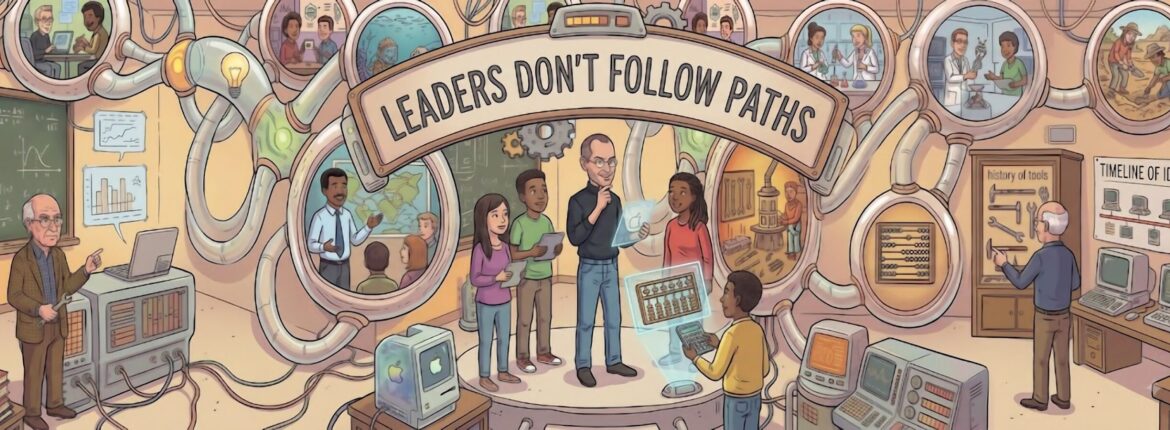
In the late 1990s, Steve Jobs made a surprising admission. As the man who had put more personal computers into classrooms than perhaps anyone else in history, he publicly stated that technology was by no means the most important thing in education (Computerworld, 1996).
"Computers are very reactive... What children need is something much more proactive," Jobs observed. "The most important thing is another person. Another person that incites your curiosity, guides your curiosity, feeds your curiosity. Kids don't need a digital assistant; they need a guide" (Jobs, 1996).
Jobs wasn't just offering a philosophical musing on teaching; he was predicting a fundamental shift in educational neuroscience. Decades later, his insights directly mirror the clinical findings of Dr. William Dodson—one of the world's leading authorities on Attention-Deficit/Hyperactivity Disorder (ADHD)—and explain why pioneer nations like Sweden and Finland are actively dismantling their 100% digital classroom models to return to paper, print, and human connection (Swedish National Agency for Education, 2023).
The Myth of the Digital "Fix" for ADHD
When modern schools attempt to support neurodivergent students, they often reach for technology: personalized learning portals, app-based task trackers, and remote video coaching.
Yet, as Dr. William Dodson’s extensive research highlights, ADHD is not a knowledge deficit or an organizational flaw that can be patched with digital checklists. Major clinical trials—such as the landmark Multimodal Treatment Study of ADHD (MTA)—proved that non-medication behavioral management and generic "executive function skills training" provided zero detectable long-term benefit over medication alone (MTA Cooperative Group, 1999). Subsequent studies by NYU and McGill University confirmed that behavioral routines fail to produce lasting, statistically significant improvements in functional performance (Abikoff et al., 2004).
The reason? ADHD is an interest-based nervous system (Dodson, 2016).
People with ADHD do not lack capability; they lack an automatic trigger to engage on demand. A cold digital interface is inherently reactive. It requires high internal task initiation and working memory—the precise executive functions that ADHD compromises. Dropping a neurodivergent student into an accelerated, screen-heavy curriculum creates immediate task paralysis, which is often compounded by Rejection Sensitive Dysphoria (RSD)—the intense, physically painful emotional reaction to perceived failure or falling short (Dodson, 2017).
The Scandinavian Pivot: Returning to Human Tangibility
This biological reality is precisely why the global experiment with hyper-digitized classrooms is reaching its limit.
For years, Scandinavian nations led the world in deploying tablets, digital-first instruction, and paperless environments. However, after watching reading comprehension decline and attention fragmentation rise, countries like Sweden executed a dramatic course correction: pulling screens out of primary classrooms, reintroducing physical textbooks, and prioritizing face-to-face instruction (Ministry of Education and Research Sweden, 2023).
They realized what Jobs pointed out decades earlier: you do not need a computer screen to spark a child’s wonder about gravity or mathematics. You need real-world tangibility, physical presence, and proactive human co-regulation.
The Intersection: Connection Over Algorithms
When Jobs reflected on his own childhood, he candidly admitted that without a fourth-grade teacher named Mrs. Hill who took the time to observe him, understand his intense energy, and challenge him with hands-on projects, he likely would have ended up in prison (Jobs, 1995). She didn't try to force him into a standardized box or manage him from a distance; she established a relationship built on mutual respect, high expectations, and authentic connection.
That relational dynamic is the exact thesis of Dr. Dodson’s clinical work:
"If I were to leave you with one thought, it is make a connection with your kids with ADHD. Let them know that there's at least one person who gets it, who sees how they're different and likes it, values it, doesn't want to change them, and doesn't see them as damaged or flawed. Everything else depends on that."
— Dr. William Dodson (Dodson, 2023)
The Path Forward for Education
Whether in traditional classrooms, elite sports academies, or remote learning models, the lesson is clear: software cannot replace human safety.
- Digital tools are assistants, not guides: Apps can track data, but only human connection disarms Rejection Sensitive Dysphoria and creates the emotional safety required for an ADHD brain to take risks.
- Engagement precedes execution: You cannot coach an ADHD student through generic behavioral checklists. You must ignite curiosity and establish a personal bond.
- Co-regulation drives performance: Before a neurodivergent student can self-regulate in a high-demand environment, they require the proactive, grounding presence of an adult who sees their potential rather than their deficits.
Steve Jobs recognized that technology’s role in learning was strictly secondary. Dr. Dodson proved the clinical mechanics behind why that is true. And as modern schools rebuild their environments for real human brains, the message remains unchanged: true education begins not with a login screen, but with a guide who truly sees the student.
References
- Abikoff, H., et al. (2004). Symptom outcome and six-month stability of stimulant and behavioral treatments for ADHD in young children. Journal of the American Academy of Child & Adolescent Psychiatry, 43(7), 802-811.
- Computerworld. (1996, February 19). Steve Jobs on Technology in Education: Interview Extracts. Computerworld Magazine.
- Dodson, W. (2016). Secrets of the ADHD Brain: Why We Think, Act, and Feel the Way We Do. ADDitude Magazine.
- Dodson, W. (2017). Emotional Dysregulation and Rejection Sensitive Dysphoria in ADHD. ADDitude Professional Webinar Series.
- Dodson, W. (2023). ADHD Background of Failure & Clinical Summary Series. ADHD Flow / ADDitude Clinical Archives.
- Jobs, S. (1995). The Smithsonian Visionary Award Interview with Steve Jobs. National Museum of American History.
- Jobs, S. (1996). Steve Jobs on Teachers, Technology, and the Role of the Educator. Wired/Computerworld Archives.
- Ministry of Education and Research Sweden. (2023). Strategy for Digital Transformation in the School System: Pivot back to Physical Textbooks and Fundamental Skills. Government Offices of Sweden.
- MTA Cooperative Group. (1999). A 14-month randomized clinical trial of treatment strategies for attention-deficit/hyperactivity disorder. Archives of General Psychiatry, 56(12), 1073-1086.
- Swedish National Agency for Education (Skolverket). (2023). Evaluation of Digitalization in Primary Education and Reading Comprehension Metrics. Stockholm: Skolverket.