
For youth on the autism spectrum (ASD), team sports characterized by continuous, unpredictable social choreography (like basketball or soccer) can create an overwhelming cognitive load. However, individual sports and highly structured, isolated roles within larger sports provide an ideal canvas. These environments allow a rigid, systematic, and deeply focused brain to achieve mastery by turning movement into an absolute science.
The Appeal of the Predictable Environment
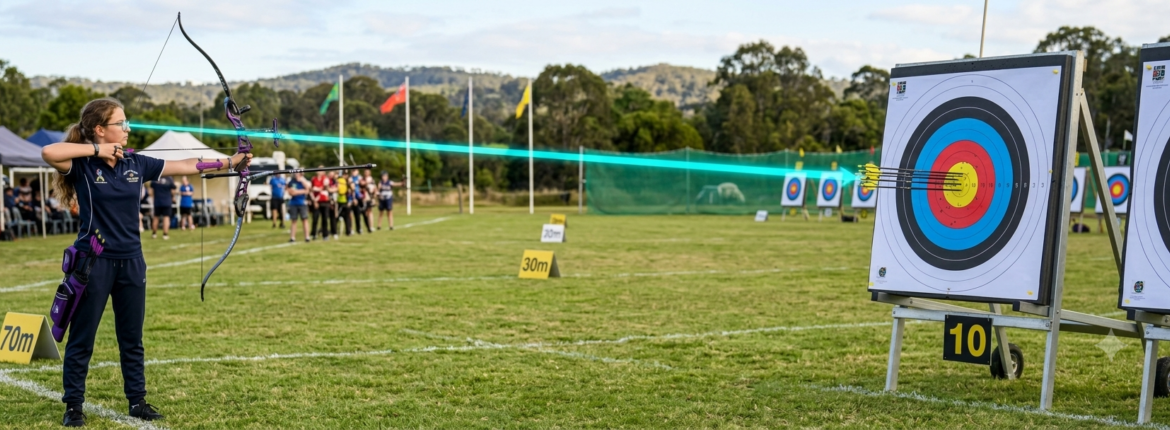
- Bowling, Archery, and Table Tennis: These sports function as closed-loop systems. The physical variables are highly controlled and repetitive. An ASD athlete can hyper-focus on the physics of a repeatable trajectory, optimizing their stance, release angle, and sensory-motor loops until the movement becomes a precise, comfortable script.
- Gymnastics and Singles Badminton: Gymnastics rewards geometric precision, balance, and highly technical, predictable sequencing. In singles badminton, the spatial boundaries are explicitly defined, and the athlete has absolute personal sovereignty over their half of the court—there is no chaotic team communication required, only immediate physical execution.
- Golf: Golf provides a massive spatial outlet that naturally encourages focus, rhythm, and self-regulation. Drills that rely on precise, systematic repetition—such as the "around the world" putting drill—allow a meticulous brain to build immense confidence and a deep, intuitive sense of spatial orientation.
The Sanctuary of the "Island" Position
Beyond strictly individual sports, there are highly individualistic, isolated positions hidden within larger, chaotic team sports. These are often referred to as "island" roles:
- The Football Field Goal Kicker: A kicker lives entirely in a closed loop within a collision sport. Their job is completely isolated from the chaotic, shifting tactics of the rest of the field. They step onto the grass to execute a single, perfectly rehearsed, mechanical sequence: step back, step over, plant, and swing. The entire process relies on spatial references and sensory-motor consistency, making it a perfect haven for a highly systematic brain.
- The Baseball Closer: Much like a kicker, a closer enters a game under distinct, high-stakes conditions with a single, unyielding objective: dominate a small, defined strike zone using specialized, repetitive mechanics.
- The Soccer Goalkeeper: While soccer is fluid and chaotic, the goalkeeper occupies a distinct spatial territory with an entirely different set of rules from the rest of the team. Training for a goalkeeper is deeply tactical and relies on mechanical precision, geometric angles, and intense focus to navigate high-pressure moments.
Dismantling the "Poor Motor Development" Myth
A persistent and damaging medical narrative suggests that all individuals on the autism spectrum suffer from poor motor development, dyspraxia, or general clumsiness. While some individuals do experience coordination challenges, generalizing this across the entire spectrum is a harmful stigma that directly limits an ASD individual's quality of life.
The Root of the Misunderstanding
The illusion of poor motor skills often stems from an environment, not an inability. In chaotic, loud, and socially demanding sports environments, an ASD child's brain faces severe sensory and cognitive overload. When a brain is working in overdrive to filter out shouting teammates, unpredictable movements, whistle blasts, and bright lights, it cannot effectively signal muscle groups to execute fluid movements.
The child is not uncoordinated; they are sensorially overwhelmed. When placed in a low-friction, structured, and predictable individual sporting environment, that same child can demonstrate elite motor control, impeccable spatial awareness, and staggering physical dexterity.
The Cost of the Stigma
When educators, parents, and coaches internalize the myth that ASD kids are inherently uncoordinated, they preemptively close the door to physical culture. This systemic gatekeeping prevents neurodivergent youth from:
- Experiencing the profound mental health benefits of physical self-regulation and athletic focus.
- Discovering areas of high-level mastery where their systematic, hyper-focused processing is a superpower, not a deficit.
- Building lifelong confidence in their own physical autonomy and spatial navigation.
By recognizing that an ASD brain learns and executes movement through structured, sensorially controlled systems, we can stop managing them out of sports and start guiding them toward the arenas where their unique cognitive style is an elite athletic asset.