
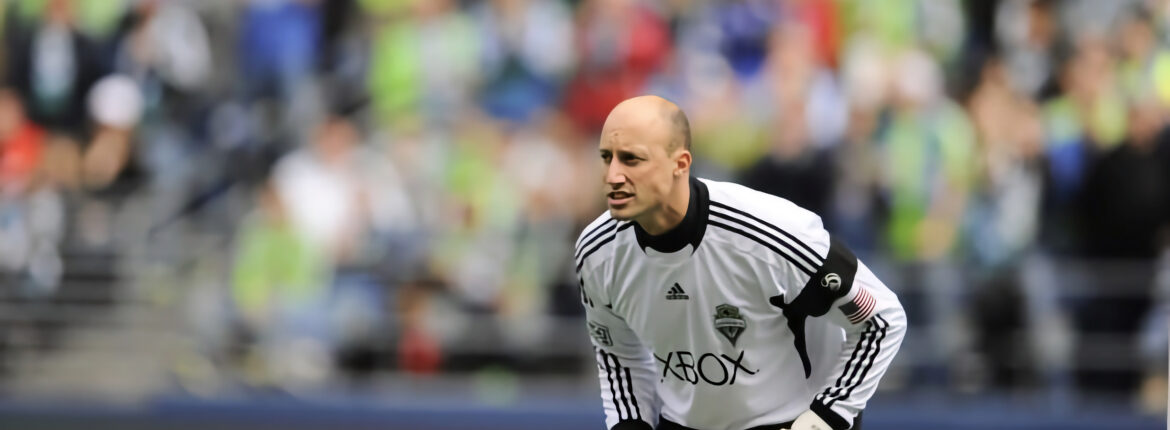
The goalkeeper position in soccer is a fascinating paradox: it is an isolated, highly specialized role that requires intense psychological resilience, making it uniquely suited for an athlete with ADHD. While it is often viewed as a "wallflower" position because the keeper stands apart from the continuous, fluid movement of the rest of the team, this exact structural isolation serves as a powerful protective mechanism against Rejection Sensitive Dysphoria (RSD)—an intense emotional sensitivity to perceived failure or criticism that frequently accompanies ADHD.
Furthermore, goalkeeping is unique because it is the one position in soccer where being a multisport athlete is absolutely essential. The diverse sensorimotor programming acquired from other sports provides the exact physical and cognitive toolkit a world-class keeper needs.
Here is a breakdown of why the goalkeeping position fits the ADHD nervous system and the multisport profile so well, in both practice and live performance.
1. Performance Dynamics: The Dopamine Rush of "High-Stakes Hyperfocus"
The pacing of a soccer match perfectly matches the dopamine-seeking nature of an ADHD brain, which thrives under high urgency but flags during sustained, monotonous tasks.
- The "Crisis Mode" Catalyst: Goalkeeping consists of long periods of scanning punctuated by explosive, fractions-of-a-second action sequences. For an ADHD athlete, a sudden breakaway or a shot on goal acts as an immediate neurological trigger, inducing a state of hyperfocus. The brain treats the incoming ball as an acute crisis, instantly organizing chaotic thoughts into absolute clarity.
- A Defined Spatial Blueprint: Unlikfield players who must constantly navigate 360 degrees of fluid tactical positioning, changing passing lanes, and off-the-ball runs, the goalkeeper’s job is governed by rigid geometric boundaries (the penalty box and the goalposts). This clear spatial reference frame aligns beautifully with sensorimotor learning frameworks, making it easier to calculate angles and navigate the environment without getting overwhelmed by field chaos.
2. The Multisport Essential: Cross-Trained Sensorimotor Intelligence
While field players benefit from specialized, repetitive soccer-specific footwork, a goalkeeper's success relies on a diverse vocabulary of physical movement. Tracking, catching, leaping, and body tracking are cross-sport disciplines.
[Basketball / Volleyball] ----> Explosive Lateral Movement, Footwork & Verticality
[Baseball / Softball]     ----> Tracking Micro-Trajectories & Elite Hand-Eye
[Football (Receiver/DB)]  ----> High-Point Catching & Tracking in Traffic
- The Basketball/Volleyball Overlap: The footwork required to defend a goalpost mimics the lateral shuffling and explosive verticality of a basketball player protecting the rim or a volleyball player blocking a net. Navigating a crowded penalty box during a corner kick requires the exact same spatial awareness and "high-pointing" tracking skills used by a football wide receiver or a basketball rebounder.
- The Baseball/Softball Connection: Field players rarely train their brains to track the micro-trajectories of a ball at high speeds using their hands. A background in baseball or softball programs the vestibular system to instantly calculate the velocity and spin of an incoming object, translating to elite, reflex-driven hand-eye coordination. By pulling from a rich catalog of varied athletic experiences, the keeper can instinctively solve chaotic physical problems on the fly.
3. Practice Dynamics: Rapid-Fire, Tangible Drills
Traditional soccer practice can sometimes lose an ADHD athlete if drills involve standing in long lines or executing abstract, multi-phase passing patterns. Goalkeeper training is completely different.
- Micro-Circuits and Fast Feedback: High-quality goalkeeper training is built on short, high-intensity repetition blocks—such as reflex saves, diving drills, and reaction balls. These drills offer immediate sensory and physical feedback (either you stopped the ball or you didn't), keeping the ADHD brain fully engaged and preventing the mental drift that occurs during slower team tactics.
- Physical Autonomy: Goalkeepers often train in a dedicated "keeper union" sub-group during practice. This smaller, highly focused environment reduces the social and sensory distractions of the larger group, allowing for deeper focus on the precision of hand-eye coordination.
4. The "Wallflower" Defense Against Rejection Sensitive Dysphoria (RSD)
Rejection Sensitive Dysphoria can be debilitating for an athlete, causing them to internalize a misplaced pass or a coach’s sideline shout as a devastating personal failure. The structural isolation of the goalkeeper acts as a natural buffer against these triggers.
- Separation from the "Blame Game" of General Play: In the midfield or defensive line, mistakes are often ambiguous. A lost ball might be blamed on a poor pass, a missed run, or a lack of communication, leading to immediate on-field arguments and second-guessing among teammates. Because the goalkeeper is physically isolated as the "wallflower," they are entirely removed from the minor, subjective squabbles of field play. Their role is clearly delineated. If a ball gets past the entire midfield and defensive line, the systemic failure belongs to the team long before it reaches the net.
- Clear Protocols Over Subjective Judgment: When a goalkeeper does have to make a play, the outcome is highly objective. They are executing practiced, reflex-driven protocols (e.g., parrying, smothering, coming off the line). Because the position is treated almost like a distinct sport within a sport, coaches and teammates naturally grant the goalkeeper a different set of performance standards and a degree of behavioral grace.
5. Embracing the Wallflower: The Freedom to Just Be Yourself
Beyond protecting against criticism, the absolute isolation of the 18-yard box grants the goalkeeper a rare psychological luxury: it is the one position on the field where an athlete can simply be themselves without mask or performance art.
On a soccer field, field players are caught in a web of constant social and tactical conformity—always adjusting their spacing relative to others, mirroring movements, and managing immediate peer friction. The goalkeeper answers to a different set of laws entirely.
- Authenticity in Isolation: As the ultimate wallflower, the keeper doesn’t have to blend in, match the team's continuous physical rhythm, or perform social maintenance on the field. They are allowed—and expected—to be a distinct entity. Whether they are intensely quiet, eccentric, vocal, or entirely stoic, the physical distance removes the pressure to perform "social correctness."
- A Sanctuary for the Neurodivergent Mind: This distinct boundary means the neurodivergent athlete doesn't have to waste precious executive function trying to mask their traits to fit into a collective hive-mind. In their own territory, they have total autonomy over their environment, their pacing, and their behavior. They are expected to be isolated, fierce, and fiercely independent. This systemic permission to be an outlier transforms the position from an isolated outpost into a sanctuary of self-regulation, allowing the athlete's true focus and confidence to flourish without the weight of conformity.