
When listening to a sweeping cinematic score, most people experience a wave of emotion, a sense of scale, or a sudden spike in adrenaline. But for a select group of neurodivergent minds, a musical arrangement is not just an auditory experience—it is a physical, vibrating space pulsing with shape, texture, and a vivid explosion of color.
In the landscape of modern film scoring, few creators embody this intersection of structural brilliance, creative chaos, and sensory crossover quite like composer Brian Tyler. Approaching $20 billion in box office grosses, Tyler is one of the most successful composers in cinema history. Behind his blockbuster soundtracks (The Super Mario Bros. Movie, Fast & Furious, Iron Man 3, Yellowstone, and Formula 1) lies a fascinating neurological framework. By examining his staggering workflow, multi-instrumental hyper-fixation, and open relationship with chromesthesia (sound-to-color synesthesia), we can see a compelling blueprint of an AuDHD—Autistic and ADHD—savant style in action.
1. The Multi-Instrumental Hyper-Fixation
A defining trait of the AuDHD brain is the intense, deep-dive curiosity that refuses to settle for superficial understanding. Where a traditional composer might sit at a piano and delegate the live performances to session musicians, Tyler frequently acts as a one-man orchestra.
He plays over 30 instruments—ranging from standard orchestral percussion, piano, and guitar to rare, obscure traditional instruments from across the globe. Witnessing his studio process is a masterclass in hyper-focus: rapidly pivoting from tracking live drums to building synth patches, to precision guitar work. This behavior perfectly mirrors a neurodivergent drive for immediate tactile immersion, bypassing the friction of translation by physically executing every layer of the sonic ecosystem himself.
2. High-Velocity Output and Dopamine Deadlines
The ADHD side of the AuDHD equation often thrives under extreme pressure, utilizing high-stakes environments to channel intense focus. Tyler’s filmography reads like an impossible logistical feat: over 100 major scores spanning massive blockbuster franchises, expansive television worlds, and global sporting themes.
This staggering volume of work requires a brain that doesn't just tolerate a high-octane pace but actively relies on it. For a mind fueled by dopamine seeking and rapid pattern recognition, the crushing deadlines of Hollywood provide a structural cage that turns potential creative chaos into hyper-productive output.
3. The Structural Math of Electronic Sound Design
Autistic cognitive traits often manifest as a profound affinity for systems, categorization, and tracking intricate patterns. Music, at its core, is pure physics and mathematics. Tyler’s signature style relies on a flawless, hyper-accurate blend of traditional acoustic orchestration and complex electronic synthesis.
He treats soundscapes like an multidimensional puzzle. Frequencies must be carved out with surgical precision, sine waves must phase correctly with brass sections, and spatial audio panning must mimic exact physical dimensions. It is a highly systemic, analytical view of art—where emotion is engineered through the meticulous management of acoustic architecture.
The Synesthetic Matrix: Mixing in Hues
When you overlay chromesthesia onto this highly organized, high-velocity workflow, the creative process transforms entirely. Chromesthesia is a form of synesthesia where audio frequencies automatically and involuntarily trigger visual color perceptions.
For Tyler, a score isn’t a collection of abstract ideas or black-and-white notes on a page; it is a canvas. The crossing of sensory wires—common in neurodivergent brains where developmental "pruning" between sensory pathways occurs differently—allows him to map sounds directly to colors.
When mixing a massive orchestral cue, adjusting a frequency isn't just about making it "brighter" or "darker" in audio terms; it’s about fixing the visual balance of the room. He famously notes that he can conduct an orchestra with dozens of violins and instantly detect if a single chair plays a B-natural instead of a B-flat because the color of the room turns incorrect. If a low-end brass section feels muddy, it might appear as an oppressive, overwhelming shade of brown or deep violet that needs to be dialed back to let a brilliant streak of amber strings cut through.
4. The Savant Showcase: Are We Dreaming
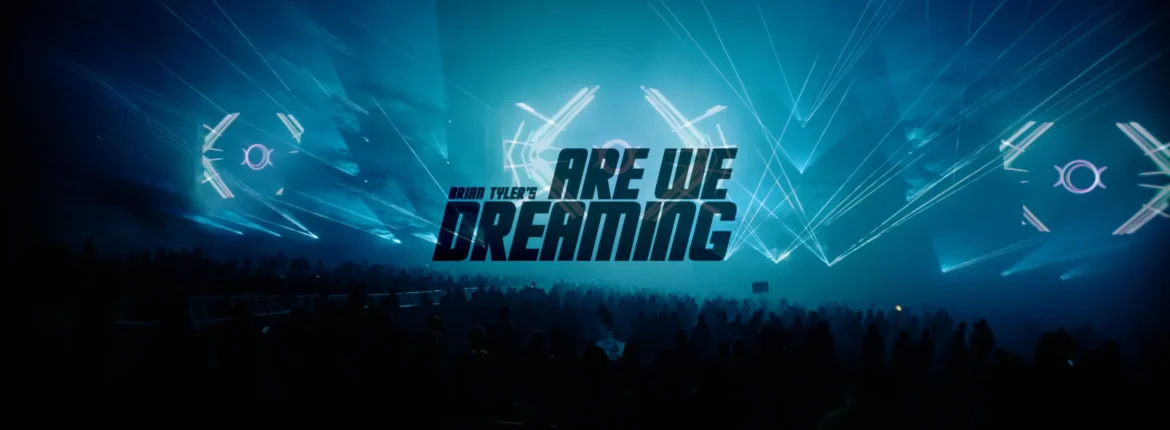
To fully grasp the visual reality of Tyler's neurodivergence, one has to look no further than his massive multimedia project, Are We Dreaming. Under this moniker, he functions not just as a composer, but as a director, animator, and video editor.
For years, Tyler lived with a quiet frustration during live concerts. Because of his chromesthesia, the flashing stage lights and video boards he saw at other artists' shows rarely matched the colors his brain was naturally generating in response to the music. The visual "noise" of a standard concert setup actually clashed with his internal sensory experience.
He created Are We Dreaming to solve this exact problem, effectively turning his mind inside out for the audience:
- Synesthetic Alignment: Every single light cue, laser, and visual element in the show is meticulously directed, edited, and color-timed by Tyler himself to perfectly align with the exact colors his chromesthesia produces.
- Swapping Perspectives: As Tyler describes it, when the show is running, the sensory conflict in his brain finally "cancels out". He gets to experience the music with a quiet, synchronized visual field while the audience is finally pulled directly into his neurodivergent world—seeing the exact visual canvas he sees when he creates.
- Intricate Patterns in Motion: Rather than standard EDM visuals, the project plays out like a futuristic, cinematic journey through space, time, and human emotion, bridging the gap between classical symphonic architecture and hyper-detailed electronic sound design.
5. Fusing Visuals and Sound: 3D Animation and Editing
Building a career as an elite Hollywood composer is already a lifetime's worth of hyper-focus. But taking on the brutal, steep learning curves of high-end 3D rendering, complex animation physics, and precision video editing—and doing it allhimself to match his internal color palette—takes his talent to a completely different level.
Usually, the brain that excels at the mathematical, spatial logic of 3D software (like tracking camera paths, managing polygon counts, and calculating light bounces) is not the same brain translating raw human emotion into a cello melody.
- The Autistic Systemizer: 3D animation is pure, tedious logic. It requires an intense comfort with complex software systems, file hierarchies, and rendering mechanics. It is a massive, unforgiving puzzle.
- The ADHD Synthesizer: Editing requires rapid-fire pattern matching, a keen sense of pacing, and constant sensory novelty.
By taking complete control of both the visual and auditory sides, he bypasses the need to translate his internal world to a team of designers. He can sit in his studio and use 3D engines to literally "sculpt" the visual representations of the colors he sees when a synth wave or brass section hits. Most people would experience severe cognitive overload trying to master just one of these massive creative disciplines. The fact that he treats them as two sides of the same coin is a beautiful testament to how a highly integrated, neurodivergent brain can process parallel channels of complex information simultaneously.
Conclusion: A Different Kind of Architecture
Ultimately, trying to separate Brian Tyler's creative genius from a neurodivergent framework misses the entire point of how his mind functions. His chromesthesia provides the vivid, immediate color palette, while his AuDHD workflow provides both the restless energy to play 30+ instruments and the systematic, pattern-seeking brain required to arrange them into cohesive masterpieces. He isn't just writing music to be heard—he is building intricate, brilliant worlds of color designed to be felt.
References
1. Chromesthesia, Synesthesia, & Neurodivergent Sensory Processing
- Cytowic, R. E. (2002). The man who tasted shapes: A bizarre medical mystery offers revolutionary insights into reasoning and perception. MIT Press.
- (Foundational text detailing synesthetic cross-modal perception, neural pruning differences, and sound-to-color mapping mechanisms).
- Cytowic, R. E., & Eagleman, D. M. (2009). Wednesday is indigo blue: Discovering the brain of synesthesia. MIT Press.
- (Examines chromesthesia, sensory integration, and how pitch/frequency variations trigger automatic visual color fields).
- Ward, J., & Simner, J. (2020). Synesthesia: The cross-modal brain. In Oxford Research Encyclopedia of Psychology. Oxford University Press. https://doi.org/10.1093/acrefore/9780190236557.013.158
- (Overview of sound-color cross-activation in cortical networks and its prevalence among neurodivergent artistic profiles).
2. Multi-Instrumental Hyper-Focus, Dopamine, & AuDHD Profiles
- Baron-Cohen, S. (2020). The pattern seekers: How autism drives human invention. Basic Books.
- (Establishes the hyper-systemizing framework of the autistic brain, detailing how high-level pattern recognition drives mastery of complex mechanical/musical systems).
- Dodson, W. (2018). Secrets of the ADHD brain: How your interest-based nervous system works. ADDitude Magazine.
- (Examines the role of interest, novelty, and high-velocity deadlines in bypassing working memory friction and driving hyper-focus states).
- Music Connection Magazine. (2021, June 28). Composer Profile: Brian Tyler.
- (Primary account documenting Tyler's self-taught mastery of over 30 instruments, his orchestral workflow, and his approach to recording all parts independently).
3. Systemic Sound Architecture, Electronic Synthesis, & Film Scoring
- Formula One World Championship Limited. (2018, March 21). Brian Tyler composes Official F1 Theme.
- (Details Tyler's mathematical integration of physical engine noise, Doppler effects, and full orchestral instrumentation into unified sound design).
- Kalinak, K. (2010). Film music: A very short introduction. Oxford University Press. https://doi.org/10.1093/actrade/9780195370874.001.0001
- (Contextualizes high-output scoring workflows, structural pacing, and dynamic mixing across modern cinematic franchises).
4. Live Audio-Visual Synthesis & Sensory Realization
- Are We Dreaming. (2021–2025). Live audiovisual project and concert experience [Media production notes]. Brian Tyler / Madsonik Projects.
- (Primary documentation for Tyler's multi-sensory live show designed to align stage lighting and 3D visual animation directly with his internal chromesthetic color map).
- The Jax Jones & Martin Warner Show. (2021, August 17). #10: Exploring the role of music in making a great film, epic… with Brian Tyler [Podcast interview].
- (Discusses synesthesia in film scoring, the creation of visual-audio resonance, and the creative mechanics of his score portfolio).
This podcast interview features Brian Tyler directly discussing his composition process, multi-instrumental approach, and how synesthesia shapes his work across film scores and live projects.