
For decades, researchers and parents have struggled to comprehend the escalating mental health crisis among teenagers. In adolescents with Attention Deficit Hyperactivity Disorder (ADHD), this crisis frequently manifests as an overwhelming, paralyzing state known as Rejection Sensitive Dysphoria (RSD). Characterized by extreme, unbearable emotional pain triggered by perceived or actual rejection, teasing, or failure, RSD was once understood purely as a neurological software glitch—an inherent vulnerability of the ADHD brain's executive functioning circuitry.
However, an emerging consensus among neurobiologists, developmental psychologists, and educators suggests a far more complex structural dynamic: RSD is being aggressively amplified by the modern, screen-dominated lifestyle that has systematically eradicated free, unstructured, real-time childhood play.
By starving young brains of the "sandbox of failure" historically provided by neighborhood games and schoolyard play, we have raised a generation of ADHD adolescents who possess virtually no neural calluses to protect them from social friction. When they enter the highly pressurized social architecture of high school, minor rejections feel like existential catastrophes. To fix this, we must look backward to leap forward: our K-8 education systems must undergo a structural revolution, expanding recess or lengthening the school day specifically to build cognitive and emotional resilience.
The Physics of Play: Building the Neural Shield Against RSD
To understand why the loss of play makes RSD worse, we must examine how unstructured physical play acts as a natural neurological stabilizer. In a self-directed game of tag, a pickup soccer match, or building a fort, children operate at the edge of social and physical chaos. They must constantly negotiate rules, interpret subtle non-verbal signals, self-regulate when a referee’s call is "unfair," and—most importantly—fail and lose in full view of their peers.
Psychologist Peter Gray, a leading researcher on the decline of play, notes that unstructured play serves as a form of natural "exposure therapy" for children. In these low-stakes, physical settings, a child experiences a brief, sharp spike of social anxiety or rejection (e.g., getting tagged out first or being left out of a play strategy). Because they desperately want to keep playing, their brain is forced to inhibit the primary threat response, self-soothe, and continue the game.
Through thousands of repetitions over a childhood, the brain solidifies a vital realization: “I failed, everyone saw it, and I am still safe.” This physical practice builds "rejection tolerance".
The Neurological Reality: The ADHD brain has a documented delay in the maturation of the prefrontal cortex—the region responsible for executive function, inhibition, and top-down emotional regulation. When an ADHD child is deprived of physical, unstructured play, they are deprived of the precise experiential gym required to wire these vital inhibitory pathways.
The Digital Substitute: High Stakes, High Isolation
As unstructured physical play has vanished from neighborhoods, replaced by sedentary, screen-mediated entertainment, the social feedback loop has fundamentally changed. This shift is particularly toxic for children with ADHD, whose dopamine-deprived brains are highly susceptible to the intermittent reward loops of social media and gaming.
When physical, real-time interaction is replaced by asynchronous screen-time, social communication becomes highly distorted:
- The Agony of the Void: In physical space, a direct minor slight is accompanied by immediate resolution, body language, and tone. On a screen, rejection is silent, ambiguous, and agonizingly delayed. An unanswered message or an unliked photo is a blank slate. The ruminative ADHD brain fills this silence with the worst possible interpretations, triggering a continuous, catastrophic RSD loop.
- The Escape Hatch: Online, children can mute, block, or rage-quit a game the moment conflict arises. While this offers temporary relief, it robs them of the critical social work of face-to-face repair. They fail to learn that a social rupture is not a permanent termination of safety.
Key Metrics on the Play Deficit
- 70% decline in children's unstructured outdoor play over the past three decades.
- 4 to 6 Hours is the average daily screen-time for elementary and middle school students.
The Systemic Fix: Why K-8 Schools Must Radically Expand Recess
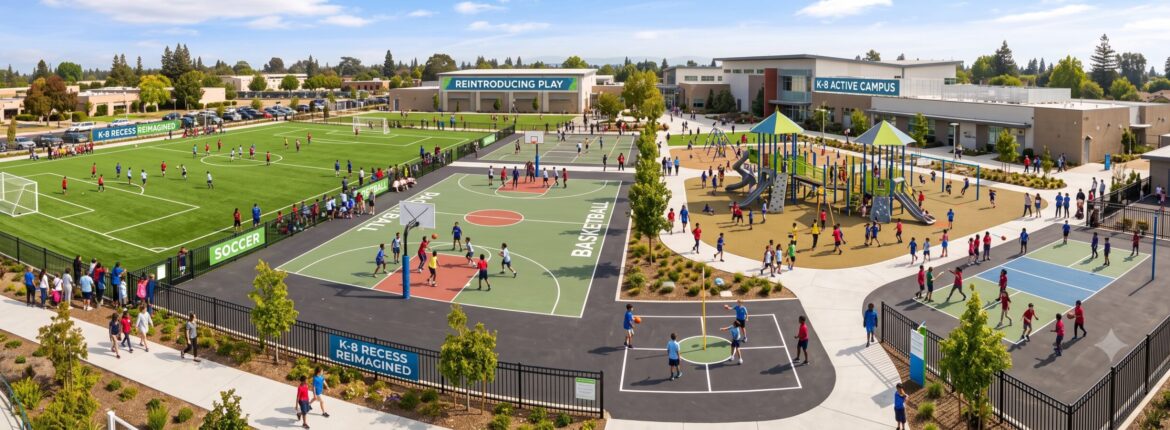
We cannot lecture or counsel an adolescent out of RSD. The neural circuitry of emotional regulation is built through somatic, experiential practice. Because children no longer have unstructured play in their personal lives, our educational institutions must step into the breach. K-8 schools must treat unstructured recess not as a luxury or a reward, but as a non-negotiable developmental intervention.
Schools must undergo a paradigm shift, expanding physical play through concrete policy changes:
1. Implementing Multiple, Distributed Chunks of Recess
The standard twenty-minute lunch recess is entirely insufficient to build social resilience. High-quality physical play requires transition time for children to establish boundaries, assign roles, and begin playing. K-8 schools should implement a minimum of three 25-minute periods of recess per day, spaced evenly to break up academic instruction. This distributed model keeps the nervous system active and provides multiple "practice arenas" for social navigation daily.
2. Extending the School Day to Protect Academic Integrity
When administrators hear proposals to expand recess, their immediate defense is the pressure of academic standards and "instructional minutes". To resolve this tension, districts must be willing to extend the elementary and middle school day by 30 to 45 minutes. This extra time must be legally earmarked exclusively for unstructured, outdoor play. By lengthening the day, schools can meet rigorous academic standards while ensuring that children receive the critical developmental benefits of free play.
The "Play-First" Policy Mandate
A resilient nervous system is the absolute foundation of all intellectual learning. State and district policies must prohibit the withholding of recess as a punishment for behavioral or academic issues. Taking away play from a struggling child, particularly one with ADHD, is developmentally counterproductive—it strips them of the exact tool they need to regulate their behavior and emotional responses.
Conclusion: Restoring the Sandbox of Failure
The explosion of severe Rejection Sensitive Dysphoria in today's high schools is a warning light on the dashboard of our society. By removing the physical, low-stakes environments where children historically practiced failing, losing, and reconciling, we have inadvertently built a fragile, high-stakes psychological landscape for our youth.
If we want our adolescents to withstand the inevitable social storms of high school and beyond, we must give them the physical space to fall down, skin their knees, and rebuild their social footing. By structurally integrating robust, non-negotiable play back into the daily rhythm of K-8 schools, we can help restore the natural, physical foundations of emotional resilience.