
The Digital Book
ADHD Escape Room starts with a simple idea: when home, school, work, and relationships feel like an escape room to an ADHD or AuDHD person, that is where academic research has traditionally lived—the pathology, impairment, failure, and dysfunction. What has barely been explored is the other side: what prevents those environments from becoming an escape room in the first place? The book examines the people, environments, relationships, accommodations, and influence of trauma that can determine which side of that divide someone experiences, including people diagnosed much later in life who may have spent decades living on the largely unstudied side. That is where much of the gold may be hiding: by studying the conditions under which ADHD and AuDHD people thrive, we may finally understand how to build homes, schools, workplaces, relationships, and accommodations that never become escape rooms to begin with.
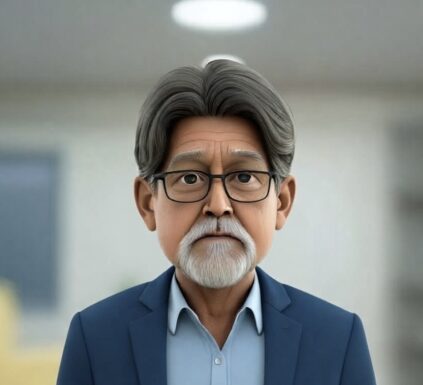
“Most of all I wanted to talk with the adults with ADHD who were NOT in my office. I wanted to know what they had figured out that so many others had not that allowed them to thrive and commonly do so without the aid of medications.”
Dr. William Dodson LF-APA
Draft Chapters/Sections ADHD Escape Room




What You Will Find Here
ADHD Escape Room is being built in public as a modular digital book: evolving chapters and sections that bring together lived experience, education, sports psychology, neuroscience, and mathematical models of the neocortex to move beyond behavioral description toward underlying mechanisms and, most importantly, testable predictions. With ChatGPT and Gemini as rapid research, drafting, and adversarial editing partners, I can challenge assumptions, follow connections across disciplines, and memorialize smaller pieces here as they evolve into the finished book. Where the science is settled, I say so. Where it is not, the goal is to make the unanswered questions precise enough to test.
Because each section is designed to stand on its own, arguments, predictions, and references may appear more than once, with references kept local for immediate investigation. The finished book is intended to function like ice cores for paleoclimatologists and volcanologists: a Rosetta Stone of observations and testable predictions that specialists can interrogate. It also examines the institutional failures that have shaped how ADHD and AuDHD people are researched, educated, treated, and supported—especially the academic research system that influences many of those downstream institutions. That means asking what gets studied, what gets funded, how funding shapes the questions researchers ask, and why American psychiatric classification has moved so slowly while international frameworks have evolved. The larger purpose is to redirect some of that enormous research energy from pathology and impairment toward the other side of the map: the mechanisms, environments, accommodations, relationships, and conditions under which ADHD and AuDHD people compensate, achieve flow, and thrive.