
EU
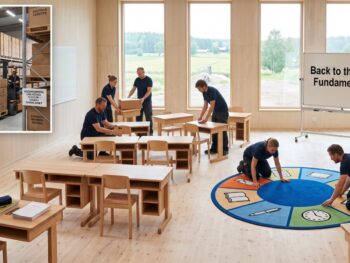
The Nordic Digital Paradox: How Unfettered Screen Time Fractured Classrooms—and the “Neo-Basics” Pivot That Followed
For decades, the Nordic nations stood as the global benchmark for education and civic responsibility. Built on high social trust, robust funding, and a deep commitment to child development, their systems seemed nearly bulletproof. When these countries pioneered 1-to-1 technology initiatives—handing every student a laptop or tablet—the world assumed it was the dawn of a […]
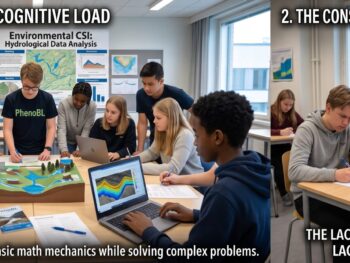
Finlands Phenomenon Based Learing and the Beginning of the Math PISA Scores Crash
No matter how engaging, authentic, or real-world a project is, you cannot bypass the reps when it comes to math. Mathematics is uniquely cumulative and hierarchical. While a student can jump into a complex historical or scientific phenomenon and analyze it conceptually, their ability to execute the underlying math depends on procedural fluency—and procedural fluency is built […]
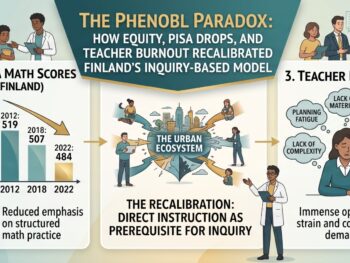
The PhenOBL Paradox: Why Finland Recalibrated Phenomenon-Based Learning
While Finland’s 2016 curriculum reform generated international buzz, the on-the-ground implementation of Phenomenon-Based Learning (PhenOBL) faced significant pushback from educators, researchers, and parents. The primary critique wasn't against project-based learning itself, but rather against the assumption that unstructured, student-led inquiry works equally well for every student and every subject. 1. The Disadvantage to Struggling and Neurodivergent Students […]

The Great Sensorimotor Course Correction
For over a decade, primary and secondary education underwent a quiet revolution: the wholesale replacing of paper, pens, and bound physical textbooks with 1-to-1 digital screen initiatives. Tablets and laptops were promised as the ultimate equalizers—interactive, infinitely customizable, and natively digital for a digital world. Now, a major reversal is underway. Across Scandinavia, governments are […]