
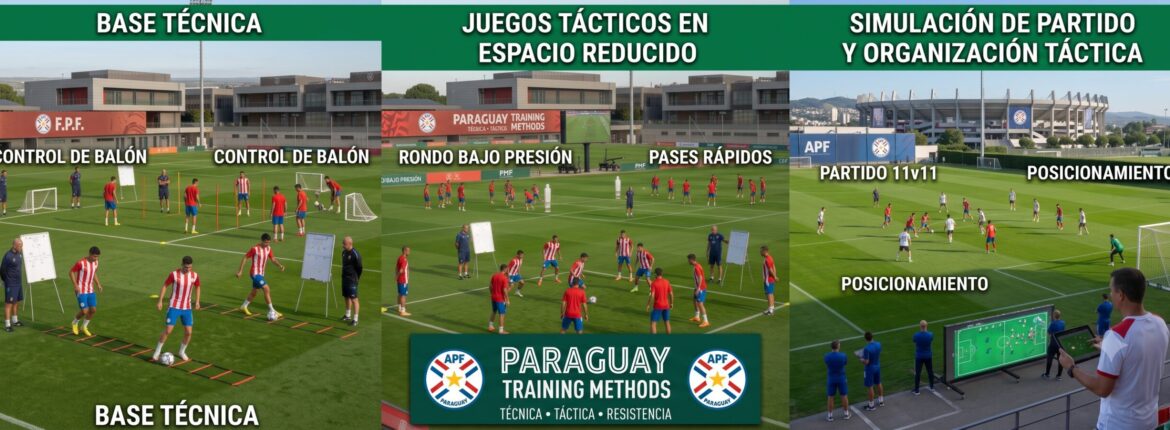
Paraguay has recently positioned itself as a major hub for sports inclusion in South America. While its national-level infrastructure historically focused heavily on physical and intellectual disabilities, the country's modern sports landscape—driven by partnerships between the Asociación Paraguaya de Fútbol (APF), the government, and international organizations—is shifting toward training methodologies that directly support cognitive processing, neurodiversity, and emotional regulation.
Rather than running isolated "ADHD-specific" clinics, Paraguay relies on an integrated, systemic approach to supporting neurodivergent soccer players through specialized training, inclusive local club programs, and elite mental conditioning.
1. The Special Olympics Global Coalition Framework
Paraguay recently made history as the first South American nation to join the Special Olympics Global Leadership Coalition for Inclusion. Backed by the Ministry of Sports and the Ministry of Education, this initiative has trickled down directly into youth soccer training through programs like Unified Champion Schools (Escuelas Unificadas).
- What it means for ADHD athletes: The training focuses on mixing neurodivergent and neurotypical players on the same pitches. For players with ADHD, this provides an environment that structures social interaction and team dynamics without isolating them, helping to build executive dysfunction workarounds (like real-time spatial awareness and verbal cues) organically.
- The "Open Schools" (Escuelas Abiertas) Program: This initiative expands sports and cultural activities to hundreds of schools on weekends. Soccer coaches in this system are trained to manage high-energy environments, moving away from rigid, lecture-based drills toward fluid, experiential game-play that naturally captures an ADHD athlete's hyperfocus.
2. Shift in Elite Training: Cognitive and Psychological Support
At the elite and academy level in Paraguay (including major clubs like Olimpia and Cerro Porteño, as well as youth national setups), there is a growing emphasis on sports psychology to handle the fast-paced, high-pressure nature of South American football.
For athletes managing ADHD or executive function challenges, modern coaching staffs are shifting away from traditional, purely physical drills toward methodologies that support the brain:
- Short, Dynamic Training Cycles: Recognizing that long, monotonous drills lead to mental fatigue and dropped focus, academies utilize high-intensity, rapidly shifting tactical scenarios. The continuous action of small-sided games (e.g., 3v3 or 4v4 matches) keeps the dopamine system engaged, allowing ADHD athletes to thrive.
- Visual and Kinetic Learning Over Verbal Direction: Coaches are increasingly utilizing non-verbal cues, visual diagrams, and physical walkthroughs. Because multi-step verbal instructions can sometimes trigger tracking difficulties or working memory overloads for neurodivergent players, training emphasizes "feeling" the tactical space rather than just memorizing a whiteboard.
- Sensory and Pressure Management: Elite academies work with sports psychologists to teach players sensory gating—blocking out stadium noise, crowd distractions, and internal performance anxiety to access a state of hyperfocus during match play.
3. The APF’s Broader Inclusion Drive
The Paraguayan Football Association (APF) has been active in showing a cultural commitment to diverse player and fan needs. A recent high-profile example includes their collaboration with Puma to launch a national team kit featuring tactile, raised symbols (the Constanz system) so visually impaired individuals can identify the shirt's colors by touch.
This macro-level focus on making the sport accessible from the ground up has paved the way for coaches across the country to adopt more empathetic, individualized approaches to player management—treating neurological differences not as a deficit, but as a unique processing style that simply requires the right training environment.