
When the Boston Globe’s Spotlight team broke the story of systemic clergy sexual abuse in 2002, the reporters exposed a chillingly calculated modus operandi. The perpetrators did not choose their victims at random. As real-life Spotlight journalist Michael Rezendes later noted, these predators were highly opportunistic: "They looked on the margins. They were like a wolf waiting for a lame sheep... they looked for children who didn't have father figures, who were vulnerable, who they knew would not speak out".
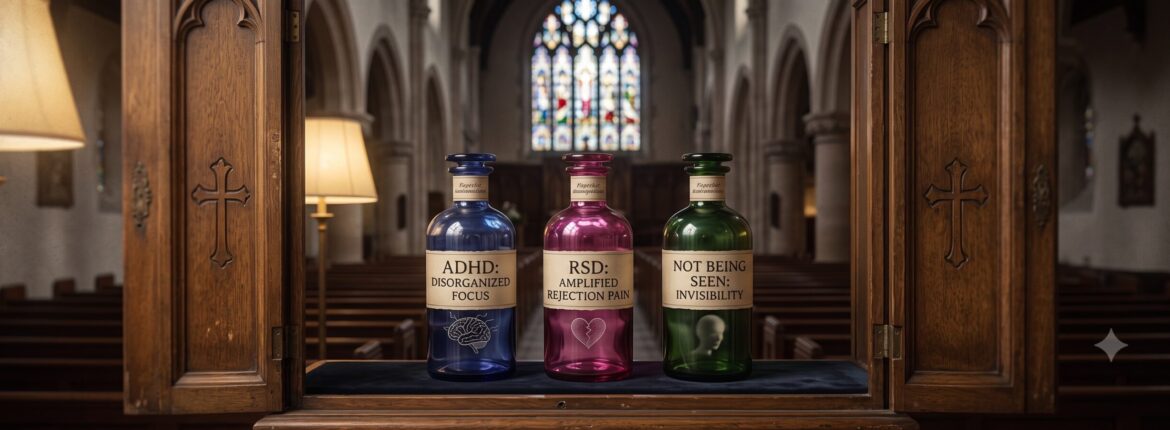
For a child navigating undiagnosed or unmanaged ADHD, Rejection Sensitive Dysphoria (RSD), and the profound ache of not being seen, those margins are a permanent residence. When these three internal factors intersect, they create a perfect psychological storm—rendering an ADHD youth uniquely vulnerable to the specific grooming tactics utilized by predatory authority figures, like the priests depicted in the Spotlight reports and subsequent film.
1. The Prey Profile: Exploiting the Neurodivergent Child
Predatory priests weaponized their status as community pillars to target children whose emotional or domestic baselines were unstable. For a child with ADHD, the world is often a chaotic, punishing place.
The Vacuum of "Not Being Seen"
Because of executive dysfunction, impulsivity, and emotional dysregulation, an ADHD child is frequently labeled as "difficult," "lazy," "too much," or "disobedient" by parents, teachers, and peers. They grow up surrounded by negative feedback, creating a profound emotional deficit.
When an authority figure—especially one cloaked in the absolute moral authority of the cloth—suddenly singles that child out, pays close attention to them, and validates them, it acts as an intoxicating relief. The predator fills the vacuum of "not being seen" with calculated, hyper-focused validation.
The Trait Amplifiers of ADHD
- Impulsivity and Novelty Seeking: ADHD brains crave dopamine. A priest offering special privileges—trips, gifts, behind-the-scenes access to the church, or elevated responsibilities—easily capitalizes on an ADHD child's natural drive for novelty and reward.
- Executive Clutter vs. Calculated Order: An ADHDer struggling to process their environment can easily be overwhelmed by the structured, insular world of the church. The predator provides an engineered sense of belonging that the child desperately craves but struggles to find elsewhere.
2. The RSD Trap: The Ultimate Weapon of Silence
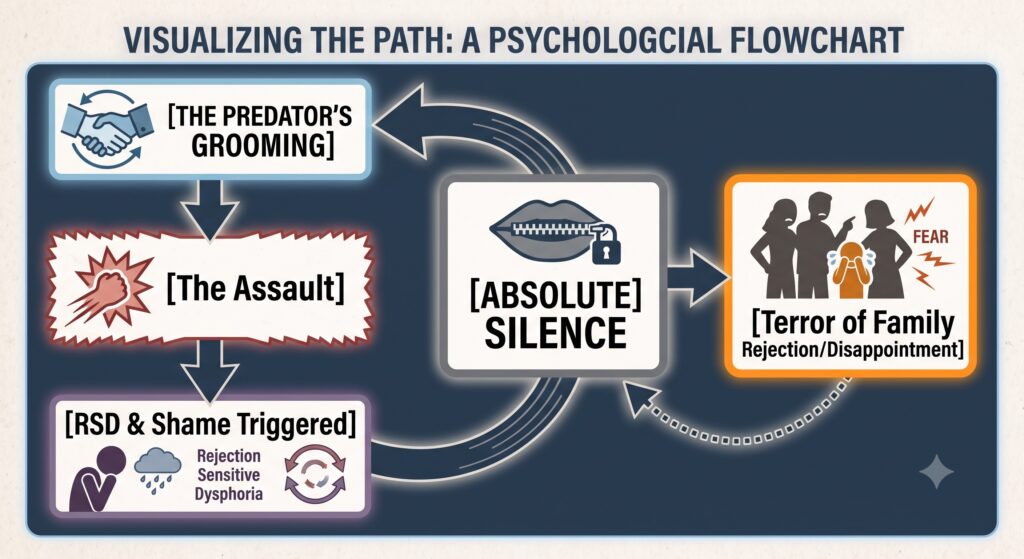
Rejection Sensitive Dysphoria (RSD) is an intense, agonizing emotional pain triggered by the perception—real or imagined—of rejection, failure, or criticism. In the hands of a skilled predator, a child's own RSD becomes the lock and key that guarantees their silence.
Exposing Vulnerability Feels Like a Landmine
For an ADHDer with RSD, the thought of telling their family about an assault isn't just a difficult conversation; it triggers a mental simulation of absolute catastrophe. The child assumes that disclosing the abuse will lead to:
- Disappointment and Disgust: The fear that their parents will look at them as "ruined" or fundamentally broken.
- Systemic Collapse: The realistic or perceived terror that speaking up will destroy the family's social or religious standing.
Because the ADHD nervous system experiences emotions at an extreme volume, the anticipated pain of this rejection causes the child to freeze. They choose the ongoing internal torment of the secret over the explosive, unpredictable risk of telling their family.
3. The Institutional Gaslight: Stranger vs. Insular Predator
As Spotlight masterfully demonstrated, the Catholic Church operated as a total institution that fiercely protected its own ecosystem. As victims' attorney Mitchell Garabedian pointed out in real-life reflections, the Church functioned as a powerful, secretive entity that genuinely believed it controlled the world, utilizing its immense wealth and influence to suppress the truth.
When the predator is an institutional authority figure rather than a stranger, the ADHD child's internal defense mechanisms completely collapse.
- Erosion of Reality: ADHD individuals already struggle with self-doubt due to chronic working memory issues and a history of being told they misinterpret situations. When a priest tells an ADHD child, "This is a special secret between us," or "God approves of our love," the child's internal alarm system is systematically dismantled. They lack the emotional stability to challenge the absolute reality dictated by the adult.
- The "Village" of Enablers: As the movie famously noted, “If it takes a village to raise a child, it takes a village to abuse one”. The insular nature of the community meant that if a child even hinted at discomfort, the surrounding adults—deeply invested in the infallibility of the priesthood—would often minimize, brush off, or gaslight the child's complaints. For an RSD-prone child, a single instance of a parent dismissing their discomfort is enough to permanently seal their lips.
Conclusion: Understanding the Multi-Layered Target
The Boston Globe Spotlight investigation was historic because it proved that clergy abuse was a predictable, calculated, structural crime. The predators intentionally sought out the children who were the least likely to be believed, the most desperate for affection, and the most paralyzed by the prospect of social exile.
An ADHD young adult who has survived this specific intersection carries a multi-layered nervous system response: the baseline executive struggles of ADHD, the hyper-vigilance of RSD, and the profound, systemic freeze response of childhood sexual trauma. Recognizing how these elements feed into one another is vital—not only for understanding the profound mechanics of grooming but for guiding survivors toward trauma-informed, neurodivergent-affirming healing.
Deep Dive Resources
To better understand the real-world journalistic investigation and legal battles that inspired the cinematic adaptation, you can watch Spotlight's Mitchell Garabedian & Michael Rezendes Discuss The Film's Impact. In this interview, reporter Michael Rezendes and attorney Mitchell Garabedian reflect on how the film validated decades of survivors' stories and address the enduring institutional power structures they fought to dismantle.