
01
Build Awareness of Trauma's Role in Impairing ADHDers in the Classroom
Recognizing how past trauma and neurodivergence intersect is vital for creating safe, understanding learning environments where students aren't just managed, but genuinely supported.
02
Target the Institutional Failures in Supporting and Nuturing ADHDers
Examining how systemic breakdowns across schools, home life, and adult psychiatric care consistently fail neurodivergent individuals by demanding neurotypical conformity instead of providing real structural support.
03
Celebrate where ADHDers Fit, Excell and Everthing Flows
Shifting the narrative toward hyperfocus, creativity, and natural strengths allows ADHD individuals to thrive in spaces tailored to how their minds work.

"A child’s worst fears are that they are unlovable (because they are broken in some way) and they are going to be abandoned with a problem they cannot fix, no matter how hard they try. If a child knows that you see the potential for greatness in them, they will walk through Hell for you to deliver that greatness."
Dr. William Dodson LF-APA
Institutional
Failures
ADHD Escape Room exposes how widespread institutional failures—spanning academic research, poorly trained clinicians and teachers, and rigid systemic policies—trap individuals in a destructive cycle of misunderstanding, criticism, and shame instead of offering true support. Rather than just navigating standard school rules, neurodivergent people face an environment where institutional shortcomings turn ordinary neurological differences into years of conflict and needless trauma. When researchers, educators, and mental health professionals repeatedly fail to understand the actual wiring of the brain in front of them, the resulting alienation drives many ADHDers to check out of traditional treatment entirely and turn instead to self-medication and unproven remedies.
25%
Despite its prevalence, only 10-25% of adults with ADHD receive an accurate diagnosis and adequate treatment. Women with ADHD face unique challenges. Many are misdiagnosed or undertreated, often receiving antidepressants instead of appropriate ADHD treatment. This gap in care represents a significant public health challenge.
Trauma
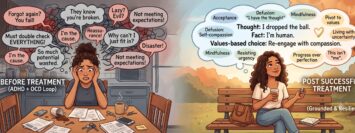
Unresolved trauma fundamentally alters neurodevelopment and hijacks the brain's predictive processing systems, locking the nervous system in a chronic state of threat detection where higher-order cognitive processing, working memory consolidation, and deep learning become biologically inaccessible. When a child or adult with ADHD faces cumulative developmental trauma from chronic criticism and rejection, their brain prioritizes immediate emotional self-preservation over exploratory curiosity—transforming the classroom, workplace, or any environment requiring vulnerability and potential failure into a zone of high-stakes danger rather than a space for skill acquisition.
Dr. Russell Barkley
Dr. Russell Barkley’s disproportionate influence on ADHD thinking in the 2000s helped focus the field heavily on executive-function deficits. That influence also impaired the flow of research into a critical question: how childhood trauma changes the developmental trajectory of an ADHD child into adulthood.
It also left another population largely unexplored: ADHD adults who thrived, often diagnosed in their forties after their children were diagnosed. Some had supportive homes, schools that fit them, and no childhood experiences that would be classified as trauma. They learned to ask for help, compensate, and build scaffolding where their ADHD brains needed it.
They still had ADHD. But they were never fighting themselves or their past. Studying these adults alongside ADHD adults who experienced childhood trauma could help separate what belongs to ADHD itself from what emerges through the interaction of ADHD, trauma, and environment.
Athletics
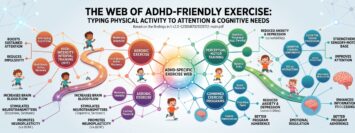
Academic ADHD research remains trapped behind a pathological lens that treats sports merely as a clinical management tool rather than a profound model of cognitive flourishing. By ignoring the vast repository of elite athletic performances where fast-paced, high-stakes environments naturally optimize kinesthetic and sensorimotor decision-making, researchers miss how the ADHD brain achieves peak operational flow. Platforms like ADHDEscapeRoom.com actively challenge this academic oversight by spotlighting sports as a natural haven for thriving, compelling the scientific community to shift its gaze from deficit checklists to the mechanics of high-performance success.
Latest Posts







Advocates

Joseph Sisko
Creative Director and ADHD Advocate

Dr William Dodson
ADHD Mental Health Advocate

Maryann Theadora
Leed Empath

Benjamin Sisko
Defiant Captain
Legal & Educational Disclaimer
1. Educational and Informational Purposes Only The content provided on this website—including articles, frameworks, graphics, podcast episodes, and apparel concepts—is for informational, educational, and advocacy purposes only. It is intended to highlight alternative learning insights and neurodivergent potential. It is not a substitute for professional medical or psychological advice, diagnosis, or treatment.
2. Anecdotal Evidence and Comorbidities The personal stories, field experiences, and strategies shared here represent anecdotal evidence showcasing the potential of individuals with ADHD, AuDHD, and ASD. These accounts are presented without any warranty or guarantee of specific outcomes. Because the behavioral science profession frequently navigates a multitude of complex, underdiagnosed comorbidities, what works for one individual may not apply to another.
3. No Professional Relationship Your use of this website, or your interaction with any associated materials, does not create a professional-client, therapist-patient, or advisory relationship.
4. Seek Professional Advice Always seek the advice of your physician, licensed therapist, or other qualified healthcare provider with any questions you may have regarding a medical or mental health condition. Never disregard professional medical advice or delay in seeking it because of something you have read on this platform.
5. Limitation of Liability By utilizing the information, concepts, or tools discussed on this website, you voluntarily agree that you are doing so at your own risk. The creators and affiliates of this platform assume no responsibility or liability for any consequence resulting directly or indirectly from any action or inaction you take based on the information provided.
6. Crisis Notice This website is not a crisis monitoring resource. If you or someone you know is struggling with a mental health crisis, please contact your local emergency services (such as dialing 988 or 911 in the U.S.) or go to the nearest emergency room immediately.