
Pop Culture

The Case of the ADHD Pope: Cardinal Bergoglio’s Field Hospital
Before he was Pope Francis, he was Cardinal Jorge Mario Bergoglio of Buenos Aires. But long before he ever wore the white cassock, the architecture of his ministry was already defined by a distinct cognitive rhythm: a profound intolerance for rigid, static protocol, an insatiable need for raw sensory input, and a hyper-reactive emotional volume […]

The Executive Disruptor: Why Teddy Roosevelt Was America’s First “Steve Jobs” President
History books love to paint Theodore Roosevelt as a rugged cowboy, a monocled rough rider, or a booming voice shouting "Bully!" across the lawn. But if you strip away the 20th-century scenery and look strictly at the architecture of his mind, TR wasn’t a traditional politician at all. He was America's first true Silicon Valley-style […]
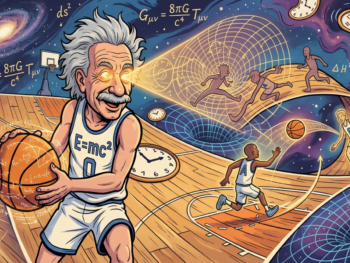
Non-Linear Genius: How Magic Johnson and Albert Einstein Mapped the Future
Comparing Magic Johnson’s court vision to Albert Einstein’s discovery of relativity reveals a fascinating parallel in how genius operates. Both men possessed a cognitive superpower: the ability to abandon rigid, linear viewpoints and instead map how space, time, and relative motion interact as a single fluid system. Einstein didn't discover relativity through abstract math alone; he did […]
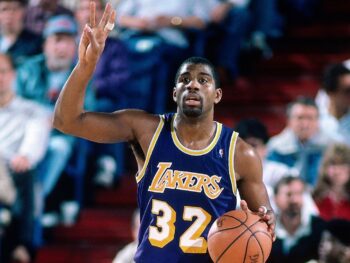
The Non-Linear Court Vision: Anticipating the Unseen
Earvin "Magic" Johnson didn't just play basketball; he conducted an orchestra at 120 miles per hour. Standing at 6'9", he fundamentally broke the traditional blueprint of a point guard. While coaches of that era valued linear, systematic play—running predictable sets down the floor—Magic thrived on raw, intuitive, and highly responsive processing. When you look at […]
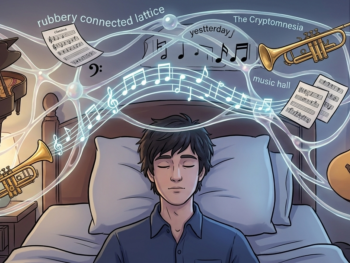
The Cryptomnesia Blueprint: Architecture of the Unconscious Leap
The story of Paul McCartney waking up with the melody of "Yesterday" completely intact—originally singing the placeholder lyrics "Scrambled eggs, oh my baby how I love your legs"—is perhaps the ultimate historical example of the "rubbery lattice" doing the work entirely off-stage. When a non-linear, hyper-associative brain is constantly stockpiling dots, the actual "writing" doesn't happen […]
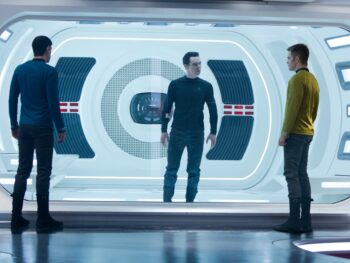
The Tri-Star Synergy: How Neurodivergent Brilliance Shattered the “Deficit” Narrative in Star Trek Into Darkness
In the field of modern psychiatry, a fierce ideological battle is being waged over the neurodivergent brain. On one side stands the rigid, traditional medical model—personified by figures like Dr. Russell Barkley (whom many in the community sarcastically dub Dr. "Darkley"). This framework views ADHD strictly as a dark room of deficits, executive dysfunction, and […]
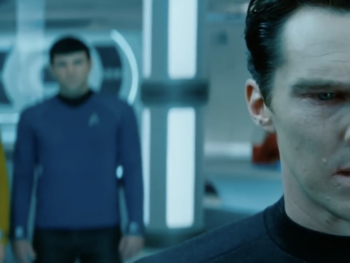
The Biology of a Scene: How Emotional Dysregulation Made Benedict Cumberbatch’s Khan an Unforgettable “Emotional Chameleon”
There is a moment in Star Trek Into Darkness that permanently altered how audiences viewed the iconic villain, Khan Noonien Singh. Locked inside a high-tech brig, framed by sterile glass, Khan delivers a monologue to Captain Kirk about the fate of his cryogenically frozen crew. His posture is perfectly still. His voice is cold, measured, and terrifyingly […]
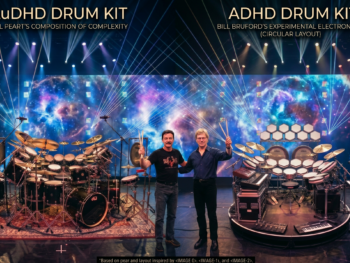
The Architecture of Rhythm: Neil Peart, Bill Bruford, and the Neurodivergent Drum Kit
In the world of progressive rock, two names sit uncontested on the Mount Rushmore of percussion: Neil Peart of Rush and Bill Bruford of Yes and King Crimson. Both were absolute masters of mathematical complexity, polyrhythms, and impossible time signatures. Yet, if you sit down and watch them play, their performances feel as though they […]

Why the Enterprise is the Ultimate Haven for Neurodivergence and Trauma
For nearly sixty years, Star Trek has invited audiences to look to the cosmos and imagine a better future. But for a vast contingent of the fandom, the starship Enterprise represents something far deeper than a vessel of exploration. It is a sanctuary. Whether navigating an atypical brain—like an AuDHD profile or dyslexia—or carrying the suffocating weight of profound […]