01
Deconstruct the Myths of Digital-First "Innovation
Exposing how screen-based learning and EdTech pushed mass digitalization at the expense of hands-on, kinesthetic, and human-centered development.
02
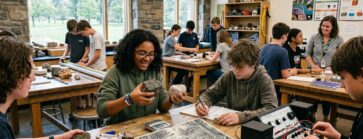
Prioritize Kinesthetic and Sensorimotor Foundations
03
Rebuild Systemic Architectures Around Natural Cognition
Designing educational frameworks that align with how the human brain actually develops and learns, turning away from rigid compliance models toward true developmental support

“We have learned that the digitalization, the educational technology does not uplift quality and equity of education systems….and I think, you know, it's not only my opinion, but whatever way you look at the research evidence, the conclusion is that it has been, indeed, a wrong way, a wrong direction to try to improve education systems. “
Dr Pasi Sahlberg, Finland
Rebooting
Education
Sweden and the Los Angeles Unified School District transitioned away from ubiquitous 1-to-1 device models to correct the academic drift caused by uncritical, screen-heavy mandates. Sweden reallocated substantial funding to physical textbooks, handwriting instruction, and printed literature to rebuild foundational literacy and cognitive stamina, particularly after national data highlighted the negative impacts of early digital saturation. Similarly, LAUSD recalibrated its device policy by restricting daily screen time, eliminating take-home technology mandates for younger grades, and scaling back default digital platforms that fragmented attention.
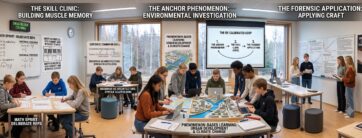
Crucially, this return to neo-basics does not signal a retreat into passive, rote memorization or rigid 19th-century instruction. Instead, these systems are leveraging the removal of individual screens to re-energize active, tactile pedagogies—most notably Finland’s phenomenon-based learning and robust project-based frameworks. By establishing a stable, screen-free baseline of physical literacy and analog tools, educators are finding that students can engage more deeply in collaborative, multidisciplinary, and hands-on inquiry without the cognitive friction and distraction inherent to constant device dependency.



5 hours
Parents trusted school-issued devices as safe, sanctioned educational tools, completely unaware that they functioned as digital Trojan horses granting round-the-clock access. Because schools endorsed the technology, families permitted unrestricted home use under the assumption it was secure and beneficial. However, this 24/7 connectivity kept children engaged deep into the night with notifications, streaming, and social media, systematically dismantling natural rest cycles. Consequently, student sleep averages plummeted to a critical low of just five hours a night.
Trauma
Unresolved trauma fundamentally alters neurodevelopment and hijacks the brain's predictive processing systems, locking the nervous system in a chronic state of threat detection where higher-order cognitive processing, working memory consolidation, and deep learning become biologically inaccessible. When a child or adult with ADHD faces cumulative developmental trauma from chronic criticism and rejection, their brain prioritizes immediate emotional self-preservation over exploratory curiosity—transforming the classroom, workplace, or any environment requiring vulnerability and potential failure into a zone of high-stakes danger rather than a space for skill acquisition.
Brandy Tackett
I am a career educator and school principal with more than 2 decades of experience leading high-needs and turnaround schools as a teacher, instructional coach, assistant principal, and principal.
My work centers on emotionally intelligent leadership, authentic culture-building, and sustainable school improvement — especially in environments where trust has been broken, morale is fragile, and expectations are high.
I am the author of Emotionally Intelligent School Leadership: Lead with Heart, Transform with Purpose (Routledge | Eye on Education, releasing March 2026), a practitioner-rooted framework drawn from real schools, real challenges, and real leadership moments. The book is already being distributed internationally and reflects my belief that transformation happens when leaders prioritize people, clarity, and accountability together.
Rebooting Education: Neo-Basics