ADHD ESCAPE ROOM: SCHOOL REBOOT

The School Provided Laptop HAS BEEN the Trojan Horse All Along

ADHD ESCAPE ROOM

Electronic Devices and The Loss of Formative Play

ADHD ESCAPE ROOM: SCHOOL REBOOT

The Scandanavian Reboot: Neo Basics

ADHD ESCAPE ROOM

The Latest Pandemic: Social-Media-Based Sleep Deprivation!

01

Deconstruct the Myths of Digital-First "Innovation

Exposing how screen-based learning and EdTech pushed mass digitalization at the expense of hands-on, kinesthetic, and human-centered development.

02

Prioritize Kinesthetic and Sensorimotor Foundations

Championing learning environments rooted in physical engagement, environmental interaction, and real-world feedback loops rather than passive screen consumption

03

Rebuild Systemic Architectures Around Natural Cognition

Designing educational frameworks that align with how the human brain actually develops and learns, turning away from rigid compliance models toward true developmental support

“We have learned that the digitalization, the educational technology does not uplift quality and equity of education systems….and I think, you know, it's not only my opinion, but whatever way you look at the research evidence, the conclusion is that it has been, indeed, a wrong way, a wrong direction to try to improve education systems. “


Dr Pasi Sahlberg, Finland

Rebooting

Education

Sweden and the Los Angeles Unified School District transitioned away from ubiquitous 1-to-1 device models to correct the academic drift caused by uncritical, screen-heavy mandates. Sweden reallocated substantial funding to physical textbooks, handwriting instruction, and printed literature to rebuild foundational literacy and cognitive stamina, particularly after national data highlighted the negative impacts of early digital saturation. Similarly, LAUSD recalibrated its device policy by restricting daily screen time, eliminating take-home technology mandates for younger grades, and scaling back default digital platforms that fragmented attention.


Crucially, this return to neo-basics does not signal a retreat into passive, rote memorization or rigid 19th-century instruction. Instead, these systems are leveraging the removal of individual screens to re-energize active, tactile pedagogies—most notably Finland’s phenomenon-based learning and robust project-based frameworks. By establishing a stable, screen-free baseline of physical literacy and analog tools, educators are finding that students can engage more deeply in collaborative, multidisciplinary, and hands-on inquiry without the cognitive friction and distraction inherent to constant device dependency.
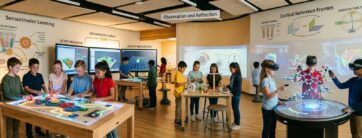
The Architecture of Active Learning: How Sensorimotor Inference Upgrades Executive Function in the Classroom
For decades, traditional pedagogy has operated on a foundational assumption: if a teacher presents information clearly enough, the student's brain will absorb it. We design classrooms around passive listening, abstract lectures, and symbolic worksheets, treating the mind like a empty vessel waiting to be filled with facts. Neuroscience tells a radically different story. In his groundbreaking work A […]
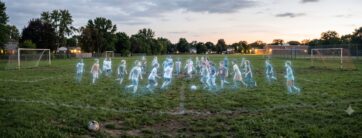
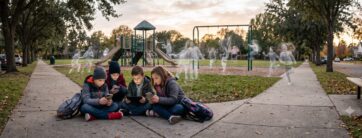
The Driveway Deficit: How the Collapse of Unstructured Play Altered Adolescent Socializing
The vanishing of unstructured "pickup" sports—the unorganized, self-policed games played in driveways, local parks, and dead-end streets—has dealt a quiet but devastating blow to adolescent social development. When youth sports shifted from spontaneous neighborhood play to hyper-structured, adult-run travel teams, kids lost more than just exercise. They lost the primary training ground for organic social negotiation, […]
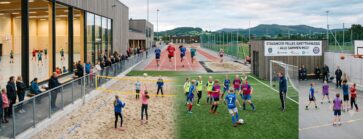
Reclaiming the Sandlot: Why America Must Adopt Norway’s Youth Sports Model—Starting in Elementary School
In the United States, youth sports have ballooned into a privatized, hyper-competitive $30 billion industry. Elite travel teams, expensive private academies, and year-round single-sport specialization dominate the landscape starting as early as age seven. Yet, despite this massive financial investment, America is facing an unprecedented crisis in youth physical health and social well-being: roughly 70% of […]
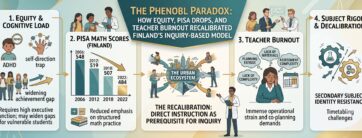
The PhenOBL Paradox: Why Finland Recalibrated Phenomenon-Based Learning
While Finland’s 2016 curriculum reform generated international buzz, the on-the-ground implementation of Phenomenon-Based Learning (PhenOBL) faced significant pushback from educators, researchers, and parents. The primary critique wasn't against project-based learning itself, but rather against the assumption that unstructured, student-led inquiry works equally well for every student and every subject. 1. The Disadvantage to Struggling and Neurodivergent Students […]

5 hours

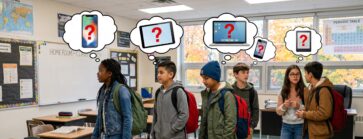
Parents trusted school-issued devices as safe, sanctioned educational tools, completely unaware that they functioned as digital Trojan horses granting round-the-clock access. Because schools endorsed the technology, families permitted unrestricted home use under the assumption it was secure and beneficial. However, this 24/7 connectivity kept children engaged deep into the night with notifications, streaming, and social media, systematically dismantling natural rest cycles. Consequently, student sleep averages plummeted to a critical low of just five hours a night.

Trauma

Unresolved trauma fundamentally alters neurodevelopment and hijacks the brain's predictive processing systems, locking the nervous system in a chronic state of threat detection where higher-order cognitive processing, working memory consolidation, and deep learning become biologically inaccessible. When a child or adult with ADHD faces cumulative developmental trauma from chronic criticism and rejection, their brain prioritizes immediate emotional self-preservation over exploratory curiosity—transforming the classroom, workplace, or any environment requiring vulnerability and potential failure into a zone of high-stakes danger rather than a space for skill acquisition.

Brandy Tackett

I am a career educator and school principal with more than 2 decades of experience leading high-needs and turnaround schools as a teacher, instructional coach, assistant principal, and principal.


My work centers on emotionally intelligent leadership, authentic culture-building, and sustainable school improvement — especially in environments where trust has been broken, morale is fragile, and expectations are high.


I am the author of Emotionally Intelligent School Leadership: Lead with Heart, Transform with Purpose (Routledge | Eye on Education, releasing March 2026), a practitioner-rooted framework drawn from real schools, real challenges, and real leadership moments. The book is already being distributed internationally and reflects my belief that transformation happens when leaders prioritize people, clarity, and accountability together.

Rebooting Education: Neo-Basics

From Defacing Desks to Designing Worlds: The Forensic Pipeline of CSI Geology
Every under-resourced high school classroom across the country has one: the "master doodler." This is the kid with a low GPA but a staggering, off-charts visual IQ, completely tuned out of a screen-heavy, vocabulary-memorize-and-dump science curriculum. Their notebooks are a chaotic tapestry of sprawling alien vistas, jagged fortresses, and comic book horizons sketched in the […]
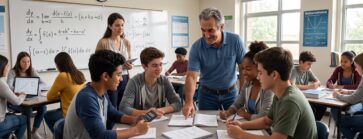
The Ladder Effect: Shifting Math Classrooms from Performance Anxiety to Experiential Flow
The reason a golf assessment of perseverance—specifically through the relentless nature of the ladders drill—successfully eliminated performance anxiety when translated to the math classroom comes down to a profound neurological and psychological shift. By taking the mechanics of that specific golf drill and embedding them into your pedagogy, you essentially rewired how the brain perceives failure, […]
The Mathematics of Trust: Applying Bob Rotella’s Performance Models to the High School Math Classroom
If Bob Rotella ran a high school mathematics classroom, he would completely tear down the traditional, anxiety-inducing structure of math education. There would be no frantic cramming, no paralyzing fear of failure, and no mechanical over-thinking during exams. Instead, he would treat mathematics exactly like an elite sport, transforming the room from a place of […]
A Place to Belong: Why Norway Views the Sports Club as the Ultimate ADHD Intervention
When looking at how Norway approaches support for athletes with ADHD, the model shifts away from the elite-centric talent optimization of Brazil and the bureaucratic risk-mitigation of the US. Instead, Norway relies on its famous "Idrett for alle" (Sport for All) egalitarian framework, combined with massive, data-driven public health integration. Norway treats organized sports not merely as recreation or […]
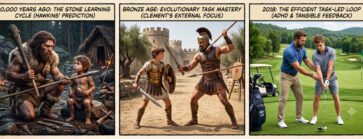
Back to the Hunt: Unlocking the ADHD Brain Through Tangible Tasks and Evolutionary Mechanics
When you overlay Jeff Hawkins' memory-prediction framework with Shawn Clement's task-focused, evolutionary golf mechanics, you get a perfect explanation for why the ADHD brain thrives on tangible, experiential learning. In fact, you can argue that the ADHD brain isn't "deficit" at all here; it is simply dialed directly into the ancient, highly efficient learning engine […]
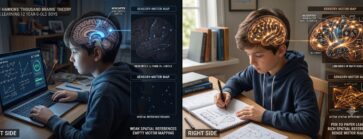
De-Evolving Intelligence: How AI Learning Starves the Human Neocortex
Jeff Hawkins’ Thousand Brains Theory of Intelligence—which details how the human neocortex operates as a distributed sensory-motor modeling system—provides a profound neuroscientific critique of modern AI-based learning models. When we look at how the brain evolved over millions of years to acquire knowledge, we find that intelligence is fundamentally embodied, predictive, and action-based. AI-based learning (passive screen […]
The Architecture of Curiosity: A Post-Apocalyptic Roadmap for Education
We are currently living through what can only be described as a social media educational apocalypse. Information has never been more abundant, yet true synthesis has never been rarer. Algorithms have optimized for attention rather than retention, shifting the modern intellectual landscape toward a fragmented state where deep focus is replaced by transactional, bite-sized consumption. […]
The Infinite Present: How Flat Screens Are Warping Executive Function (And How We Get It Back)
For over a decade, education has operated under a massive, unexamined assumption: that moving the physical world onto a digital pane of glass was a harmless upgrade. We swapped heavy textbooks for tablets, spatial exploration for tracking cursors, and the slow, linear friction of time for the instant gratification of a refresh button. But as […]
The Curriculum Reboot: Sensorimotor Synthesis and the Burkean Cascade
The modern educational landscape is not merely inefficient; it is biologically hostile to the human brain. By trapping students in a low-stimulation, screen-saturated, "fixed-focus" environment, we have systematically decoupled their cognitive development from the physical world. This has not only led to a decline in executive function—it has rendered the "legacy classroom" obsolete. To reboot […]