ADHD ESCAPE ROOM: SCHOOL REBOOT

The School Provided Laptop HAS BEEN the Trojan Horse All Along

ADHD ESCAPE ROOM

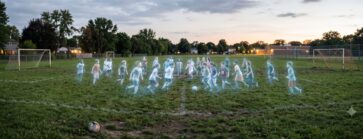
Electronic Devices and The Loss of Formative Play

ADHD ESCAPE ROOM: SCHOOL REBOOT

The Scandanavian Reboot: Neo Basics

ADHD ESCAPE ROOM

The Latest Pandemic: Social-Media-Based Sleep Deprivation!

01

Deconstruct the Myths of Digital-First "Innovation

Exposing how screen-based learning and EdTech pushed mass digitalization at the expense of hands-on, kinesthetic, and human-centered development.

02

Prioritize Kinesthetic and Sensorimotor Foundations

Championing learning environments rooted in physical engagement, environmental interaction, and real-world feedback loops rather than passive screen consumption

03

Rebuild Systemic Architectures Around Natural Cognition

Designing educational frameworks that align with how the human brain actually develops and learns, turning away from rigid compliance models toward true developmental support

“We have learned that the digitalization, the educational technology does not uplift quality and equity of education systems….and I think, you know, it's not only my opinion, but whatever way you look at the research evidence, the conclusion is that it has been, indeed, a wrong way, a wrong direction to try to improve education systems. “


Dr Pasi Sahlberg, Finland

Rebooting

Education

Sweden and the Los Angeles Unified School District transitioned away from ubiquitous 1-to-1 device models to correct the academic drift caused by uncritical, screen-heavy mandates. Sweden reallocated substantial funding to physical textbooks, handwriting instruction, and printed literature to rebuild foundational literacy and cognitive stamina, particularly after national data highlighted the negative impacts of early digital saturation. Similarly, LAUSD recalibrated its device policy by restricting daily screen time, eliminating take-home technology mandates for younger grades, and scaling back default digital platforms that fragmented attention.


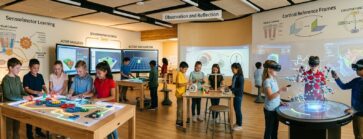
Crucially, this return to neo-basics does not signal a retreat into passive, rote memorization or rigid 19th-century instruction. Instead, these systems are leveraging the removal of individual screens to re-energize active, tactile pedagogies—most notably Finland’s phenomenon-based learning and robust project-based frameworks. By establishing a stable, screen-free baseline of physical literacy and analog tools, educators are finding that students can engage more deeply in collaborative, multidisciplinary, and hands-on inquiry without the cognitive friction and distraction inherent to constant device dependency.

The Digital Trojan Horse: How Unlocked School Laptops Stole Our Children’s Sleep
For years, the widespread rollout of 1-to-1 school laptop programs was marketed as the ultimate equalizer—a progressive leap toward digital equity and modern literacy. Parents were told that supplying children with school-issued devices was a necessary investment in their academic future. Trusting these sanctioned tools as safe and educational, families welcomed them into the home […]
The Global ADHD/ASD Social-Media-Based Severe Sleep Deprivation Crisis
Bridging the 2024–2025 Clinical Discovery, Dr. Joseph Llinás’ Psychiatric Framework, Dr. William Dodson’s Adult ADHD Sleep Research, and Sweden’s National Public Health Validation The U.S. Vacuum and the 2024–2025 Discovery Between 2024 and 2025, an acute neurodevelopmental crisis escalated across American classrooms: adolescent students with Attention-Deficit/Hyperactivity Disorder (ADHD) and Autism Spectrum Disorder (ASD) experienced unprecedented […]
When Steve Jobs Predicted the Future of Neurodiversity: How the Tech Icon Foresaw Dr. William Dodson’s ADHD Framework and the Scandinavian School Reboot
In the late 1990s, Steve Jobs made a surprising admission. As the man who had put more personal computers into classrooms than perhaps anyone else in history, he publicly stated that technology was by no means the most important thing in education (Computerworld, 1996). "Computers are very reactive... What children need is something much more […]
The Neo-Basic Pivot: How Nordic Schools Are Countering Digital Dependency Through Analog Sanctuaries
For over a decade, Nordic education systems were held up as global benchmarks for digital integration. Laptops and tablets replaced paper, interactive apps supplanted physical textbooks, and classrooms became living laboratories for 1:1 screen-based learning. However, as international literacy scores slipped and public health agencies reported rising rates of youth anxiety, sleep deprivation, and fragmented […]

5 hours

Parents trusted school-issued devices as safe, sanctioned educational tools, completely unaware that they functioned as digital Trojan horses granting round-the-clock access. Because schools endorsed the technology, families permitted unrestricted home use under the assumption it was secure and beneficial. However, this 24/7 connectivity kept children engaged deep into the night with notifications, streaming, and social media, systematically dismantling natural rest cycles. Consequently, student sleep averages plummeted to a critical low of just five hours a night.

Trauma

Unresolved trauma fundamentally alters neurodevelopment and hijacks the brain's predictive processing systems, locking the nervous system in a chronic state of threat detection where higher-order cognitive processing, working memory consolidation, and deep learning become biologically inaccessible. When a child or adult with ADHD faces cumulative developmental trauma from chronic criticism and rejection, their brain prioritizes immediate emotional self-preservation over exploratory curiosity—transforming the classroom, workplace, or any environment requiring vulnerability and potential failure into a zone of high-stakes danger rather than a space for skill acquisition.

Violent Discipline, Culture, and Neurodiversity in Latin America and the Caribbean
Disclaimer: While the research highlighted in this article illustrates systemic trends and the disproportionately high rates of harsh discipline in these regions, these data points reflect regional averages—not the reality of every home. Countless parents and caregivers across Latin America, the Caribbean, and around the world reject physical and verbal abuse, navigate parenting with deep empathy, […]
Compounding Crisis: ADHD, Violent Discipline, and the Global Reality of Child Protection
The global reality of childhood discipline revealed by UNICEF's long-term research reveals a staggering baseline: roughly 1.6 billion children aged 2–14 (2 in 3 worldwide) regularly endure violent discipline, including psychological aggression and physical punishment, at the hands of their primary caregivers. Nearly 400 million children under age 5face violent discipline globally, underpinned by deep-seated social norms where more […]
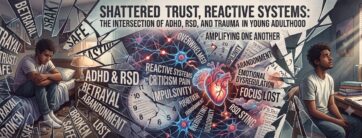
Shattered Trust, Reactive Systems: The Intersection of ADHD, RSD, and Trauma in Young Adulthood
When ADHD, Rejection Sensitive Dysphoria (RSD), and unresolved childhood trauma from a significant event like a sexual assault intersect in a young adult, they don't just exist side-by-side—they actively amplify one another. ADHD brings a naturally intense, highly reactive nervous system and executive dysfunction. RSD adds an agonizing vulnerability to perceived criticism or abandonment. Childhood […]
The Layered Vulnerability: Why ADHD, RSD, and “Not Being Seen” Create the Ideal Target for Predator Priests
When the Boston Globe’s Spotlight team broke the story of systemic clergy sexual abuse in 2002, the reporters exposed a chillingly calculated modus operandi. The perpetrators did not choose their victims at random. As real-life Spotlight journalist Michael Rezendes later noted, these predators were highly opportunistic: "They looked on the margins. They were like a wolf waiting for […]

Brandy Tackett

I am a career educator and school principal with more than 2 decades of experience leading high-needs and turnaround schools as a teacher, instructional coach, assistant principal, and principal.


My work centers on emotionally intelligent leadership, authentic culture-building, and sustainable school improvement — especially in environments where trust has been broken, morale is fragile, and expectations are high.


I am the author of Emotionally Intelligent School Leadership: Lead with Heart, Transform with Purpose (Routledge | Eye on Education, releasing March 2026), a practitioner-rooted framework drawn from real schools, real challenges, and real leadership moments. The book is already being distributed internationally and reflects my belief that transformation happens when leaders prioritize people, clarity, and accountability together.

Rebooting Education: Neo-Basics

The Unpiloted Pivot: How Scandinavia Reversed Hyper-Digital Education Without Sample School
Executive Summary When Sweden and Denmark executed their dramatic pivot away from screen-heavy instruction and back toward physical textbooks, handwriting, and phone bans in 2023, they did so without running formal, state-sponsored "sample school" or pilot trials. Instead of conducting a multi-year pilot program, Scandinavian policymakers treated the preceding decade of hyper-digitalisation as an unproven, large-scale […]
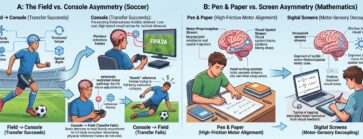
The Asymmetry of Learning: Sensorimotor Reference Frames in Mathematics and Physical Mastery
Executive Summary Modern educational technology operates on the implicit premise that digital interfaces—touchscreens, keyboards, and interactive software—are functional equivalents to physical, tactile interaction. However, advances in neocortical modeling (specifically Jeff Hawkins’ Thousand Brains Theory of Intelligence) and embodied cognitive neuroscience expose a fundamental flaw in this assumption: skill transfer between physical reality and digital simulation is strictly […]
The Nordic Digital Paradox: How Unfettered Screen Time Fractured Classrooms—and the “Neo-Basics” Pivot That Followed
For decades, the Nordic nations stood as the global benchmark for education and civic responsibility. Built on high social trust, robust funding, and a deep commitment to child development, their systems seemed nearly bulletproof. When these countries pioneered 1-to-1 technology initiatives—handing every student a laptop or tablet—the world assumed it was the dawn of a […]
The Architecture of Active Learning: How Sensorimotor Inference Upgrades Executive Function in the Classroom
For decades, traditional pedagogy has operated on a foundational assumption: if a teacher presents information clearly enough, the student's brain will absorb it. We design classrooms around passive listening, abstract lectures, and symbolic worksheets, treating the mind like a empty vessel waiting to be filled with facts. Neuroscience tells a radically different story. In his groundbreaking work A […]
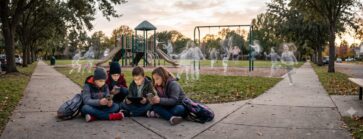
The Driveway Deficit: How the Collapse of Unstructured Play Altered Adolescent Socializing
The vanishing of unstructured "pickup" sports—the unorganized, self-policed games played in driveways, local parks, and dead-end streets—has dealt a quiet but devastating blow to adolescent social development. When youth sports shifted from spontaneous neighborhood play to hyper-structured, adult-run travel teams, kids lost more than just exercise. They lost the primary training ground for organic social negotiation, […]
Reclaiming the Sandlot: Why America Must Adopt Norway’s Youth Sports Model—Starting in Elementary School
In the United States, youth sports have ballooned into a privatized, hyper-competitive $30 billion industry. Elite travel teams, expensive private academies, and year-round single-sport specialization dominate the landscape starting as early as age seven. Yet, despite this massive financial investment, America is facing an unprecedented crisis in youth physical health and social well-being: roughly 70% of […]
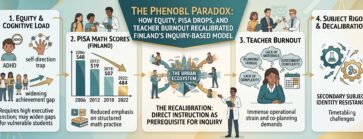
The PhenOBL Paradox: Why Finland Recalibrated Phenomenon-Based Learning
While Finland’s 2016 curriculum reform generated international buzz, the on-the-ground implementation of Phenomenon-Based Learning (PhenOBL) faced significant pushback from educators, researchers, and parents. The primary critique wasn't against project-based learning itself, but rather against the assumption that unstructured, student-led inquiry works equally well for every student and every subject. 1. The Disadvantage to Struggling and Neurodivergent Students […]
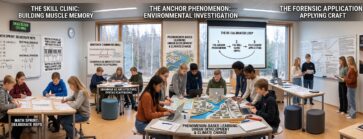
The Concert and the Scale: What Finland’s Inquiry Experiment Taught Us About the Craft of Math and Sentence
When news of Finland’s 2016 national curriculum reform swept through the educational world, international headlines framed it as a revolution: Finland was abolishing traditional subjects. The reality was far more measured. Through Phenomenon-Based Learning (PhenOBL), Finnish schools mandated interdisciplinary modules where real-world topics—like climate change or urban development—were investigated using tools from multiple disciplines simultaneously. The vision […]
The Great Sensorimotor Course Correction
For over a decade, primary and secondary education underwent a quiet revolution: the wholesale replacing of paper, pens, and bound physical textbooks with 1-to-1 digital screen initiatives. Tablets and laptops were promised as the ultimate equalizers—interactive, infinitely customizable, and natively digital for a digital world. Now, a major reversal is underway. Across Scandinavia, governments are […]