
Athletics
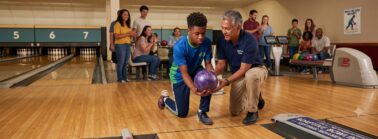
Striking a Balance: How Rhythmic Bowling Mechanics Calm and Coordinate the Autistic Nervous System
In the context of sports, recreation, and adapted physical activity, bowling is often a highly recommended sport for individuals on the autism spectrum (ASD). However, standard delivery styles can sometimes feel mechanically rigid or sensory-jarring. The "rock the baby" approach—a specialized bowling delivery technique where the bowler cradles or swings the ball smoothly close to the body, emphasizing a […]
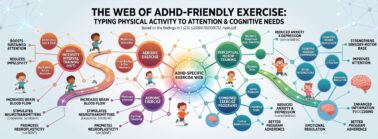
Effects of physical exercise on children with Attention Deficit Hyperactivity Disorder (ADHD)
This review article examines the role of physical exercise as an adjunctive, non-drug treatment for children and adolescents with Attention Deficit Hyperactivity Disorder (ADHD) . It synthesizes how both brief, single sessions (acute exercise) and regular, long-term programs (chronic exercise) impact the neurophysiology and cognitive functions of children dealing with the disorder . Key Highlights […]
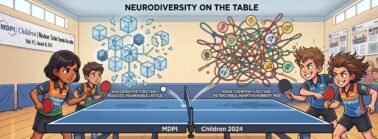
The Neurodivergent Arena: Singles vs. Doubles Table Tennis
For individuals navigating neurodivergence, sports are rarely just about physical exercise. They are an intense exercise in cognitive load management. While a sport like soccer introduces a massive, 21-vector matrix of chaotic human movement, table tennis shrinks the physical universe down to a highly predictable, $9 \times 5$ foot geometric surface. However, how a brain processes this […]

Why Certain Individual Sports and “Island” Positions Are Sanctuaries for ASD Thinkers
For youth on the autism spectrum (ASD), team sports characterized by continuous, unpredictable social choreography (like basketball or soccer) can create an overwhelming cognitive load. However, individual sports and highly structured, isolated roles within larger sports provide an ideal canvas. These environments allow a rigid, systematic, and deeply focused brain to achieve mastery by turning […]
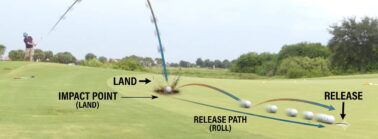
When to Remove the “u” in AuDHD to Master Performance in Golf
Traditional school systems are fundamentally built on a structural model that rewards sequential processing, conformity, and uniform paces. For a student with a highly active, nonlinear brain, the rigid environment of primary and secondary education often acts as a friction point rather than a catalyst for learning. When a high-IQ, hyperactive thinker checks out of […]

The Defensive Instinct: The Neuro-Architecture of the “Mama Bear” Charge
To the uninitiated, when a goalkeeper like Kasey Keller or Emiliano “Dibu” Martínez hurtles off their line to throw their physical frame directly at a charging striker's laces, it looks like reckless bravado—a hyper-aggressive, alpha-male display of dominance. But that is a profound misreading of the competitive instinct. This brand of extreme, forward-charging goalkeeping isn't […]
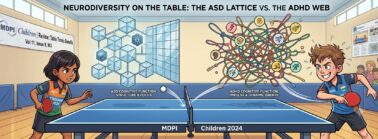
Table Tennis and the ADHD and ASD brain.
To understand why table tennis is such a powerful vehicle for saving a generation of children with ADHD and ASD, we have to look closely at the precise neurocognitive and sensorimotor demands of the sport. It isn't just physical exercise; it is a highly structured, fast-paced environment that perfectly aligns with the specific mechanics of […]

The Progressive Rock of the Playing Field: How the ADHD Non-Linear Brain Weaponizes Syncopation
Most traditional sports coaching treats the athletic arena like a predictable 4/4 pop song. It relies on rote, linear repetitions, a steady, metronomic cadence, and an insistence that consistency is the ultimate virtue. But to a specific type of competitor—driven by a non-linear, empathic ADHD brain—the playing field is not a pop song. It is […]

The Case of an ADHD “Michelin Star Mind” and Unfettered Rejection Sensitive Dysphoria (RSD).
The Michelin Star Mind in the Quiet of Real Life: Understanding RSD When you take the "Michelin Star Mind" out of the high-heat environment and drop them into interpersonal relationships, that social friction is very often driven by unfettered Rejection Sensitive Dysphoria (RSD). RSD is an intense, agonizing emotional vulnerability to the perception—not necessarily the reality—of […]