Tag Rebooting the Classroom

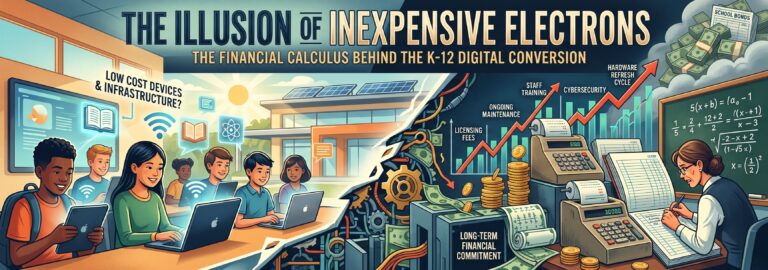
The Illusion of Inexpensive Electrons: The Financial Calculus Behind the K-12 Digital Conversion

Over the past decade, primary and secondary public education systems across North America underwent a structural transformation, shifting from physical textbooks to 1-to-1 digital device deployment. While this transition was often framed in pedagogical terms—promising “interactive engagement” and “personalized learning”—the…

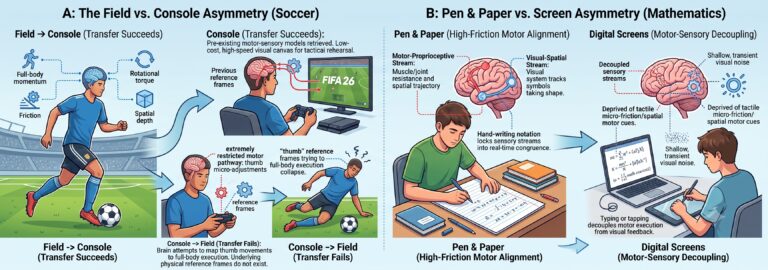
The Asymmetry of Learning: Sensorimotor Reference Frames in Mathematics and Physical Mastery

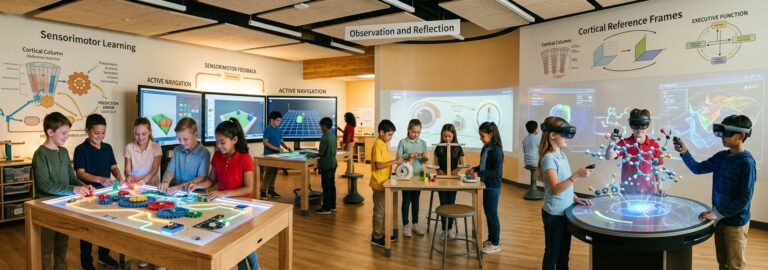
Executive Summary Modern educational technology operates on the implicit premise that digital interfaces—touchscreens, keyboards, and interactive software—are functional equivalents to physical, tactile interaction. However, advances in neocortical modeling (specifically Jeff Hawkins’ Thousand Brains Theory of Intelligence) and embodied cognitive neuroscience expose…

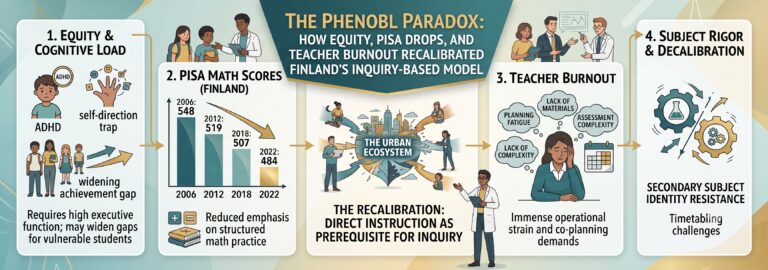
The PhenOBL Paradox: Why Finland Recalibrated Phenomenon-Based Learning

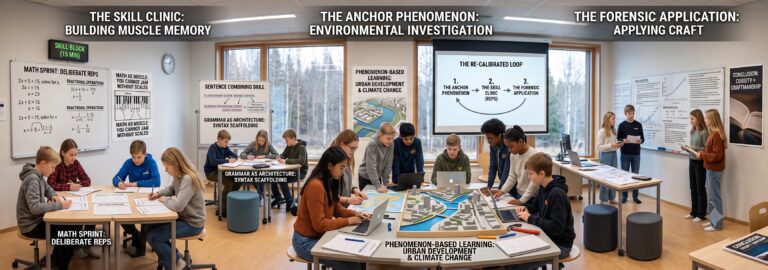
While Finland’s 2016 curriculum reform generated international buzz, the on-the-ground implementation of Phenomenon-Based Learning (PhenOBL) faced significant pushback from educators, researchers, and parents. The primary critique wasn’t against project-based learning itself, but rather against the assumption that unstructured, student-led inquiry works equally…

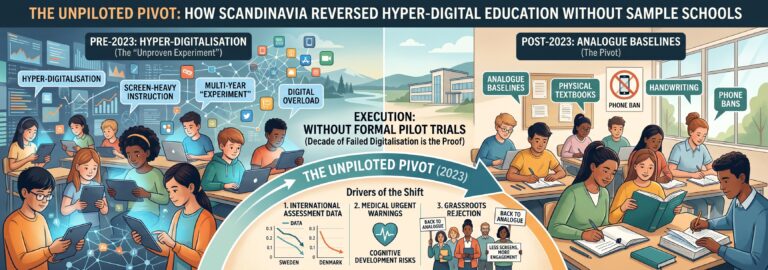
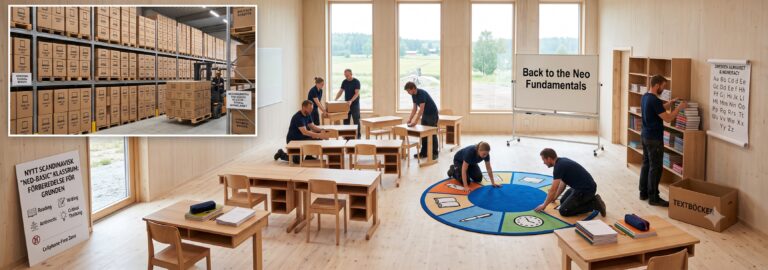
The Great Sensorimotor Course Correction

For over a decade, primary and secondary education underwent a quiet revolution: the wholesale replacing of paper, pens, and bound physical textbooks with 1-to-1 digital screen initiatives. Tablets and laptops were promised as the ultimate equalizers—interactive, infinitely customizable, and natively…