
Article Archive

The Firewall of Education Law: School Social Work When Parents Weaponize Medical Privacy
When a parent pulls a student out of therapy to hide their own actions or prevent exposure, a school social worker enters a high-stakes, legally complex landscape. The transition from an outside private clinician to a school-based social worker fundamentally changes the legal and structural boundaries. School social workers are governed by a distinct matrix […]
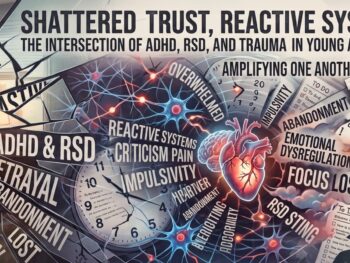
Shattered Trust, Reactive Systems: The Intersection of ADHD, RSD, and Trauma in Young Adulthood
When ADHD, Rejection Sensitive Dysphoria (RSD), and unresolved childhood trauma from a significant event like a sexual assault intersect in a young adult, they don't just exist side-by-side—they actively amplify one another. ADHD brings a naturally intense, highly reactive nervous system and executive dysfunction. RSD adds an agonizing vulnerability to perceived criticism or abandonment. Childhood […]

The Microphone as a Shield: How ADHD, RSD, and Trauma Shape the Comedy of Provocation
When we think of stand-up comedians, we picture people who are fearless. We see individuals willing to stand alone under blinding spotlights, facing a room full of strangers whose sole job is to judge them in real-time. For decades, icons like Lenny Bruce, Sam Kinison, and Sarah Silverman have pushed the boundaries of what is […]

The Mask of Contentment: Johnny Carson, RSD, and the Architecture of Control
When Dr. William Dodson first introduced the clinical concept of Rejection Sensitive Dysphoria (RSD) to describe the intense, agonizing emotional pain experienced by neurodivergent individuals in response to perceived failure or abandonment, it unlocked a massive wave of sudden clarity. One of the most famous clinical anecdotes from the early documentation of RSD involves a patient who, […]

The 20,000-Correction Wound: Why School Administrators Must Abolish the ADHD Punishment Loop
By the time a child with ADHD reaches their twelfth birthday, they have received an estimated 20,000 more negative messages, corrections, and public rejections than their neurotypical peers. Let that number sink in. It isn't just a staggering statistic; it is the blueprint for a profound, secondary psychological injury. For decades, school disciplinary frameworks have been built […]

The Chaney Paradigm: Why Relationships Are the Only Way Classroom Consequences Work for ADHD Students
For a student with ADHD, standard behavioral consequences often fall completely flat. Traditional disciplinary models operate on a simple calculus: misbehavior equals punishment, which should theoretically deter future misbehavior. But in an ADHD brain—particularly one navigating the intense emotional currents of Rejection Sensitive Dysphoria (RSD)—this calculus doesn't just fail; it frequently backfires. The truth is, […]
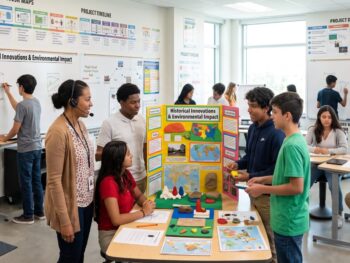
It’s Not an Attention Deficit—It’s an “Engagement on Demand” Difference
In a recent post, I questioned why states mandate specialized ESOL/ELL training for general education teachers while requiring almost zero specialized training for teaching students with ADHD. The common explanation is that ADHD is a behavioral issue or an "executive function deficit." But as leading experts like Dr. William Dodson point out, ADHD is fundamentally […]

The Great Sensorimotor Course Correction
For over a decade, primary and secondary education underwent a quiet revolution: the wholesale replacing of paper, pens, and bound physical textbooks with 1-to-1 digital screen initiatives. Tablets and laptops were promised as the ultimate equalizers—interactive, infinitely customizable, and natively digital for a digital world. Now, a major reversal is underway. Across Scandinavia, governments are […]

PSYCHOLOGY TODAY (OFF-TRACK EDITION)
Study: Gritty/Santa Paradox Proves Philadelphia Children Possess Distinct, Unmapped Neurotype PHILADELPHIA, PA — In a groundbreaking report released Tuesday by the imaginary Delaware Valley Institute for Advanced Behavioral Studies, researchers announced a major breakthrough in human development: children born within a 15-mile radius of City Hall do not process authority, terror, or jolly holiday figures through traditional […]

The 3D Mind on a 2D Page: Why 2E Non-Linear Creators Freeze—and How Dr. Dodson’s “Romania Strategy” Unlocks Them
For the twice-exceptional (2E) mind—where elite quantitative, spatial, or conceptual aptitude exists alongside an ADHD neurotype—the act of creation begins with a fundamental paradox. Hand a 2E thinker a high-level math problem, a code architecture challenge, or a complex structural mystery, and their brain moves with blinding speed. The problem statement bounds the universe, defines […]

The Concert and the Scale: What Finland’s Inquiry Experiment Taught Us About the Craft of Math and Sentence
When news of Finland’s 2016 national curriculum reform swept through the educational world, international headlines framed it as a revolution: Finland was abolishing traditional subjects. The reality was far more measured. Through Phenomenon-Based Learning (PhenOBL), Finnish schools mandated interdisciplinary modules where real-world topics—like climate change or urban development—were investigated using tools from multiple disciplines simultaneously. The vision […]
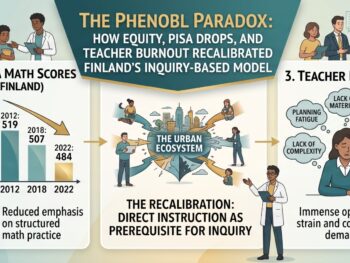
The PhenOBL Paradox: Why Finland Recalibrated Phenomenon-Based Learning
While Finland’s 2016 curriculum reform generated international buzz, the on-the-ground implementation of Phenomenon-Based Learning (PhenOBL) faced significant pushback from educators, researchers, and parents. The primary critique wasn't against project-based learning itself, but rather against the assumption that unstructured, student-led inquiry works equally well for every student and every subject. 1. The Disadvantage to Struggling and Neurodivergent Students […]
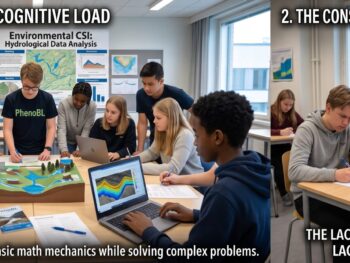
Finlands Phenomenon Based Learing and the Beginning of the Math PISA Scores Crash
No matter how engaging, authentic, or real-world a project is, you cannot bypass the reps when it comes to math. Mathematics is uniquely cumulative and hierarchical. While a student can jump into a complex historical or scientific phenomenon and analyze it conceptually, their ability to execute the underlying math depends on procedural fluency—and procedural fluency is built […]
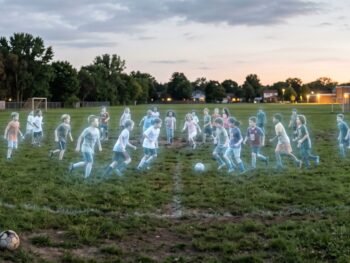
Reclaiming the Sandlot: Why America Must Adopt Norway’s Youth Sports Model—Starting in Elementary School
In the United States, youth sports have ballooned into a privatized, hyper-competitive $30 billion industry. Elite travel teams, expensive private academies, and year-round single-sport specialization dominate the landscape starting as early as age seven. Yet, despite this massive financial investment, America is facing an unprecedented crisis in youth physical health and social well-being: roughly 70% of […]
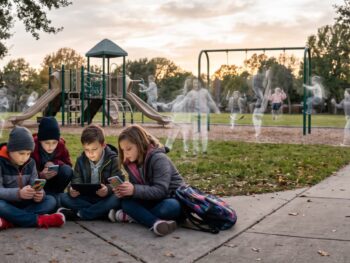
The Driveway Deficit: How the Collapse of Unstructured Play Altered Adolescent Socializing
The vanishing of unstructured "pickup" sports—the unorganized, self-policed games played in driveways, local parks, and dead-end streets—has dealt a quiet but devastating blow to adolescent social development. When youth sports shifted from spontaneous neighborhood play to hyper-structured, adult-run travel teams, kids lost more than just exercise. They lost the primary training ground for organic social negotiation, […]