ADHD ESCAPE ROOM

How Unlocked School Laptops Stole Our Children’s Sleep

ADHD ESCAPE ROOM

Electronic Devices and The Loss of Formative Play

ADHD ESCAPE ROOM

Flipping the Script on Dr. Russell Barkley & Executive Functions Deficits

ADHD ESCAPE ROOM

The Hubris of the Lab Bench: Why ADHD Science Needs a "Reboot"

ADHD ESCAPE ROOM

The Missed Steve Jobs Story: Path to Empathy

01

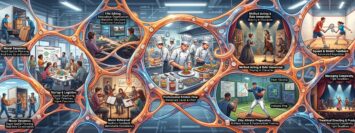
Build Awareness of Trauma's Role in Impairing ADHDers in the Classroom

Recognizing how past trauma and neurodivergence intersect is vital for creating safe, understanding learning environments where students aren't just managed, but genuinely supported.

02

Target the Institutional Failures in Supporting and Nuturing ADHDers

Examining how systemic breakdowns across schools, home life, and adult psychiatric care consistently fail neurodivergent individuals by demanding neurotypical conformity instead of providing real structural support.

03

Celebrate where ADHDers Fit, Excell and Everthing Flows

Shifting the narrative toward hyperfocus, creativity, and natural strengths allows ADHD individuals to thrive in spaces tailored to how their minds work.

"A child’s worst fears are that they are unlovable (because they are broken in some way) and they are going to be abandoned with a problem they cannot fix, no matter how hard they try. If a child knows that you see the potential for greatness in them, they will walk through Hell for you to deliver that greatness."


Dr. William Dodson LF-APA

Institutional

Failures

ADHD Escape Room exposes how widespread institutional failures—spanning academic research, poorly trained clinicians and teachers, and rigid systemic policies—trap individuals in a destructive cycle of misunderstanding, criticism, and shame instead of offering true support. Rather than just navigating standard school rules, neurodivergent people face an environment where institutional shortcomings turn ordinary neurological differences into years of conflict and needless trauma. When researchers, educators, and mental health professionals repeatedly fail to understand the actual wiring of the brain in front of them, the resulting alienation drives many ADHDers to check out of traditional treatment entirely and turn instead to self-medication and unproven remedies.


Beyond the Percentage Tick: The Compounding Systemic Failure of Protecting Autistic and ADHD Kids
When you add the ADHD craving for positive validation and the Autistic default to literal truth into the mix, you see exactly why the vulnerability doesn't just tick up—it multiplies exponentially. These aren't just traits; in the hands of a predator, they are weaponized. 1. The Vulnerability of Needing to Be Seen Children with ADHD grow up in a […]
The Caddy vs. The Lab Bench: Why the Sports Psychologist Outperforms the Traditional Clinician for the ADHD Golfer
For decades, the standard for addressing ADHD has been set by the clinical model: a desk-bound, diagnostic, and symptom-focused interaction that often feels like an extension of the sterile lab environment. Yet, when an ADHD golfer steps onto the course, they are not a "patient" with a "deficit"—they are an athlete navigating a high-stakes, real-time […]
The “Behavioral” Trap: Why ADHD Research Lacks the Predictive Power of Geology and Astrophysics
For decades, the academic consensus surrounding ADHD has been treated as a final, immutable truth: individuals with ADHD were diagnosed with poorer motor development compared to their neurotypical peers. Yet, this "consensus" is a classic example of what Dr. William Dodson describes as the hubris of an era that falsely believes it has reached the […]
Electronic Devices and The Loss of Formative Play
Early childhood exposure to two-dimensional digital devices as primary caregivers generates a compounding developmental debt. Between the critical window of ages 4 and 8, the human brain relies on three-dimensional physical exploration and dynamic social reciprocity ("serve-and-return" interactions) to calibrate parietal and prefrontal architectures. By substituting physical trial and error with flat glass interaction, early […]

25%

Despite its prevalence, only 10-25% of adults with ADHD receive an accurate diagnosis and adequate treatment. Women with ADHD face unique challenges. Many are misdiagnosed or undertreated, often receiving antidepressants instead of appropriate ADHD treatment. This gap in care represents a significant public health challenge.

Trauma

Unresolved trauma fundamentally alters neurodevelopment and hijacks the brain's predictive processing systems, locking the nervous system in a chronic state of threat detection where higher-order cognitive processing, working memory consolidation, and deep learning become biologically inaccessible. When a child or adult with ADHD faces cumulative developmental trauma from chronic criticism and rejection, their brain prioritizes immediate emotional self-preservation over exploratory curiosity—transforming the classroom, workplace, or any environment requiring vulnerability and potential failure into a zone of high-stakes danger rather than a space for skill acquisition.

Dr. Russell Barkley

Dr. Russell Barkley’s disproportionate influence on ADHD thinking in the 2000s helped focus the field heavily on executive-function deficits. That influence also impaired the flow of research into a critical question: how childhood trauma changes the developmental trajectory of an ADHD child into adulthood.

It also left another population largely unexplored: ADHD adults who thrived, often diagnosed in their forties after their children were diagnosed. Some had supportive homes, schools that fit them, and no childhood experiences that would be classified as trauma. They learned to ask for help, compensate, and build scaffolding where their ADHD brains needed it.


They still had ADHD. But they were never fighting themselves or their past. Studying these adults alongside ADHD adults who experienced childhood trauma could help separate what belongs to ADHD itself from what emerges through the interaction of ADHD, trauma, and environment.


Athletics

Academic ADHD research remains trapped behind a pathological lens that treats sports merely as a clinical management tool rather than a profound model of cognitive flourishing. By ignoring the vast repository of elite athletic performances where fast-paced, high-stakes environments naturally optimize kinesthetic and sensorimotor decision-making, researchers miss how the ADHD brain achieves peak operational flow. Platforms like ADHDEscapeRoom.com actively challenge this academic oversight by spotlighting sports as a natural haven for thriving, compelling the scientific community to shift its gaze from deficit checklists to the mechanics of high-performance success.


The Subtle Evangelical Mama Bear: Nick Foles
When people talk about a "culture fit" or a great locker room guy, they usually think of a traditional alpha personality—someone yelling, stomping, and demanding conformity. But Nick Foles proved that the absolute highest form of leadership is rooted in radical empathy and a non-judgmental presence. For an elite athlete with intense, deeply personal evangelical […]
Nick Foles: The ultimate hyper non-linear point guard.
The complete narrative arc of Nick Foles is a brilliant testament to the power of the non-linear, multi-sport ADHD mind. In a league that systematically strips away athletic instinct in favor of rigid, robotic over-coaching, Foles succeeded because he treated the gridiron like a chaotic, cross-referenced playground. He didn't think like a conventional quarterback; he […]
“Lefty” cracked the code on how to balance extreme on-field hyperfocus
For athletes with Attention Deficit Hyperactivity Disorder (ADHD), the typical sports psychology advice can feel incredibly rigid. Being told to "just focus" or follow a strict, monotone routine often works against an ADHD brain, which naturally thrives on high stimulation, novelty, and intense shifts in energy. That is why Hall of Fame pitcher Steve Carlton’s blueprint is […]
Pedal to the Metal: How Brett Myers’ Wired-for-Crisis Brain Ignited the Great 2007 Phillies Comeback
On September 12, 2007, the Philadelphia Phillies were dead in the water. They sat 7.5 games behind the New York Mets in the National League East with a mere 17 games left on the schedule. The postseason felt like a statistical impossibility, and to make matters worse, veteran closer Tom Gordon was down with a […]

Latest Posts

The Case of Steven Spielberg: Art as Survival
To look at Steven Spielberg today—a titan of cinema with three Academy Awards and the highest-grossing directorial catalog in history—is to look at a monument of success. But look beneath the monument, and you find a foundation built entirely on childhood survival. The story of Spielberg’s rise is often framed as a wholesome tale of […]
From Defacing Desks to Designing Worlds: The Forensic Pipeline of CSI Geology
Every under-resourced high school classroom across the country has one: the "master doodler." This is the kid with a low GPA but a staggering, off-charts visual IQ, completely tuned out of a screen-heavy, vocabulary-memorize-and-dump science curriculum. Their notebooks are a chaotic tapestry of sprawling alien vistas, jagged fortresses, and comic book horizons sketched in the […]
Stolen Shadows: Why the ADHD Screen Crisis Is Killing Tomorrow’s Elite Night Professionals
The intersection of passive digital consumption, severe sleep deprivation, and the unique mechanics of the ADHD nervous system creates a compound crisis in the classroom. When electronic devices steal thousands of hours from a developing child, they don't just cause exhaustion—they systematically bankrupt the child's inner world, rendering standard educational interventions useless. Based on the […]
The Nocturnal Sanctuary: How the ADHD Brain Weaponized the Night and Built a Modern Sleep Crisis
For decades, medicine treated the sleep issues plaguing individuals with Attention-Deficit/Hyperactivity Disorder (ADHD) as a secondary behavioral failure. It was dismissed as poor "sleep hygiene," a stubborn refusal to turn off the lights, or a byproduct of daytime restlessness. Modern chronobiology and vocational data tell a radically different story. ADHD is fundamentally intertwined with a circadian […]
The Confession: Why I Really Got the Job at Poinciana High School
For years, my professional bio read like a standard trajectory in academia and systemic reform. It spoke of a theoretical mathematician, a veteran educator, and an instructional technology manager dedicated to fixing fractured learning models. It highlighted a belief in hands-on, pen-to-paper learning and the creation of alternative frameworks to rescue students from the isolating […]
The Symphony of Survival: How Trauma, ADHD, and Music Forge the Voices of Grey DeLisle
Behind the hundreds of animated faces that defined a generation's childhood—from the razor-sharp chill of Azula to the bubblegum grit of Daphne Blake—lies the remarkable story of Grey DeLisle. Her career as a legendary voice actress and Grammy-winning musician is not just a catalog of immense talent; it is a masterclass in how a neurodivergent […]
Controlled Chaos: How an Undiagnosed Director Wired Hollywood for Executive Dysfunction
The traditional image of a Hollywood film director is an all-seeing auteur, a rigid general executing a flawless tactical campaign. But look closer at the actual mechanics of a film set—a highly pressurized, rapidly shifting environment of constant sensory input—and you find a workspace organically customized for the neurodivergent brain. For Jack Sholder, a veteran […]
The Fallacy of the Deficit: How the ADHD Brain Weaponizes Executive Function “Under Fire”
In the landscape of modern neuropsychology, Dr. Russell Barkley’s model of Attention Deficit Hyperactivity Disorder stands as a dominant paradigm. Barkley defines ADHD not as a knowledge deficit, but as a chronic, pervasive failure of executive functioning (EF) and self-regulation. In his view, the ADHD brain is biologically incapable of reliably holding onto working memory, […]
The Ghost in the Machine vs. The Genius of Chaos
The intersection of Dr. Russell Barkley’s lifetime work—which defines ADHD as a fundamental deficit in executive functioning and self-regulation—and the traditional ethos of Brazilian soccer coaching represents a total clash of paradigms. Barkley’s methods rely on explicit structure, externalized scaffolds, and systematic behavioral regulation. Brazilian football development, historically and culturally, thrives on implicit learning, chaotic environments, and […]

Advocates

Joseph Sisko

Creative Director and ADHD Advocate

Dr William Dodson

ADHD Mental Health Advocate

Maryann Theadora

Leed Empath

Benjamin Sisko

Defiant Captain

Legal & Educational Disclaimer

1. Educational and Informational Purposes Only The content provided on this website—including articles, frameworks, graphics, podcast episodes, and apparel concepts—is for informational, educational, and advocacy purposes only. It is intended to highlight alternative learning insights and neurodivergent potential. It is not a substitute for professional medical or psychological advice, diagnosis, or treatment.

2. Anecdotal Evidence and Comorbidities The personal stories, field experiences, and strategies shared here represent anecdotal evidence showcasing the potential of individuals with ADHD, AuDHD, and ASD. These accounts are presented without any warranty or guarantee of specific outcomes. Because the behavioral science profession frequently navigates a multitude of complex, underdiagnosed comorbidities, what works for one individual may not apply to another.

3. No Professional Relationship Your use of this website, or your interaction with any associated materials, does not create a professional-client, therapist-patient, or advisory relationship.

4. Seek Professional Advice Always seek the advice of your physician, licensed therapist, or other qualified healthcare provider with any questions you may have regarding a medical or mental health condition. Never disregard professional medical advice or delay in seeking it because of something you have read on this platform.

5. Limitation of Liability By utilizing the information, concepts, or tools discussed on this website, you voluntarily agree that you are doing so at your own risk. The creators and affiliates of this platform assume no responsibility or liability for any consequence resulting directly or indirectly from any action or inaction you take based on the information provided.

6. Crisis Notice This website is not a crisis monitoring resource. If you or someone you know is struggling with a mental health crisis, please contact your local emergency services (such as dialing 988 or 911 in the U.S.) or go to the nearest emergency room immediately.