ADHD ESCAPE ROOM

How Unlocked School Laptops Stole Our Children’s Sleep

ADHD ESCAPE ROOM

Electronic Devices and The Loss of Formative Play

ADHD ESCAPE ROOM

Flipping the Script on Dr. Russell Barkley & Executive Functions Deficits

ADHD ESCAPE ROOM

The Hubris of the Lab Bench: Why ADHD Science Needs a "Reboot"

ADHD ESCAPE ROOM

The Missed Steve Jobs Story: Path to Empathy

01

Build Awareness of Trauma's Role in Impairing ADHDers in the Classroom

Recognizing how past trauma and neurodivergence intersect is vital for creating safe, understanding learning environments where students aren't just managed, but genuinely supported.

02

Target the Institutional Failures in Supporting and Nuturing ADHDers

Examining how systemic breakdowns across schools, home life, and adult psychiatric care consistently fail neurodivergent individuals by demanding neurotypical conformity instead of providing real structural support.

03

Celebrate where ADHDers Fit, Excell and Everthing Flows

Shifting the narrative toward hyperfocus, creativity, and natural strengths allows ADHD individuals to thrive in spaces tailored to how their minds work.

"A child’s worst fears are that they are unlovable (because they are broken in some way) and they are going to be abandoned with a problem they cannot fix, no matter how hard they try. If a child knows that you see the potential for greatness in them, they will walk through Hell for you to deliver that greatness."


Dr. William Dodson LF-APA

Institutional

Failures

ADHD Escape Room exposes how widespread institutional failures—spanning academic research, poorly trained clinicians and teachers, and rigid systemic policies—trap individuals in a destructive cycle of misunderstanding, criticism, and shame instead of offering true support. Rather than just navigating standard school rules, neurodivergent people face an environment where institutional shortcomings turn ordinary neurological differences into years of conflict and needless trauma. When researchers, educators, and mental health professionals repeatedly fail to understand the actual wiring of the brain in front of them, the resulting alienation drives many ADHDers to check out of traditional treatment entirely and turn instead to self-medication and unproven remedies.

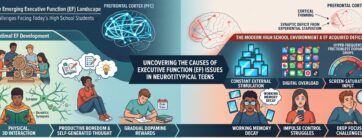
The Cost of Institutional Blind Spots: Why Neglecting ADHD Hyperfocus Research Mutes Genuine Working Memory Impairments
For decades, academic literature has operated under a profound diagnostic paradox: it classifies Attention-Deficit/Hyperactivity Disorder (ADHD) strictly as a static attention deficit. Yet, clinical practice and frontline observation repeatedly witness the opposite—periods of intense, all-consuming concentration known as hyperfocus. Because modern neuroscience has historically treated hyperfocus as an unquantifiable quirk rather than a primary mechanism of attention […]
The Mirage of the “Broken Brain”: Why PFC Density Deficits are a Misleading Metric for ADHD
For decades, mainstream ADHD discourse—spearheaded by figures like Dr. Russell Barkley—has relied heavily on a deficit-based, biologically deterministic model. This framework frequently points to structural neuroimaging studies revealing a 3% to 10% reduction in prefrontal cortex (PFC) volume or gray matter density in individuals diagnosed with ADHD. The narrative built around this data is simple, clean, […]
The Compositionality Crisis: Why AI Image Generation Struggles with Geometry and the “Thousand Brains” Fix
Modern text-to-image AI models—such as Midjourney, Stable Diffusion, and DALL-E—can generate stunning, hyper-realistic imagery at the click of a button. Yet, despite their artistic flair, these generators frequently suffer from bizarre, immersion-breaking structural failures. Ask an AI to draw a person holding a coffee mug, and the hand might clip through the porcelain, the handle […]
The Kinetic Stratigraphy: Decoding Elite ADHD Performance from the Broadcast Archive
If a volcanologist uses ice core samples to read centuries of atmospheric shifts and pressure spikes, then the thousands of hours of tape on elite ADHD athletes—from game film to raw post-match press conferences—is a living, breathing stratigraphy of neurodivergent human performance under extreme duress. It is a data set hiding in plain sight. Yet, […]

25%

Despite its prevalence, only 10-25% of adults with ADHD receive an accurate diagnosis and adequate treatment. Women with ADHD face unique challenges. Many are misdiagnosed or undertreated, often receiving antidepressants instead of appropriate ADHD treatment. This gap in care represents a significant public health challenge.

Trauma

Unresolved trauma fundamentally alters neurodevelopment and hijacks the brain's predictive processing systems, locking the nervous system in a chronic state of threat detection where higher-order cognitive processing, working memory consolidation, and deep learning become biologically inaccessible. When a child or adult with ADHD faces cumulative developmental trauma from chronic criticism and rejection, their brain prioritizes immediate emotional self-preservation over exploratory curiosity—transforming the classroom, workplace, or any environment requiring vulnerability and potential failure into a zone of high-stakes danger rather than a space for skill acquisition.

Dr. Russell Barkley

Dr. Russell Barkley’s disproportionate influence on ADHD thinking in the 2000s helped focus the field heavily on executive-function deficits. That influence also impaired the flow of research into a critical question: how childhood trauma changes the developmental trajectory of an ADHD child into adulthood.

It also left another population largely unexplored: ADHD adults who thrived, often diagnosed in their forties after their children were diagnosed. Some had supportive homes, schools that fit them, and no childhood experiences that would be classified as trauma. They learned to ask for help, compensate, and build scaffolding where their ADHD brains needed it.


They still had ADHD. But they were never fighting themselves or their past. Studying these adults alongside ADHD adults who experienced childhood trauma could help separate what belongs to ADHD itself from what emerges through the interaction of ADHD, trauma, and environment.


Athletics

Academic ADHD research remains trapped behind a pathological lens that treats sports merely as a clinical management tool rather than a profound model of cognitive flourishing. By ignoring the vast repository of elite athletic performances where fast-paced, high-stakes environments naturally optimize kinesthetic and sensorimotor decision-making, researchers miss how the ADHD brain achieves peak operational flow. Platforms like ADHDEscapeRoom.com actively challenge this academic oversight by spotlighting sports as a natural haven for thriving, compelling the scientific community to shift its gaze from deficit checklists to the mechanics of high-performance success.


ADHD: The Necessity of Showing Rather Than Telling
The necessity of showing rather than telling is a foundational concept when collaborating with, coaching, or leading individuals with ADHD. Because abstract verbal instructions require a high degree of mental sequencing and working memory, concrete visual examples act as a cognitive bridge. The dynamics of this approach are illustrated by the basketball examples, the bakery analogy, and […]
The Ancestral Engine: Why the ADHD Brain Thrives in Craft, Trade, and Action
For decades, modern education and corporate culture have treated ADHD as a deficit of attention and executive function. Individuals with ADHD are frequently diagnosed as having "broken" internal wiring because they struggle to sit still for six hours, absorb abstract lectures, or organize their day using traditional planners and spreadsheets. However, when you strip away […]
The Vector of Real Empathy: Why We Are Failing Neurodivergent Kids and How to Fix It
My former psychiatrist, Dr Joseph Llinas, is a two time APA man of the year for his clinical research on ADHD and ASD kids from low income families. One day I once asked him based on two people I know who had challenges with their ADHD kids the following question “What percentage of the problems […]
The Goalkeeper Paradox: High-Stakes Focus, Spatial Clarity, and the Multisport Advantage
The goalkeeper position in soccer is a fascinating paradox: it is an isolated, highly specialized role that requires intense psychological resilience, making it uniquely suited for an athlete with ADHD. While it is often viewed as a "wallflower" position because the keeper stands apart from the continuous, fluid movement of the rest of the team, […]

Latest Posts

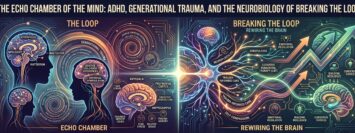
The Echo Chamber of the Mind: ADHD, Generational Trauma, and the Neurobiology of Breaking the Loop
⚠️ Crucial Clinical Disclaimer The following material discusses complex neurobiological interactions, trauma frameworks, and emerging pharmacological research. This article is for informational and educational purposes only and is not a substitute for professional medical advice, diagnosis, or treatment. ADHD and Complex PTSD (C-PTSD) share massive symptomatic overlap; self-diagnosing either condition—or assuming specific trauma pathways—can lead to […]
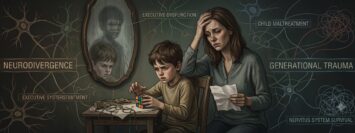
The Colliding Systems: ADHD, Generational Trauma, and the Cycle of Maltreatment 
The intersection of neurodivergence, generational trauma, and child maltreatment is a critical area of study in developmental psychology and behavioral health. When a child with ADHD grows up in a home with an undiagnosed, dysregulated parent, it creates an intense environment where executive dysfunction and nervous system survival strategies collide. 1. Rates of Physical Abuse […]
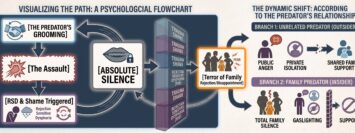
The Layered Vulnerability: Why ADHD, RSD, and “Not Being Seen” Create the Ideal Target for Predator Priests
When the Boston Globe’s Spotlight team broke the story of systemic clergy sexual abuse in 2002, the reporters exposed a chillingly calculated modus operandi. The perpetrators did not choose their victims at random. As real-life Spotlight journalist Michael Rezendes later noted, these predators were highly opportunistic: "They looked on the margins. They were like a wolf waiting for […]
ADHD Childhood Sexual Assault(s) and RSD
When an ADHD young adult is carrying the weight of sexual assault trauma, opening up to family isn't just a matter of "finding the right words." The combination of Trauma Shame and Rejection Sensitive Dysphoria (RSD) creates a severe psychological barrier. Because the ADHD nervous system experiences emotions at an extreme volume, the thought of exposing these vulnerabilities feels […]
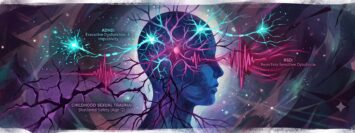
The Layered Nervous System: How ADHD, RSD, and Childhood Sexual Trauma Intersect in Young Adulthood
When an ADHD young adult is carrying the weight of sexual assault trauma, opening up to family isn't just a matter of "finding the right words." The combination of Trauma Shame and Rejection Sensitive Dysphoria (RSD) creates a severe psychological barrier. Because the ADHD nervous system experiences emotions at an extreme volume, the thought of exposing these vulnerabilities feels […]
The Illusion of the Desk: Neocortex Mechanics vs. The Psychological Theatre
For over a century, the quest to understand human consciousness has been locked in a quiet civil war. If you walk into a university psychology department, you will likely be told that consciousness is the ultimate software suite. Academic psychologists will describe it using computational metaphors: a centralized "Global Neuronal Workspace" or a cognitive "theatre" […]
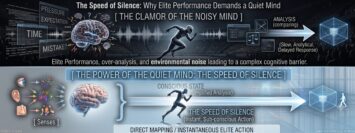
The Speed of Silence: Why Elite Performance Demands a Quiet Mind
In the high-stakes worlds of professional sports, concert halls, and live theater, there is a distinct difference between a performer who is practicing and a performer who is flying. When a goalkeeper faces a point-blank shot, a jazz pianist improvises a lightning-fast run, or an actor commands a stage, they enter a state of execution […]
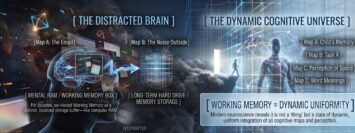
The Myth of Mental RAM: Why Working Memory Isn’t What You Think It Is
For decades, cognitive psychology has relied on a clean, comfortable metaphor to explain how we think: the computer. In this classic model, your brain has a hard drive (long-term memory) where your childhood memories and language skills are stored. But when you need to solve a math problem, remember a phone number, or track a […]
The Ghost in the Machine: The Illusion of the Focus Bridge and the Myth of Mental RAM
We have all experienced the sudden, almost violent transition. One moment, your mind is a scattered mess—a dozen browser tabs open in your brain, jumping from a half-written email to a stray noise outside, to an impending deadline. Then, a trigger hits. A sudden realization, a looming cutoff, or a captivating problem locks into view. […]

Advocates

Joseph Sisko

Creative Director and ADHD Advocate

Dr William Dodson

ADHD Mental Health Advocate

Maryann Theadora

Leed Empath

Benjamin Sisko

Defiant Captain

Legal & Educational Disclaimer

1. Educational and Informational Purposes Only The content provided on this website—including articles, frameworks, graphics, podcast episodes, and apparel concepts—is for informational, educational, and advocacy purposes only. It is intended to highlight alternative learning insights and neurodivergent potential. It is not a substitute for professional medical or psychological advice, diagnosis, or treatment.

2. Anecdotal Evidence and Comorbidities The personal stories, field experiences, and strategies shared here represent anecdotal evidence showcasing the potential of individuals with ADHD, AuDHD, and ASD. These accounts are presented without any warranty or guarantee of specific outcomes. Because the behavioral science profession frequently navigates a multitude of complex, underdiagnosed comorbidities, what works for one individual may not apply to another.

3. No Professional Relationship Your use of this website, or your interaction with any associated materials, does not create a professional-client, therapist-patient, or advisory relationship.

4. Seek Professional Advice Always seek the advice of your physician, licensed therapist, or other qualified healthcare provider with any questions you may have regarding a medical or mental health condition. Never disregard professional medical advice or delay in seeking it because of something you have read on this platform.

5. Limitation of Liability By utilizing the information, concepts, or tools discussed on this website, you voluntarily agree that you are doing so at your own risk. The creators and affiliates of this platform assume no responsibility or liability for any consequence resulting directly or indirectly from any action or inaction you take based on the information provided.

6. Crisis Notice This website is not a crisis monitoring resource. If you or someone you know is struggling with a mental health crisis, please contact your local emergency services (such as dialing 988 or 911 in the U.S.) or go to the nearest emergency room immediately.