
Article Archive
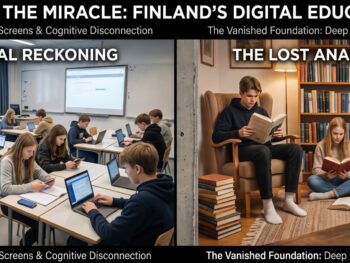
The Digital Reckoning: How Screen Overuse, Sleep Deprivation, and the Loss of Play Unraveled the Nordic Educational Miracle
For decades, Scandinavia—and Finland in particular—stood as the undisputed beacon of global education. When the OECD released its early Programme for International Student Assessment (PISA) results in the 2000s, Finland was celebrated worldwide for achieving top-tier academic scores while maintaining equitable classrooms, short school hours, and minimal standardized testing. It was heralded as an educational […]

The Razor’s Edge of Cinema: How Physical Film Editing Built Steven Spielberg’s Cinematic Brain
Long before he ever set foot on a Hollywood soundstage, a teenage Steven Spielberg sat at a small desk in his bedroom running 8mm and 16mm celluloid through his fingers. He held strips of film up to a light bulb, marked individual frames with grease pencils, scraped off emulsion, and physically spliced shots together using […]
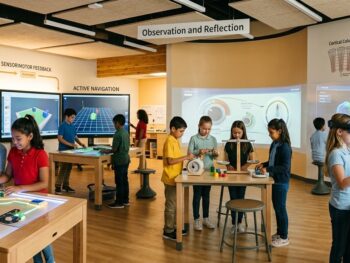
The Architecture of Active Learning: How Sensorimotor Inference Upgrades Executive Function in the Classroom
For decades, traditional pedagogy has operated on a foundational assumption: if a teacher presents information clearly enough, the student's brain will absorb it. We design classrooms around passive listening, abstract lectures, and symbolic worksheets, treating the mind like a empty vessel waiting to be filled with facts. Neuroscience tells a radically different story. In his groundbreaking work A […]
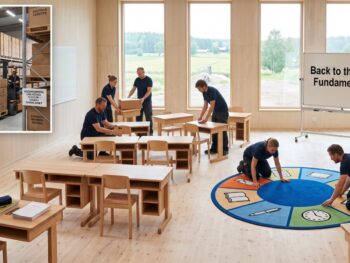
The Nordic Digital Paradox: How Unfettered Screen Time Fractured Classrooms—and the “Neo-Basics” Pivot That Followed
For decades, the Nordic nations stood as the global benchmark for education and civic responsibility. Built on high social trust, robust funding, and a deep commitment to child development, their systems seemed nearly bulletproof. When these countries pioneered 1-to-1 technology initiatives—handing every student a laptop or tablet—the world assumed it was the dawn of a […]
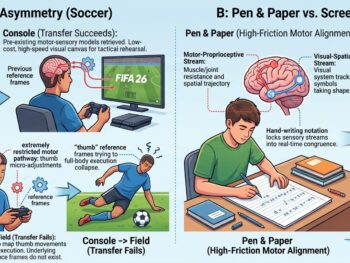
The Asymmetry of Learning: Sensorimotor Reference Frames in Mathematics and Physical Mastery
Executive Summary Modern educational technology operates on the implicit premise that digital interfaces—touchscreens, keyboards, and interactive software—are functional equivalents to physical, tactile interaction. However, advances in neocortical modeling (specifically Jeff Hawkins’ Thousand Brains Theory of Intelligence) and embodied cognitive neuroscience expose a fundamental flaw in this assumption: skill transfer between physical reality and digital simulation is strictly […]
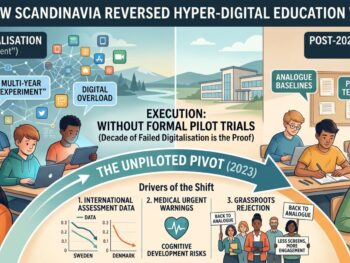
The Unpiloted Pivot: How Scandinavia Reversed Hyper-Digital Education Without Sample School
Executive Summary When Sweden and Denmark executed their dramatic pivot away from screen-heavy instruction and back toward physical textbooks, handwriting, and phone bans in 2023, they did so without running formal, state-sponsored "sample school" or pilot trials. Instead of conducting a multi-year pilot program, Scandinavian policymakers treated the preceding decade of hyper-digitalisation as an unproven, large-scale […]

Narrative Leverage vs. First-Principles Mechanics: Decoding the Genius of Steve Jobs and Elon Musk
In discussions of modern industrial titanhood, Steve Jobs and Elon Musk are frequently grouped together as singular tech visionaries who bent global industries to their will. Yet placing them in the same cognitive category fundamentally misunderstands how their minds process information, evaluate risk, and execute strategy. While Musk operates as a first-principles optimizer, breaking complex physical […]

The Illusion of Inexpensive Electrons: The Financial Calculus Behind the K-12 Digital Conversion
Over the past decade, primary and secondary public education systems across North America underwent a structural transformation, shifting from physical textbooks to 1-to-1 digital device deployment. While this transition was often framed in pedagogical terms—promising "interactive engagement" and "personalized learning"—the foundational impulse driving school administrators was grounded in financial calculus. Educators and district CFOs were […]
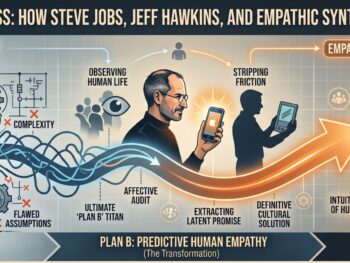
The “Plan B” Masterclass: How Steve Jobs, Jeff Hawkins, and Empathic Synthesis Built Tech Empires
In Silicon Valley, there is a pervasive founding myth: a startup launches with a grand vision (Plan A), fails on its initial assumptions, preserves its remaining capital, and pivots to an unexpected alternative (Plan B)—where the real enterprise value is unlocked. While commentators often attribute this phenomenon to luck or simple persistence, the structural reality […]
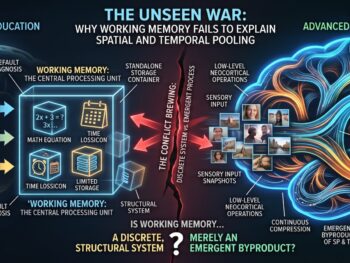
The Unseen War: Why Working Memory Fails to Explain Spatial and Temporal Pooling
For decades, cognitive psychology and education have treated working memory as the central processing unit of the human mind—the mental workspace where we store, manipulate, and execute complex thought. When a student struggles to hold a multistep math equation in mind, or an adult loses track of time during a complex project, the default diagnosis is almost […]
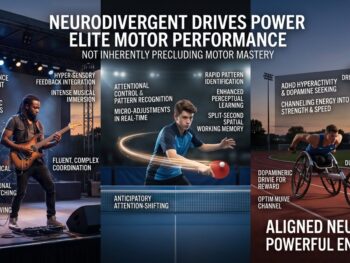
The Kinetic Paradox: Why Academic Research Misdiagnoses Neurodivergent Motor Performance
For decades, psychiatric literature and standardized developmental assessments have maintained a firm diagnostic consensus: Attention-Deficit/Hyperactivity Disorder (ADHD) and Autism Spectrum Condition (ASD) are fundamentally characterized by motor impairment. Meta-analyses consistently cite motor planning friction, poor gait symmetry, low muscle tone (hypotonia), and developmental dyspraxia as high-prevalence traits affecting approximately 75% to 85% of the neurodivergent […]

The Neo-Basic Pivot: How Nordic Schools Are Countering Digital Dependency Through Analog Sanctuaries
For over a decade, Nordic education systems were held up as global benchmarks for digital integration. Laptops and tablets replaced paper, interactive apps supplanted physical textbooks, and classrooms became living laboratories for 1:1 screen-based learning. However, as international literacy scores slipped and public health agencies reported rising rates of youth anxiety, sleep deprivation, and fragmented […]

Sleeping is Winning: Why Elite ADHD Athletes Are the Ultimate Ambassadors for Sleep Hygiene
In the high-stakes world of elite sports, physical conditioning, nutrition, and tactics have traditionally dominated the performance conversation. Yet, sport science has increasingly revealed a simpler, more potent game-changer: sleep. For neurodivergent athletes—particularly those living with Attention-Deficit/Hyperactivity Disorder (ADHD)—sleep isn't just a rest period; it is an irreplaceable tool for cognitive regulation, emotional stability, and physical […]
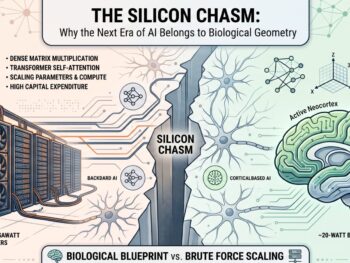
The Silicon Chasm: Why the Next Era of AI Belongs to Biological Geometry
The global artificial intelligence race is currently divided by an architectural rift. On one side sits the scaling hypothesis, championed by OpenAI’s Sam Altman: a strategy that treats intelligence as a dense matrix multiplication problem solvable by escalating compute, parameters, and energy consumption. On the other side sits the Thousand Brains Theory, formulated by Numenta founder Jeff Hawkins: […]

Neurodivergence in the Pressure Cooker: Supporting ADHD and AuDHD Students from Caribbean Households in Florida Title I Schools
Disclaimer: While the research highlighted in this article illustrates systemic trends and the disproportionately high rates of harsh discipline in these regions, these data points reflect regional averages—not the reality of every home. Countless parents and caregivers across Latin America, the Caribbean, and around the world reject physical and verbal abuse, navigate parenting with deep empathy, […]